An assemblage of long-debated fossils from the site of Xujiayao in northern China’s Nihewan Basin belongs to Denisovans, an extinct branch of humanity first identified from DNA in a Siberian cave, according to a new molecular analysis published in the journal Nature.
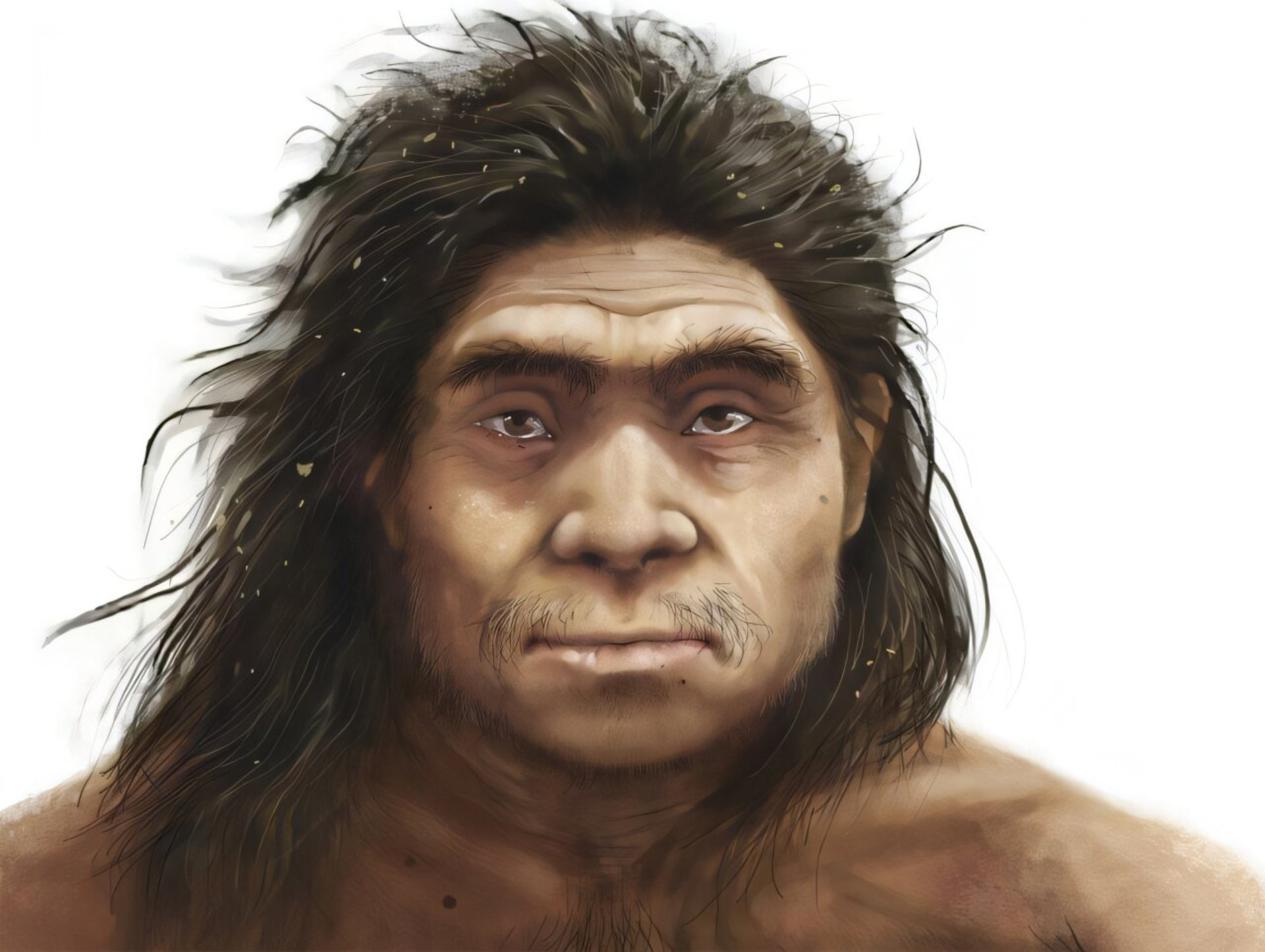
Reconstruction of a Denisovan. Image credit: Xing et al. / Institute of Vertebrate Paleontology and Paleoanthropology, Chinese Academy of Sciences.
The Xujiayao site, dated to roughly 199,000 to 138,000 years ago, yielded 20 hominin fossils excavated between 1976 and 1979, including parts of a skull and a jaw.
Earlier studies assigned them to Neanderthals, to early or archaic Homo sapiens, and most recently to a proposed new species, Homo juluensis.
“The Xujiayao assemblage comprises 20 hominin cranial, mandibular and dental fossils excavated between 1976 and 1979 from a well-defined stratigraphic context in the Nihewan Basin, northern China,” said Dr. Qiaomei Fu, a researcher with the Institute of Vertebrate Paleontology and Paleoanthropology at the Chinese Academy of Sciences, and colleagues.
“This assemblage, recovered alongside abundant artifacts — dominated by scrapers and spheroids — and faunal remains, represents one of the most extensive collections among East Asian late Middle Pleistocene archaic Homo.”
In the new study, the authors extracted ancient proteins from a skull bone fragment and a jaw fragment from Xujiayao.
After screening out modern contamination, they identified 18 endogenous proteins.
The key evidence was a single amino acid change in a collagen protein, COL1A2, where Denisovans carry a lysine instead of the arginine found in Neanderthals and modern humans.
The variant appeared in both Xujiayao samples, and a family tree built from the protein sequences grouped them with the Denisovan individual from Denisova Cave.
Within the Denisovan group, the researchers could not determine how the Xujiayao individuals relate to other Denisovans, because no other distinguishing variants turned up.
According to the study, the anatomy of Xujiayao and of the Harbin skull, identified as Denisovan in 2025 through proteins and mitochondrial DNA, points to a shared Denisovan physical type.
Most other East Asian fossils, including Jinniushan, Dali and Hualongdong, share a distinctive combination of traits and so also belong to the lineage.
The traits include a low skull with nearly parallel sides, a massive brow ridge, a flat midface and weak jutting of the lower face.
Denisovans also mix primitive features reminiscent of Homo erectus, such as a thick skull vault, with more modern ones, such as a strongly arched temporal bone.
This conclusion cuts against the proposal that Xujiayao and related fossils form a separate species, Homo juluensis, distinct from the group that includes the Harbin skull.
“Xujiayao and Xuchang were previously assigned to Homo juluensis, distinct from the groups of Dali, Harbin, Jinniushan and Hualongdong,” the scientists said.
“However, the main difference in endocranial capacity between Homo juluensis (1,700-1,800 ml) and other members of East Asian late Middle Pleistocene Homo (1,120-1,420 ml) falls within the documented variation range of modern humans (1,090-1,880 ml), and also is approximately compatible with the spectrum of Neanderthals (1,065-1,740 ml).”
“This variation in endocranial capacity should therefore be considered an intrapopulation variation.”
Dr. Fu and co-authors also compared Denisovans with Neanderthals.
The East Asian fossils generally lack classic Neanderthal features such as the ‘bun’ at the back of the skull, though they share a few traits with late Neanderthals, including the arrangement of structures in the inner ear and, in the Xuchang skull, a shallow depression at the back of the skull.
The authors suggest that later Neanderthals may have changed in appearance through interbreeding with modern humans or other archaic groups, which could explain how far they diverged from Denisovans.
“If both morphological and molecular evidence were considered, Denisovans could have lived in East Asia from at least 300,000 to 45,000 years ago, paralleling the temporal range of Siberian Denisovans (250,000-55,000 years ago),” they said.
“Sporadic dispersal of modern humans into southern China (for example, Zhiren and Daoxian) might not have substantially interfered with the living niches of Denisovans until a major migration around 40,000 years ago replaced them (with partial Denisovan introgression into modern humans), forming the basal population of regional living populations.”
_____
S. Xing et al. 2026. The proteome of Middle Pleistocene Xujiayao and common Denisovan morphology. Nature 659, 1015-1021; doi: 10.1038/s41586-026-11132-z