Featured News

Aug 29, 2017 by Enrico de Lazaro

In a study published Friday in the Journal of Vertebrate Paleontology, paleontologists report the discovery of a partially-preserved skeleton of one of the earliest known elasmosaurs, from the Early Cretaceous (130 million years ago) of Germany. Life reconstruction of Lagenanectes richterae. Image credit: Joschua Knuppe. Elasmosaurs (Elasmosauridae) were a family of plesiosaurs that flourished during the Cretaceous period, about 145 million to 66...

Aug 28, 2017 by Natali Anderson

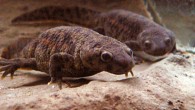
Herpetologists are claiming they have discovered a new species of purple frog living in the Western Ghats, India. The Bhupathy’s purple frog (Nasikabatrachus...

Aug 25, 2017 by James Romero

Surface water ice found within a brilliantly bright crater on the dwarf planet Ceres is being exposed by avalanches reprocessing impact deposits in just...

Aug 25, 2017 by News Staff

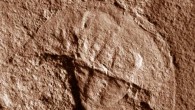
Plimpton 322, the most famous of Old Babylonian tablets (1900-1600 BC), is the world’s oldest trigonometric table, possibly used by Babylonian scholars...

Aug 24, 2017 by News Staff

A new species of extinct dwarf dolphin that lived about 30 million years ago (Oligocene epoch) and possessed adaptations for suction feeding has been identified...

Aug 24, 2017 by News Staff

A new species of long-necked titanosaurian dinosaur has been unearthed in southwestern Tanzania. Life reconstruction of Shingopana songwensis. Image credit:...

Aug 23, 2017 by News Staff

An international team of astronomers from Chile and Germany has managed to capture an image of unprecedented detail of another star — that isn’t...

Aug 23, 2017 by News Staff

Underwater archaeologists using a new state-of-the-art technology are mapping out the submerged portion of the 17th-century town of Port Royal in Jamaica. Underwater...

Aug 22, 2017 by News Staff

A new study led by a Scripps Institution of Oceanography researcher contradicts a recently published paper, which suggested the interior of Earth’s only...

Aug 21, 2017 by News Staff

Streptococcus agalactiae (Group B-Streptococcus, or GBS) is a type of bacteria that can cause invasive infections in people of all ages. A research team...

Aug 21, 2017 by Enrico de Lazaro

A relatively large near-Earth asteroid will safely fly by pur planet on September 1, 2017, according to NASA. (3122) Florence will pass safely by Earth...

Aug 18, 2017 by Enrico de Lazaro

Fossils discovered in Turkey represent a new species that is a previously unknown relative of modern-day marsupials, according to a new paper published...

Aug 18, 2017 by Natali Anderson

An international team of researchers from the Kiepenheuer Institute for Solar Physics and the University of Texas at Arlington has spotted signs of an...

Aug 17, 2017 by News Staff

In a paper published recently in the journal Palaeodiversity, U.S. paleontologists described a new species of angiosperm flower, Tropidogyne pentaptera,...

Aug 16, 2017 by News Staff

Dr. Rory Barnes, an assistant professor in the Department of Astronomy and Astrobiology Program at the University of Washington, arrived at this finding...

Aug 16, 2017 by News Staff

An international team of astronomers has found evidence for a unique gravitational lensing system, in which a massive star cluster is magnifying an extremely...

Aug 15, 2017 by News Staff

Physicists from the ATLAS experiment, one of the four major experiments at CERN’s Large Hadron Collider (LHC) in Switzerland, have found the first direct...

Aug 15, 2017 by News Staff

A team of geoscientists from the University of Edinburgh, UK, has discovered an extensive volcanic range beneath West Antarctica’s massive ice sheet. Location...

Aug 14, 2017 by News Staff

New excavations of a cave site in western Sumatra called Lida Ajer indicate modern humans reached Southeast Asia between 73,000 to 63,000 years ago —...

Aug 14, 2017 by News Staff

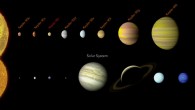
A research team says the TRAPPIST-1 planetary system — a compact system of at least seven exoplanets with sizes similar to Earth — formed between...