Featured News

Jan 17, 2022 by News Staff

Astronomers have obtained 12 new high-precision transit observations of WASP-103b — a planet almost twice the size of Jupiter with 1.5 times its mass — with ESA’s CHaracterising ExOplanet Satellite (CHEOPS) to study the tidal interaction with its host star, WASP-103. WASP-103b has been deformed by the strong tidal forces between the planet and its host star. Image credit: ESA. “It’s incredible that CHEOPS was actually able to reveal...

Jan 14, 2022 by News Staff

In their hunt for elusive exomoon candidates, astronomers have looked at 70 cool gas giants found by NASA’s Kepler space telescope. They’ve found only...

Jan 13, 2022 by Natali Anderson

An international team of scientists has described a new species of the rainfrog genus Pristimantis from the cloud forests of Panama and named it after...

Jan 12, 2022 by News Staff

The nearly complete humerus — or upper arm bone — of a pangolin from the paleontological site of Grăunceanu in Romania definitively demonstrates...

Jan 12, 2022 by News Staff

Space Telescope Science Institute astronomer and data visualization expert Dr. Catherine Zucker and her colleagues have shown how a chain of events beginning...

Jan 11, 2022 by News Staff

Paleontologists have unearthed the well-preserved skeleton of the large-bodied predatory ichthyosaur species Temnodontosaurus trigonodon at Rutland Water...

Jan 10, 2022 by Natali Anderson

Using data from NASA’s Transiting Exoplanet Survey Satellite (TESS) and several ground-based facilities, astronomers have discovered a long-period sub-Neptune...

Jan 6, 2022 by News Staff

An extinct species of brachyuran crab called Callichimaera perplexa was a highly visual predator inhabiting well-lit environments, according to new research...

Jan 6, 2022 by News Staff

The Standard Model of particle physics is both incredibly successful and glaringly incomplete. Among the questions left open is the striking imbalance...

Jan 6, 2022 by News Staff

Archaeologists have found a richly decorated ‘knight’ chess piece at a medieval site in Tønsberg, the oldest city in Norway. The 800-year-old Arabic-inspired...

Jan 4, 2022 by News Staff

An international team of scientists from the United States, China, Singapore, France and Canada has decoded the genome of the lychee (Litchi chinensis),...

Jan 3, 2022 by Enrico de Lazaro

Paleontologists have discovered the footprints of large sauropodomorph dinosaurs on the shoreline near Penarth in south Wales, the United Kingdom. An individual...

Dec 26, 2021 by News Staff

The James Webb Space Telescope, an international partnership between NASA, ESA and the Canadian Space Agency (CSA), launched at 7:20 a.m. EST (13:20 CET)...

Dec 24, 2021 by News Staff

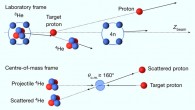
Magnesium-18 (18Mg) is the lightest isotope of magnesium, which is element 12 on the periodic table. Magnesium-18. Image credit: S.M. Wang / Fudan University...

Dec 24, 2021 by News Staff

With a skull size of 2 m (6.6 feet) and an estimated body size of 17 m (56 feet), the newly-identified ichthyosaur species is the largest animal discovered...

Dec 22, 2021 by News Staff

Using observations and archival data from several space- and ground-based telescopes, astronomers have discovered a rich population of free-floating planets...

Dec 22, 2021 by News Staff

The fossilized dinosaur egg from the Hekou Formation, Ganzhou, Jiangxi province, southern China, is elongate ovoid in shape with dimensions of 16.7 cm...

Dec 22, 2021 by Sergio Prostak

New research by scientists from Seoul National University, Korea Food Research Institute and Chungnam National University suggests that dark chocolate...

Dec 21, 2021 by News Staff

Arthropleura, an enormous myriapod that lived some 326 million years ago (Carboniferous period), is estimated to have been 55 cm (1.8 feet) in width and...

Dec 21, 2021 by Enrico de Lazaro

A new genus and species of dromaeosaurid dinosaur has been discovered by a team of paleontologists from the University of Bath and the University of Portsmouth. Life...