Featured News

Nov 10, 2020 by News Staff

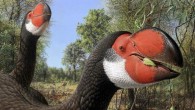
Paranthropus robustus is a small-brained extinct hominin that lived between 2 million and 1.2 million years ago in what is now South Africa. Discovered in 1938, it was among the first early hominins described and the first discovered robust australopithecine. Paranthropus robustus males were thought to be substantially larger than females — much like the size differences seen in modern-day primates. But the well-preserved adult male skull of...

Nov 10, 2020 by News Staff

Jupiter’s icy moon Europa is bombarded by a constant and intense blast of radiation from the gas giant. Different salty compounds on the moon’s surface...

Nov 9, 2020 by Natali Anderson

The greater glider (Petauroides volans), a large, nocturnal gliding marsupial endemic to Australia, isn’t one species, but rather three distinct ones. Petauroides...

Nov 9, 2020 by News Staff

Astronomers using the CHIME (Canadian Hydrogen Intensity Mapping Experiment) and FAST (Five-hundred-meter Aperture Spherical radio Telescope) telescopes...

Nov 9, 2020 by News Staff

Archaeological excavations at the site of Wilamaya Patjxa in the high Peruvian Andes have revealed a 9,000-year-old female burial associated with a big-game...

Nov 6, 2020 by Enrico de Lazaro

Paleontologists in China have uncovered exceptionally preserved fossils of a previously unknown genus and species of extinct arthropod, Kylinxia zhangi,...

Nov 5, 2020 by News Staff

An international team of paleontologists has identified a new genus and species of lambeosaurine hadrosaur from fossils dug up in Morocco, North Africa. An...

Nov 5, 2020 by News Staff

Paleontologists have uncovered a previously unknown species of cynodont that lived during the Triassic period in what is now Arizona, the United States. An...

Nov 5, 2020 by News Staff

Gentoo penguins (Pygoscelis papua) have previously been recognized to be a single species divided into several subspecies. However, a study led by University...

Nov 5, 2020 by Natali Anderson

A team of researchers in Europe has identified a new high-pressure mineral in a lunar meteorite called Oued Awlitis 001. Fragments of Oued Awlitis 001....

Nov 3, 2020 by News Staff

Filikomys primaevus, a new genus and species of multituberculate mammal that lived during the Late Cretaceous epoch, has been identified from multi-individual...

Nov 3, 2020 by News Staff

In a new study published in the journal Science, an international team of scientists sequenced the genomes of 27 ancient dogs, some of which lived up to...

Nov 2, 2020 by News Staff

In 1980, the 160,000-year-old fossilized partial jawbone of a Denisovan — the so-called Xiahe mandible — was found in Baishiya Karst Cave,...

Oct 30, 2020 by News Staff

NASA’s Juno spacecraft has been in orbit around Jupiter since 2016. One of its instruments is the ultraviolet spectrograph (UVS), which is primarily...

Oct 30, 2020 by Enrico de Lazaro

Astronomers from the OGLE (Optical Gravitational Lensing Experiment) project have discovered a Mars- to Earth-mass free-floating, or rogue, planet through...

Oct 29, 2020 by Enrico de Lazaro

Archaeologists have discovered figures of animals, mainly bison, engraved in a Gravettian style in three caves in northern Spain. Engravings in the A panel...

Oct 28, 2020 by News Staff

Using high sensitivity spectroscopic observations from the Atacama Large Millimeter/submillimeter Array (ALMA), astronomers have detected a small cyclic...

Oct 28, 2020 by News Staff

Paleontologists have described new fossils of pelagornithid birds from the middle Eocene Submeseta Formation on Seymour Island, Antarctica. An artist’s...

Oct 27, 2020 by News Staff

Astronomers using the Space Telescope Imaging Spectrograph on the NASA/ESA Hubble Space Telescope have observed the main-belt asteroid (16) Psyche, the...

Oct 26, 2020 by News Staff

Using data gathered by the Faint Object infraRed CAmera for the SOFIA Telescope (FORCAST) onboard the NASA/DLR Stratospheric Observatory for Infrared Astronomy...