Paleontology News

Jul 1, 2024 by News Staff

Fossil and molecular evidence suggests that complex multicellular organisms originated and proliferated during the Neoproterozoic Era (1,000-541 million years ago). Extreme glaciations during the Cryogenian period (720-635 million years ago), a phenomenon commonly referred to as Snowball Earth, led to a radical transformation of the Earth’s climate and oceans. New research suggests that Snowball Earth was an environmental trigger for the proliferation...

Jun 28, 2024 by News Staff

Woolly mammoths (Mammuthus primigenius) became isolated on Wrangel Island off the coast of Siberia around 10,000 years ago and persisted for over 200 generations...

Jun 28, 2024 by News Staff

A team of paleontologists from the United Kingdom and the United States has analyzed the fossil record of ammonites — marine mollusks often distinguished...

Jun 27, 2024 by News Staff

Paleontologists have unearthed a well-preserved fossil assemblage of Cambrian trilobites in the High Atlas of Morocco. The 510-million-year-old specimens...

Jun 21, 2024 by News Staff

Among the most widely promoted examples of fossil folklore is a supposed link between the Central Asian horned dinosaur Protoceratops and the griffin,...

Jun 20, 2024 by Enrico de Lazaro

A new genus and species of gracilisuchid reptile from the Triassic period has been identified from fossils found in the Santa Maria Formation in Brazil. Artistic...

Jun 20, 2024 by Enrico de Lazaro

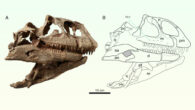
Paleontologists have identified a new genus and species of centrosaurine dinosaur from the fossilized remains found in the Judith River Formation in the...

Jun 18, 2024 by News Staff

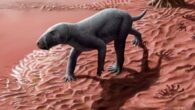
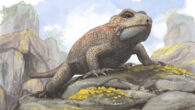
The ‘Elgin Marvel’ fossil is a block of reddish sandstone containing a natural mould of a skull and jaw of Permian dicynodont found in the Hopeman...

Jun 17, 2024 by Enrico de Lazaro

A new genus and species of unenlagiine dinosaur has been identified by paleontologists in Argentina. Named Diuqin lechiguanae, it fills a substantial gap...

Jun 17, 2024 by Enrico de Lazaro

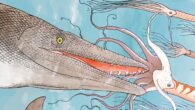
The 246-million-year-old specimen represents the geologically oldest sea-going reptile from the southern hemisphere. This image shows nothosaurs swimming...

Jun 13, 2024 by Enrico de Lazaro

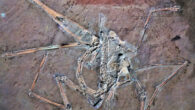
Paleontologists in Australia have discovered fossilized skeletal remains that belonged to a previously unknown, 100-million-year-old anhanguerian pterosaur. Life...

Jun 12, 2024 by News Staff

About 2.5 billion years ago, free oxygen first started to accumulate to meaningful levels in Earth’s atmosphere, setting the stage for the rise of complex...

Jun 11, 2024 by News Staff

With an estimated body mass of about 10 kg, the newly-discovered species, Buronius manfredschmidi, represents the smallest known hominid. Danuvius guggenmosi,...

Jun 10, 2024 by Enrico de Lazaro

Paleontologists have redescribed Epitornoceras baldisi, an enigmatic species of ammonoid cephalopod from the Devonian period of Argentina, using new fossils...

Jun 5, 2024 by Enrico de Lazaro

Pachystropheus rhaeticus — one of the last thalattosaur, a large sea-lizard that behaved like an otter — was able to move on land, but was...

Jun 4, 2024 by Enrico de Lazaro

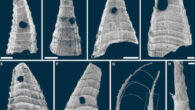
Paleontologists in Japan have described a new species of shark-like cartilaginous fish based on the fossilized teeth from the Late Triassic Momonoki Formation. The...

Jun 4, 2024 by Enrico de Lazaro

A team of paleontologists has unearthed the fossil remains of a ctenochasmatoid pterosaur from the Kimmeridge Clay Formation in Oxfordshire, central England....

Jun 4, 2024 by Enrico de Lazaro

The extinction of the woolly rhinoceros (Coelodonta antiquitatis) at the onset of the Holocene remains an enigma, with conflicting evidence regarding its...

Jun 4, 2024 by News Staff

Paleontologists from the University of Texas at Austin and elsewhere have discovered a fragmentary jaw of the scimitar-toothed cat Homotherium on McFaddin...

Jun 3, 2024 by News Staff

Paleontologists in Australia have unearthed the fossilized skull of Genyornis newtoni, a species of giant flightless ‘mihirung’ that became extinct...