A group of researchers from Emory University in the United States and Lancaster University and the University of Leeds, both in the UK, has discovered...
The honeybee (Apis mellifera) has joined the ranks of dolphins, parrots, and primates, in demonstrating the ability to understand the concept of zero numerosity....
A team of scientists at Case Western Reserve University School of Medicine has created the first artificial human prion.
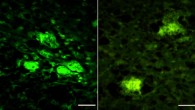
Thioflavin S positive amyloid...
A multicenter clinical trial of DCVax-L, a personalized vaccine that targets the aggressive brain cancer glioblastoma, has indicated improved patient survival...
A set of three nearly identical genes found only in humans, NOTCH2NL, appears to play a critical role in the development of our large brains, according...
Activation of the immune system by the Escherichia coli infection may temporarily disrupt formation of long-term memories in older rats by reducing levels...
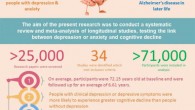
Individuals with affective problems (depression and anxiety) are at an increased risk of a greater decline in cognitive state, according to a review of...
A team of neuroscientists from the University of California, San Francisco, and Loma Linda University has identified the first potential treatment for...
A species of extinct hominin called Homo naledi was discovered in 2013 in a remote cave chamber of the Rising Star cave system in South Africa. This species...
A team of Indiana University researchers has reported the first evidence that non-human animals (rats) can replay a stream of multiple episodic memories....
A research team led by a University of Cambridge scientist has found that in the brain, cholesterol acts as a catalyst which triggers the formation of...
Middle-aged to elderly men and women who take frequent sauna baths have a substantially reduced risk of new-onset stroke, according to a 15-year follow-up...
A duo of scientists at the University of Oxford, UK, has proposed an evolutionary framework to understand why our gut microbiota affects the brain and...
Consuming dark chocolate with at least 70% cacao has positive effects on stress levels, inflammation, mood, memory and immunity, according to two studies...
New research, published in the Schizophrenia Bulletin, has revealed that muscular strength, measured by handgrip, is an indication of how healthy our brains...
Taking part in a hot chili pepper eating contest might have some unexpected consequences, according to a team of doctors from Bassett Medical Center and...
A new study published in the journal Neuron links willingness to take risks to brain structure and function, specifically the amygdala and the prefrontal...
A daily regimen of non-prescription NSAIDs (nonsteroidal anti-inflammatory drugs) such as ibuprofen can prevent the onset of Alzheimer’s, according to...
Betanin, a natural pigment found in the sugar beet (Beta vulgaris), could eventually help slow the accumulation of misfolded proteins in the brain, a process...