A new species of the sauropod dinosaur genus Mamenchisaurus has been discovered in China dating back to the Late Jurassic epoch.

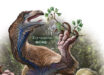
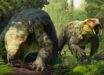
Life reconstruction of another Mamenchisaurus species, Mamenchisaurus sinocanadorum. Image credit: Júlia d’Oliveira.
Mamenchisaurus sanjiangensis roamed our planet during the Early Oxfordian age of the Jurassic period, some 160 million years ago.
This dinosaur was a diverged mamenchisaurid that shares a relatively near relationship with most other Mamenchisaurus species.
“Sauropod dinosaur diversity reached an apparent peak in the Late Jurassic, comprised many wide geographically distributed non-neosauropodan eusauropod lineages (e.g., mamenchisaurids, turiasaurians), and primarily of a wide array of near-globally distributed members of neosauropodan clades (Diplodocoidea and Macronaria),” said Dr. Hui Dai, a paleontologist at the Chongqing Institute of Paleontology and the Chongqing Key Laboratory of Paleontology and Paleoenvironment Co-evolution, and colleagues.
“The Late Jurassic sedimentary units of China preserve rich sauropod records, and most of them are dominated by mamenchisaurids, although the exact neosauropodan remains are widely recognized from early Middle Jurassic.”
“The dominance of Asian sauropod faunas is quite different from that of contemporaneous European and North and South American Formations.”
“Moreover, most of the Late Jurassic Asian sauropod diversity comes from the deposits assigned to the lower parts, particularly near the Middle-Late Jurassic transition period.”
The single partial skeleton of Mamenchisaurus sanjiangensis was unearthed at the fossil site of Chongqing in southwest China.
“The remains were found in purplish-red silty mudstones near the middle portion of the Upper Shaximiao Formation,” the paleontologists said.
“Traditionally, a general Callovian-Oxfordian age was inferred for this formation, whereas the exact age for this formation is still controversial.”
The discovery of Mamenchisaurus sanjiangensis enriches the diversity of the early diverging sauropod dinosaurs and provides additional information to help understand the evolutionary history of sauropods in northwest China.
“A refined understanding of the evolutionary relationships of Middle-Late Jurassic Chinese eusauropods is pertinent to testing hypotheses concerning the isolation of East Asia from western Laurasia and Gondwana at this time and the paleobiogeographical history of early branching sauropods and eusauropods more broadly,” the researchers said.
“However, our understanding of this evolutionary stage is far from complete, and reexamination of specimens is needed for East Asian lineages to fill the ‘gaps’.”
The study was published on November 25, 2025 in the journal Scientific Reports.
_____
H. Dai et al. A new mamenchisaurid sauropod dinosaur from the Upper Jurassic of Southwest China reveals new evolutionary evidence from East Asian eusauropods. Sci Rep, published online November 25, 2025; doi: 10.1038/s41598-025-29995-z