A team of scientists at the University of Montreal, Canada, has created a DNA-based nanothermometer that is 20,000 times smaller than a human hair.
Scientists...
A study led by Dr. Kieren Mitchell of the University of Adelaide sheds new light on the evolution of what are believed to be the largest bears that ever...
A new tool called the Geographic Population Structure (GPS), which converts DNA data into its ancestral coordinates, has pinpointed origin of Yiddish speakers,...
Neanderthal Y-chromosome genes disappeared from the genome of modern humans long ago, suggests a new study published this week in the American Journal...
A single-molecule diode, the world’s smallest, has been created by a team of researchers from Ben-Gurion University of the Negev and the University of...
Residents of the Pacific islands of Melanesia share fragments of genetic code with two early human species: Denisovans, whose remains were found in Siberia,...
The first analysis of nuclear DNA from Sima de los Huesos hominins, conducted by Dr. Matthias Meyer of the Max Planck Institute for Evolutionary Anthropology...
A new study in rats led by Dr. Beth Allison of the University of Cambridge, UK, suggests that the aging clock begins ticking even before we are born and...
An international group of scientists has successfully sequenced the whole mitochondrial genome of the ancient glyptodont – a heavily armored herbivorous...
A multinational group of researchers has found strong genetic evidence of an interbreeding event between Neanderthals and anatomically modern Homo sapiens...
A large team of scientists led by Vanderbilt University geneticist John Capra has found surprising correlations between Neanderthal-derived DNA and disease...
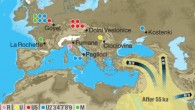
DNA evidence lifted from the bones and teeth of hunter-gatherers who lived in Europe from 35,000 years ago (Late Pleistocene) to 7,000 years ago (early...
Work done by Dr Jessica Cooke Bailey of Case Western Reserve University School of Medicine and co-authors has led to the discovery of three genes that...
Interbreeding of anatomically modern Homo sapiens with Neanderthals (Homo neanderthalensis) around 40,000 years ago may have left humans with gene variants...
Using black widow spiders, a team of scientists has successfully extracted, amplified, and sequenced mitochondrial DNA from spider webs that identified...
A new study published this week in the journal Biology Letters overturns the popular assumption that the mitochondrial evolution is only visible over long...
The first dogs were domesticated about 15,000 years ago in Central Asia, perhaps near present-day Nepal and Mongolia, suggests a genetic study published...
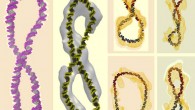
Using a multidisciplinary approach, an international team of scientists has revealed in never-before-seen detail the 3D structure of biologically active...
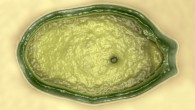
Viruses are fully-alive organisms that share a long evolutionary history with cells, according to a new study published last week in the journal Science...