As anatomically modern Homo sapiens migrated out of Africa and around the rest of the world, they met and interbred with at least four different hominin...
A 210,000-year-old partial skull found in southern Greece about four decades ago has been identified as the earliest example of anatomically modern Homo...
A 3-rooted lower molar, a rare trait primarily found in modern Asian lineages, was previously thought to have evolved after Homo sapiens dispersed from...
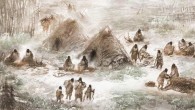
Northeastern Siberia has been inhabited by humans for more than 40,000 years but its deep population history remains poorly understood. In a new study,...
How food production entered sub-Saharan Africa some 5,000 years ago and the ways in which herding and farming spread through the continent in ancient times...
Between 8 and 2 million years ago, cosmic-ray energy from one or more nearby supernovae reached Earth and pummeled the planet’s atmosphere, initiating...
New research demonstrates that Asian regions such as the Gobi Desert and the Altai Mountains could have periodically acted as corridors and routes for...
An international team of researchers has found numerous fragments of charred starch plant tissues in 120,000-year-old hearths at the archaeological site...
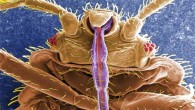
Bedbugs are blood-sucking parasites in the family Cimicidae. A multinational research team led by University of Sheffield, the University Museum Bergen...
A new study that analyzed dental evolutionary rates in early Neanderthals from Sima de los Huesos, a cave site in Atapuerca Mountains, Spain, found that...
In Grotta della Basura, a deep cave near Toirano in northern Italy, a team of archaeologists has made a surprising discovery: a number of human hand- and...
In 1980, a Buddhist monk found the right half a fossilized hominin jawbone in Baishiya Karst Cave on the Tibetan Plateau, Xiahe, China. An analysis of...
Neanderthals had just as many head trauma injuries as Upper Paleolithic humans, according to new research from the University of Tübingen, Germany.
Neanderthals...
Neanderthal DNA introgressed in modern humans helped them adapt against RNA viruses, according to new research published in the journal Cell.
Interbreeding...
A cross-hatched pattern drawn with an ochre crayon on a small piece of siliceous rock (silcrete) is 73,000 years old. It pre-dates the earliest previously...
The transition from Neanderthals to modern humans in Europe occurred during a period of recurring cold climate cycles. In a new study, a team of researchers...
Modern pygmies living in a village near the Liang Bua cave on the Indonesian island of Flores, where fossils of the dwarfed human species Homo floresiensis...