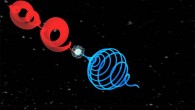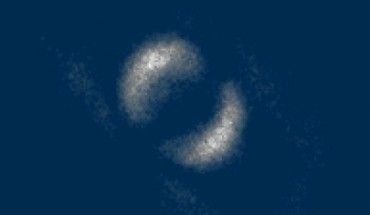
A team of physicists from the School of Physics and Astronomy at the University of Glasgow has captured an image of Bell entanglement, a strong form of quantum entanglement. Full-frame single image of Bell entanglement. Scale bar – 1 mm. Image credit: Moreau et al, doi: 10.1126/sciadv.aaw2563. Two particles which interact with each other — like two photons passing through a beam splitter, for example — can sometimes remain connected,...