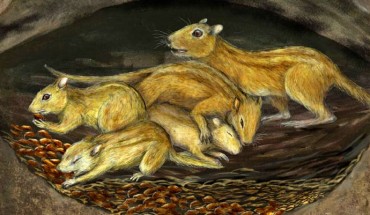
Filikomys primaevus, a new genus and species of multituberculate mammal that lived during the Late Cretaceous epoch, has been identified from multi-individual aggregates of skulls and skeletons found at a dinosaur nesting site in Montana, the United States. The well-preserved fossils indicate that Filikomys primaevus engaged in multi-generational, group-nesting and burrowing behavior, representing the first example of social behavior in a Mesozoic...