Paleontology News

Jan 29, 2018 by News Staff

A new species of bristle worm that lived about 508 million years ago (Cambrian period) has been identified from fossils found in Marble Canyon and Burgess Shale sites, both in British Columbia, Canada. Kootenayscolex barbarensis. Image credit: Danielle Dufault / Royal Ontario Museum. Dubbed Kootenayscolex barbarensis, the ancient worm was a type of annelid, a highly diverse group of animals that includes modern-day leeches and earthworms. “While...

Jan 26, 2018 by News Staff

Researchers have long wondered how horses evolved from a five-toed ancestor to the single-toed animal we know today. While it is largely believed that...

Jan 17, 2018 by News Staff

A newly discovered species of bird-like dinosaur, Caihong juji, had a beautiful iridescent coloration, according to a study published in the journal Nature...

Jan 16, 2018 by News Staff

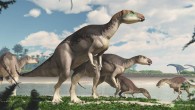
A new species of turkey-sized herbivorous dinosaur being named Diluvicursor pickeringi has been unearthed in southeastern Australia. Artist’s impression...

Jan 12, 2018 by News Staff

An international group of paleontologists has found the oldest fossilized remains of insects from the order Lepidoptera known to date. The fossils, mostly...

Jan 11, 2018 by News Staff

Paleontologists say they’ve found the fossilized remains of a new genus and species of bat that lived in New Zealand between 19 and 16 million years...

Dec 25, 2017 by News Staff

Habelia optata, a close relative of the ancestor of modern-day spiders, scorpions and horseshoe crabs, evolved an extremely complex head to hunt and eat...

Dec 19, 2017 by News Staff

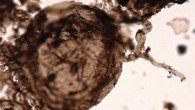
A detailed analysis of 3.465-billion-year-old microbial microfossils provides evidence to support an increasingly widespread understanding that life in...

Dec 18, 2017 by Enrico de Lazaro

An international team of paleontologists has found the remains of an unusual prehistoric bear that lived 3.5 million years ago (Pliocene epoch) in Canada’s...

Dec 14, 2017 by Natali Anderson

A mostly complete and moderately well-preserved fossilized specimen is thought to represent the first Triassic horseshoe crab found in North America, according...

Dec 13, 2017 by News Staff

Paleontologists have found the fossil remains of a giant prehistoric penguin that lived about 59 to 56 million years ago (Paleocene epoch) in what is now...

Dec 13, 2017 by News Staff

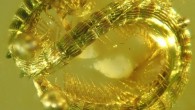
Preserved in 99 million-year-old Burmese amber paleontologists found a tick grasping a dinosaur feather. The discovery, reported in the journal Nature...

Dec 8, 2017 by News Staff

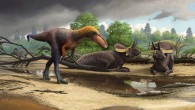
Paleontologists have discovered what they say is a completely unexpected semi-aquatic theropod dinosaur that lived 75 million years ago in what is now...

Dec 7, 2017 by News Staff

Paleontologists have discovered a new species of carnivorous marsupial lion that lived 26 to 18 million years ago (late Oligocene to early Miocene) in...

Dec 3, 2017 by News Staff

An analysis of mitochondrial and nuclear DNA from fossils of extinct New World stilt-legged horses reveals that, contrary to previous findings, these enigmatic...

Dec 1, 2017 by News Staff

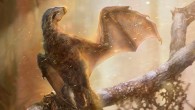
An international team of paleontologists has discovered a fossil-rich site with more than 200 fossilized eggs of the Cretaceous pterosaur species Hamipterus...

Nov 30, 2017 by News Staff

A study published this week in the journal Palaeontology has revealed new details about feathers of the chicken-sized, feathered, bird-like dinosaur Anchiornis. A...

Nov 16, 2017 by Enrico de Lazaro

The trackway of a plant-eating sauropod dinosaur has been excavated in the Jura Mountains, France. This 508-foot (155 m) line of footsteps is the longest...

Nov 15, 2017 by News Staff

A research team led by University of Wisconsin-Milwaukee paleoecologist Erik Gulbranson has found the fossil remnants of a Permian-age forest on the frozen...

Nov 8, 2017 by Enrico de Lazaro

A group of paleontologists from the University of Portsmouth has discovered two new species of mammals that lived 145 million years ago in what is now...