Dr. Dirk Knaust, a geologist with the Norwegian energy company Equinor ASA, has identified plesiosaur regurgitalites — the technical term for fossilized vomit — from preserved in rock cores drilled beneath the North Sea, offering a rare window into how these long-necked marine reptiles fed in the Middle and Late Jurassic seas.
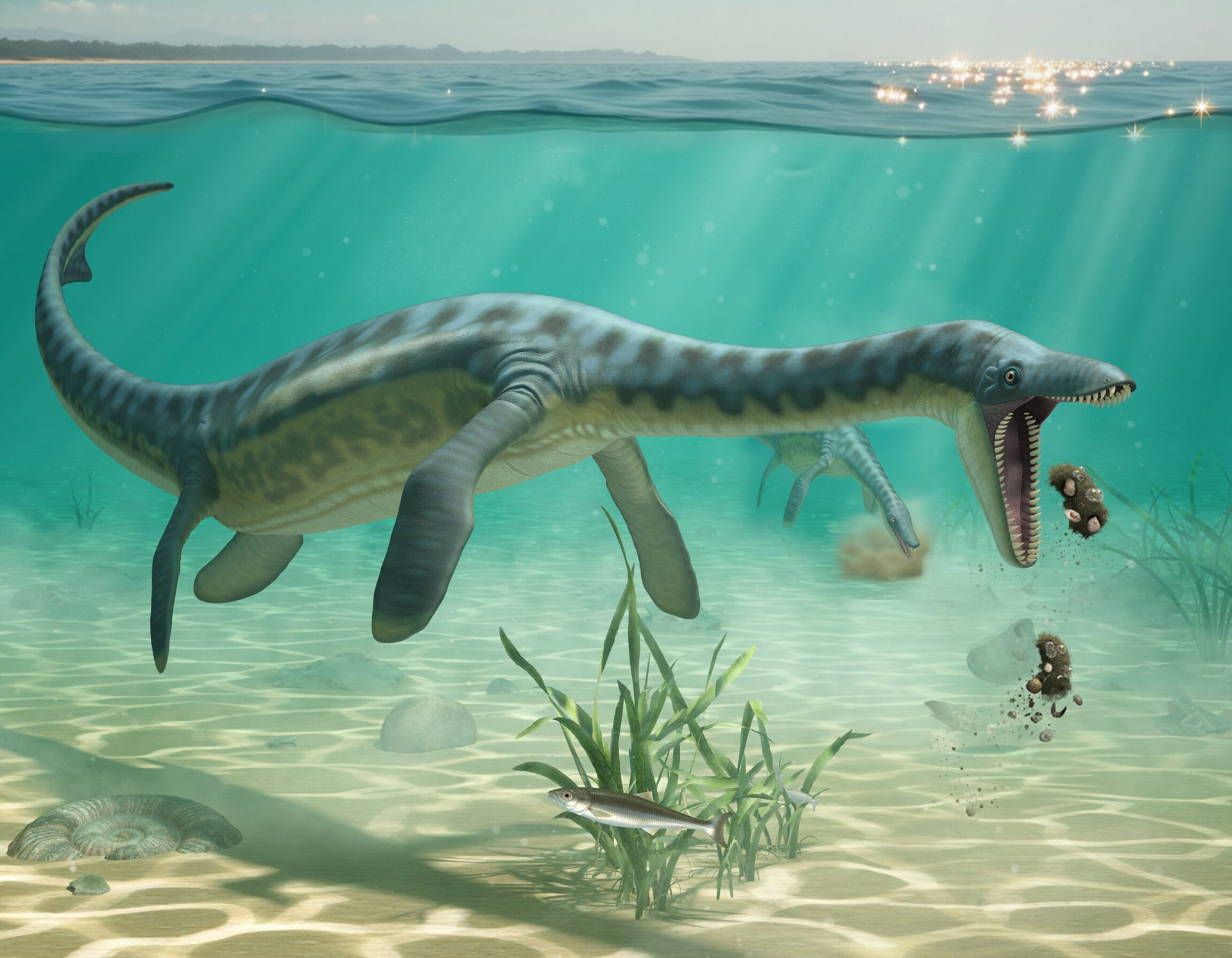
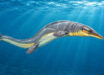
An artist’s impression of a plesiosaur feeding on the sea floor. Image credit: Lente Artemieff.
“Regurgitalites have been recognized as such for a century, but only recently they became better understood and systematically described,” Dr. Knaust said.
The researcher examined regurgitalites scattered through Middle to Upper Jurassic rock layers offshore Norway.
The fossils, most just a few centimeters across, were recovered from cores drilled through delta deposits near the giant Troll oil and gas field on the Horda Platform.
The tightly packed mix of broken and whole shells from bivalves, tube-dwelling worms called serpulids, and crinoids — along with bits of fossilized wood — shows telltale signs of having passed through a predator’s digestive system, including corroded, etched shell surfaces and a jumble of species that would never naturally occur together in one spot.
What makes the material particularly puzzling is that it consists of creatures that need full ocean salinity, found in sediments deposited where a river met the sea and fresh water diluted the salt water.
This mismatch means something carried the food remains from farther offshore into the shallower, brackish delta before spitting them out.
Based on tooth shape, feeding style, and even preserved stomach contents from related species found elsewhere, the scientist points to a family of long-necked, small-headed plesiosaurs called Cryptoclididae as the most likely regurgitalite producers.
The inferred picture is of a marine reptile that foraged along the seafloor for clams, worms, and other bottom-dwelling creatures farther out at sea, then swam toward shore to bring up what it could not digest — much as some seals and dolphins do today.
“There has been a lot of research into fossilized vomit over the last decade but most of it has focused on vertebrates eating other vertebrates,” Dr. Knaust said.
“This is the first time that plesiosaur vomit, and the shellfish in it, have been identified, and these creatures tell us a great deal.”
The author formally names the new trace fossil type Vomitus, with three specific varieties distinguished by their dominant contents: one rich in bivalve shells, one dominated by serpulid worm tubes, and one made up mostly of crinoid fragments.
Similar clumps had been found in isolated instances in other parts of the world over the past century, sometimes mistaken for storm deposits or misidentified fecal material, but the Norwegian specimens represent the first such fossils documented in continuous drill-core material and the first attempt to systematically classify them.
“The plesiosaur is a fascinating animal,” Dr. Knaust said.
“These findings add to other kinds of evidence that help us to understand their abilities and behavior.”
“And this is still just the beginning. There’s so much more we can learn from picking through what extinct animals threw up after dinner.”
A paper on the findings was published in the Geological Magazine.
_____
Dirk Knaust. 2026. The fate of supposed plesiosaur vomit from Jurassic delta deposits offshore Norway. Geological Magazine 163: e43; doi: 10.1017/S0016756826100806