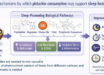
Few people enjoy their first sip of coffee, yet millions come to crave it. Scientists at the University of California, San Francisco, say they have identified part of the reason: a slow dopamine signal that runs from the gut to the brain and teaches us to like foods that make us feel good. Their findings appear today in the journal Nature.

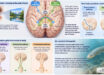
Grove et al. identify a dopamine pathway that enables learning about the nutrient content of food. Image credit: Sci.News.
“Dopamine has been intensely studied because it helps guide our behavior by teaching us what is worth pursuing. Scientists know a great deal about its fast-acting pathways,” said University of California, San Francisco’s Professor Zachary Knight, senior author of the study.
“But the slower side to dopamine is much more of a mystery, and we are much less conscious of it in our daily lives.”
“Sensors in the digestive system detect nutrients such as sugar and fat and send signals toward the brain.”
“The resulting dopamine signal builds after food reaches the gut and can persist for many minutes.”
In experiments with mice, the researchers delivered sugar water or a milkshake-like liquid directly into the animals’ stomachs, bypassing taste.
The nutrients set off a sustained release of dopamine in a part of the brain called the basolateral amygdala.
When the scientists blocked that signal, the mice still ate normally but failed to learn that a new flavor meant calories.
When they artificially stimulated the same dopamine fibers after the mice tasted a calorie-free flavor, the animals came to prefer it.
“We’ve shown that this slow dopamine system is what drives us to learn to like certain foods over time, and we can see where and how that happens,” Professor Knight said.
“Once your brain has learned to associate the flavor of your favorite brew with the uplift from caffeine, coffee starts to taste a lot better.”
A reanalysis of an earlier PET study of 13 men, along with a new fMRI study of 38 adults, found nutrient-linked activity in the same region.
In both mice and humans, the response was stronger on the left side of the brain, a lopsidedness that surprised the authors.
The findings raise the possibility that food preferences could one day be adjusted.
“One intriguing question involves GLP-1 drugs. These medications mimic a hormone produced in the gut and can dramatically change eating behavior,”
“We did not study GLP-1 drugs, and whether they affect the newly identified pathway is unknown.”
“The drugs could potentially reduce nutrient-triggered dopamine signaling, making food less reinforcing over time.”
“That raises a broader possibility: rather than simply affecting how hungry or full someone feels, future treatments might someday influence the underlying learning process that makes some foods particularly desirable.”
“By understanding the steps between nutrient detection in the gut and learning in the brain, it might be possible to fine-tune them to subtly change our preferences for different foods.”
_____
J.C.R. Grove et al. The neural basis of flavor-nutrient learning. Nature, published online November 4, 2026; doi: 10.1038/s41586-026-11229-5