Humans and chimpanzees share more than 96% of their protein-coding DNA, yet human brains are roughly three times larger and far more complex. New research led by Lund University scientists suggests that part of the explanation may lie in a viral infection that struck chimpanzee ancestors millions of years ago and never reached ours.
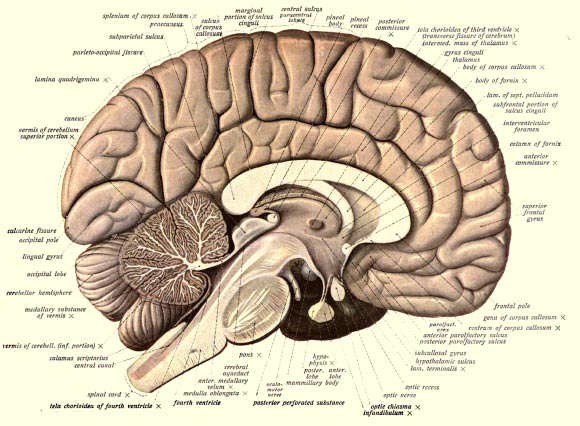
Gerdes et al. show that LINC00662, a human-specific transcript expressed during brain development, plays a role in neuronal maturation, axon outgrowth, and neural organoid development. Image credit: Johannes Sobotta.
“Over the past 5 to 7 million years, humans and chimpanzees have diverged in brain size, structure, and cognition despite high conservation of protein-coding genes,” said Lund University’s Professor Johan Jakobsson, senior author of the study.
“A large proportion of primate genome sequences is made up of transposable elements, with one major family being endogenous retroviruses, which have expanded throughout primate evolution.”
“In humans and chimpanzees, at least 8% of the genome consists of retroviruses.”
In their research, Professor Jakobsson and his colleagues focused on a retrovirus called PTERV1.
It invaded the germ line of African ape ancestors roughly 5 to 7 million years ago and left behind its genetic code.
The chimpanzee genome carries at least 150 insertions of PTERV1, while the human genome has none.
“The virus we investigated specifically affected chimpanzees,” Professor Jakobsson said.
“Yet humans and chimpanzees have largely the same genetic makeup. That is why it is important to understand the differences in how genes are regulated.”
The researchers grew small clusters of developing brain tissue, known as neural organoids, from stem cells of chimpanzees and humans.
Using long-read DNA sequencing, they found that nearly all PTERV1 insertions they identified in the chimpanzee genome were heavily chemically tagged with methyl groups, a mark associated with gene silencing.
The scientists then looked for genes that contain a PTERV1 insertion and behave differently in the two species.
LINC00662, a gene that produces a long noncoding RNA, stood out. It was highly active in human organoids but silent in chimpanzee ones.
In chimpanzees, a roughly 7,000-letter viral insertion sits inside the gene, and the DNA around it is heavily methylated.
The insertion appears to be present in chimpanzees and bonobos but not in other apes examined.
“The gene was strongly expressed in the human organoids, but not at all in the chimpanzee organoids,” said first author Patricia Gerdes, a postdoctoral researcher at Lund University.
In human cells, LINC00662 was most active in early fetal brain development.
When the researchers silenced the gene in human organoids, tissue at 30 days showed weaker staining for a marker of young neurons in the region where new neurons extend fibers.
Genes involved in axon and dendrite growth were more active, which they interpret as a possible compensatory response.
“Our findings reveal a mechanism by which endogenous retroviral insertions contributed to human-chimpanzee brain divergence,” the scientists concluded.
The study was published October 23 in the journal Science Advances.
_____
Patricia Gerdes et al. 2026. Retroviral insertions contributed to the divergence of human and chimpanzee brains. Science Advances 12 (43); doi: 10.1126/sciadv.aeg5791