Paleontologists have described what they say is the first fully marine species of a stem amphibian, Gerrothorax maritimus, based on two nearly complete skeletons from the Late Triassic epoch of China.
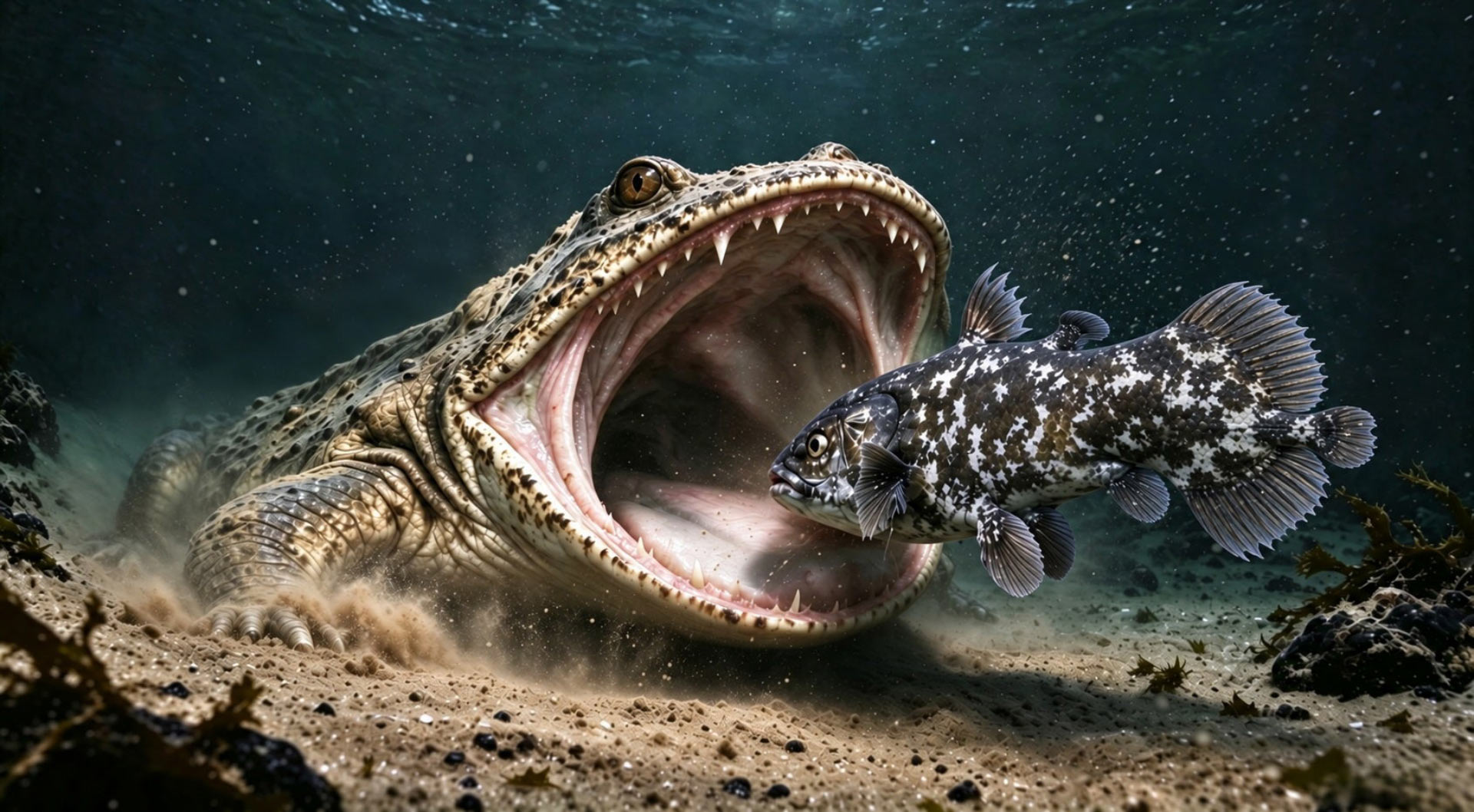
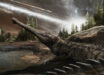
Life reconstruction of Gerrothoroax maritimus. Image credit: Chen Geng / Guizhou University.
Of the more than 8,000 species of amphibians alive today, none lives in the ocean.
Frogs, salamanders and their relatives depend on fresh water, and fewer than 2% of species show even some tolerance for salt.
Mammals, reptiles and birds have all sent species to sea, so amphibians have long stood out as the holdouts.
Gerrothorax maritimus could be the first known amphibian to have lived without access to land or fresh water.
The species lived in what is now China during the Late Triassic epoch, approximately 237 million years ago.
The animal measured 73.7 cm (29 inches) in length and had a flattened, heavily armored body that may have reduced water loss, while its gills and digestive system may have helped it manage salt and swallowed seawater.
“If you think about today’s amphibians, this animal is unusual because it’s big,” said Professor Ryosuke Motani, a paleontologist at the University of California, Davis.
“It’s probably, body mass-wise, about the same as the giant salamander, but what’s different is that giant salamanders are elongated whereas this animal is really chunky.”
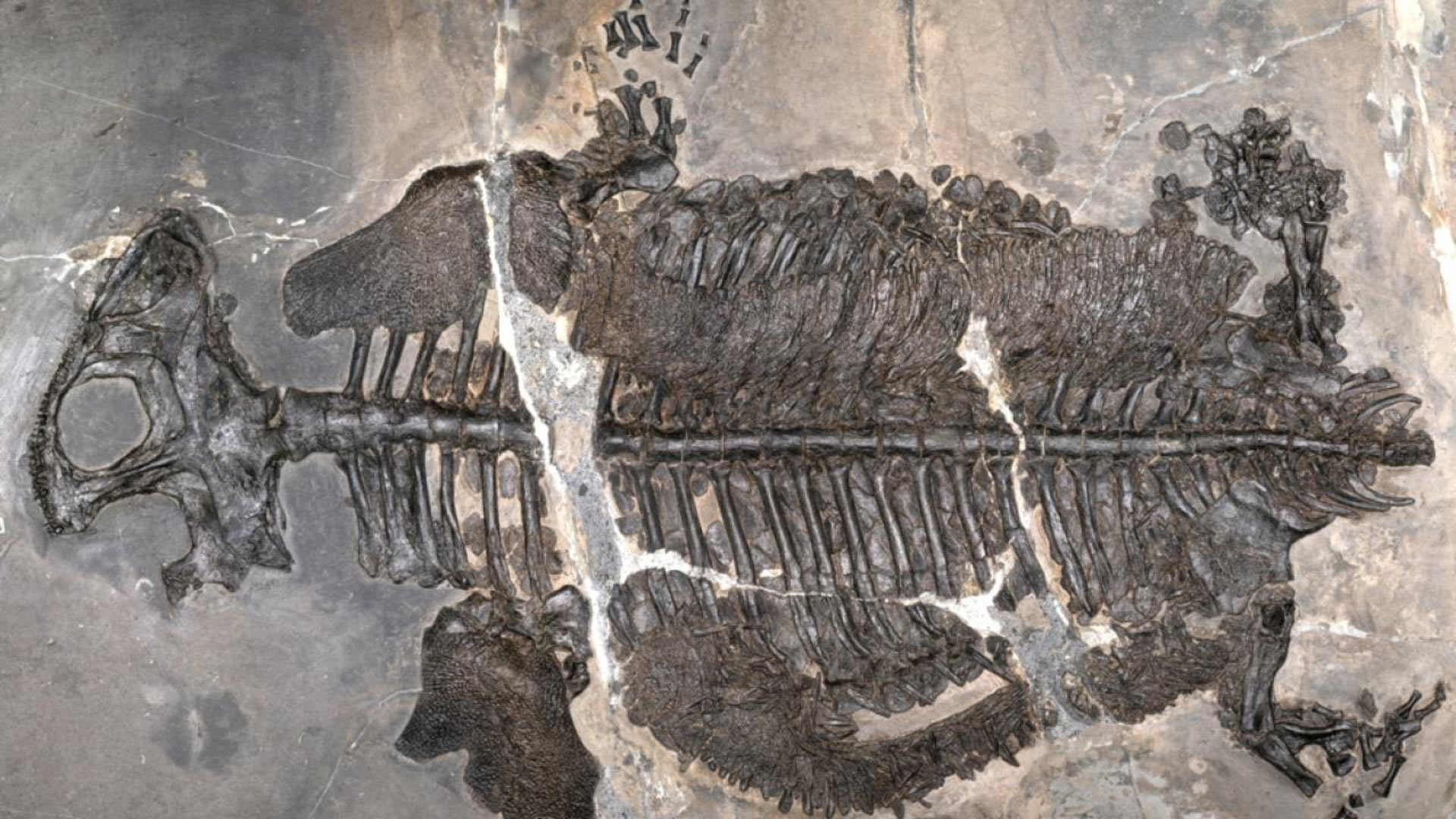
The nearly complete skeleton of Gerrothorax maritimus. Image credit: Ryosuke Motani, UC Davis.
Professor Motani and colleagues hypothesize that Gerrothorax maritimus was a bottom-dwelling suction feeder.
“They would probably just wait at the bottom and then when prey comes around, they would just suck it in,” Professor Motani said.
“This feeding style is similar to the wobbegong, a modern, bottom-dwelling carpet shark.”
The two specimens of Gerrothorax maritimus were found in China’s Guizhou province, in rock that formed dozens of kilometers from any large landmass.
And their strontium isotope signature matched what is expected of Late Triassic seawater.
“Gerrothorax maritimus’ articulated occurrence far from land, together with associated strontium isotope record, suggests life in fully marine regimes,” the authors said.
“It descended from a lineage with complete body armor, which would limit skin-based water, gas or salt exchanges typical of amphibians and instead enforced the use of the gill and gut that can become more tolerant of salt — this probably prepared them for marine adaptation.”
Their paper was published today in the journal Nature Ecology & Evolution.
_____
L. Diao et al. A fully marine stem amphibian from the Late Triassic of China. Nat Ecol Evol, published online October 26, 2026; doi: 10.1038/s41559-026-03209-9