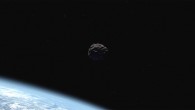
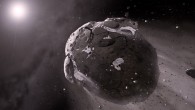
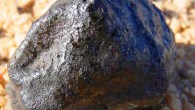
A 6-foot (2 m) wide asteroid called 2018 LA disintegrated harmlessly over Botswana, Africa, just hours after its discovery on Saturday morning (June 2,...
The Cretaceous/Paleogene mass extinction ended the reign of the dinosaurs and wiped out 76% of species on Earth. It was caused by the impact of an asteroid...
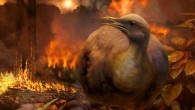
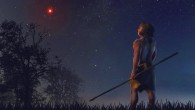
Ground-dwelling birds survived while their close, tree-dwelling relatives went extinct during the end-Cretaceous mass extinction event, caused by the impact...
2015 BZ509, an object in Jupiter’s co-orbital region with a retrograde motion around the Sun, is the first known asteroid to have been captured from...
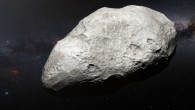
An international team of astronomers has found that a small Kuiper Belt object called 2004 EW95 is a carbonaceous (carbon-rich) asteroid — the first...
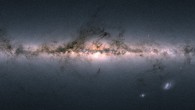
ESA’s Gaia mission has released the largest catalogue ever of Milky Way stars. It includes the positions on the sky for approximately 1.7 billion stars,...
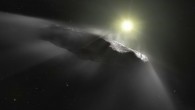
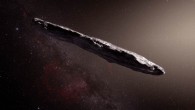
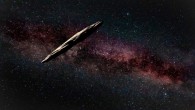
1I/2017 U1 ‘Oumuamua, the first asteroid of extrasolar origin identified in our Solar System, has had a violent past which is causing it to tumble around...
An intermediate-sized asteroid discovered sixteen years ago will fly safely past Earth on February 4, 2018 at 4:30 p.m. EST (1:30 p.m. PST, 21:30 UTC).
This...
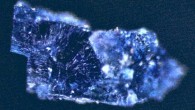
A team of researchers from the United States, UK and Japan has found liquid water and a mix of complex organic compounds in 4.5-billion-year-old salt crystals...
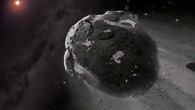
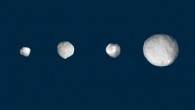
ESO’s Spectro-Polarimetric High-contrast Exoplanet Research (SPHERE) instrument, installed on the Very Large Telescope at the Paranal Observatory in...
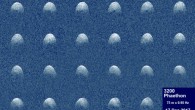
A sequence of radar images of the near-Earth asteroid (3200) Phaethon was obtained in December 2017 by astronomers using the NASA-funded planetary radar...
Astronomers from the Breakthrough Listen initiative are reporting preliminary results and making initial data available from its observations of 1I/2017...