The thylacine (Thylacinus cynocephalus) is the largest of modern-day carnivorous marsupials and was hunted to extinction by European settlers in Australia....
In a large study of U.S. adults, higher olive oil intake was associated with a moderately lower risk of fatal dementia, irrespective of diet quality.
Increasing...
Espresso coffee is among the most consumed beverages in the world. Recent studies report a protective activity of the coffee beverage against neurodegenerative...
Do we only hear sounds? Or can we also hear silence? These questions are the subject of a centuries-old philosophical debate between two camps: the perceptual...
A new study published in the journal eLife elucidates the honeybee’s behavioral strategy to associate sensory cues with rewards of different values....
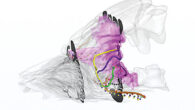
Scientists from Ohio State University and elsewhere have developed a 3D computer model of the nose of the domestic cat (Felis catus) and simulated how...
Plain caffeine only partially reproduces the effects of drinking a cup of coffee, activating areas of the brain that make you feel more alert but not the...
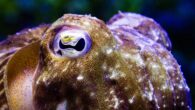
Scientists from the Max Planck Institute for Brain Research and the Okinawa Institute of Science and Technology have studied camouflage in the common cuttlefish...
Importantly, the impaired neuronal responses are not restored after diet-induced weight loss, according to a new study led by Amsterdam University Medical...
Taking someone else’s visual perspective marks an evolutionary shift in the formation of advanced social cognition. It enables using others’ attention...
The ability to make inferences based on statistical information has so far been tested only in animals having large brains in relation to their body size,...
Regular Internet usage was associated with approximately half the risk of dementia compared to non-regular usage in new research from New York University.
Cho...
The brain’s powerful information processing capacity can be largely attributed to neuronal microcircuits established by synaptic connectivity patterns....
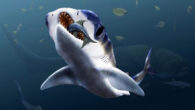
Paleontologists have described a new genus and species of broad-snouted chondrichthyan fish from several fossilized specimens found in Morocco.
Reconstruction...
Western diets rich in fat and sugar promote excess calorie intake and weight gain; however, the underlying mechanisms are unclear. To close this gap, researchers...
Using their non-invasive sensors, Professor Francesca Iacopi from the University of Technology Sydney and her colleagues have demonstrated hands-free communication...
Among animals, humans stand out in their consummate propensity to self-induce altered states of mind. Archaeology, history and ethnography show these activities...
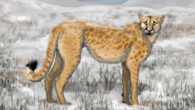
Miracinonyx trumani is an extinct species of cheetah-like cat that roamed the North American prairies and steppe terrains more than 13,000 years ago.
Miracinonyx...
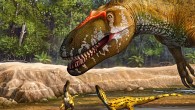
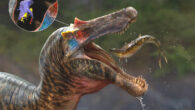
Using X-ray computed tomography scan data, paleontologists reconstructed the braincase endocasts of Baryonyx walkeri and Ceratosuchops inferodios from...