Using infrared spectral data from NASA’s Spitzer Space Telescope, Instituto de Astrofísica de Canarias astronomer has detected the aromatic amino acid...
Using the 570-megapixel Dark Energy Camera at NSF/NOIRLab Cerro Tololo Inter-American Observatory in Chile, astronomers have produced a stunning image...
AT2021lwx occurred nearly 8 billion years ago and was more than 10 times brighter than any known supernova explosion. The event was likely caused by the...
As part of the VISIONS survey program, astronomers have surveyed five nearby star-forming molecular cloud complexes associated with the constellations...
Astronomers using ESO’s Very Large Telescope (VLT) have detected three distant gas clouds whose chemical composition matches what they expect from the...
This new photo of the reflection nebula NGC 1333 was taken in celebration of the 33rd anniversary of the launch of the NASA/ESA Hubble Space Telescope...
Astronomers using the Near Infrared Camera (NIRCam) onboard the NASA/ESA/CSA James Webb Space Telescope have revealed new details surrounding the dark...
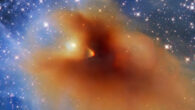
The Hubble team has released a detailed photo taken by the NASA/ESA Hubble Space Telescope of the orange molecular cloud CB 130-3.
This Hubble image shows...
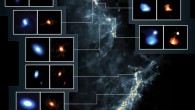
Astronomers using NSF’s Karl G. Jansky Very Large Array and the Atacama Large Millimeter/submillimeter Array have detected 97 disks of gas and dust around...
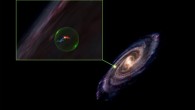
Space Telescope Science Institute astronomer and data visualization expert Dr. Catherine Zucker and her colleagues have shown how a chain of events beginning...
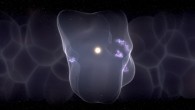
The 490-light-year-wide void is located among the constellations Perseus and Taurus, and was formed by one powerful supernova or a series of such events...
Astronomers using the Atacama Large Millimeter/submillimeter Array (ALMA) have found thousands of dense gas clumps but, surprisingly, no star formation,...
Propionamide (C2H5CONH2), a complex alkyl amide with twelve atoms, is the largest peptide-like molecule detected in space, according to a new study led...
In 2011, planetary researchers using samples of the solar wind collected by NASA’s Genesis spacecraft found that solar system planetary bodies have a...
Asteroid material in chondritic Vigarano class alteration type 3 (CV3) meteorites provide a good record of complex chemistry present when or before our...
Astronomers using NSF’s Karl G. Jansky Very Large Array (VLA) have captured new, high-resolution radio images of a massive star-forming region called...
Using data from the Robert C. Byrd Green Bank Telescope, astronomers have identified emission from two isomers of a small polycyclic aromatic hydrocarbon...
A research team led by International Centre for Radio Astronomy Research (ICRAR) astronomers has studied the molecular-gas content of nearby massive galaxies...
Glycine and other amino acids form in dense interstellar clouds well before they transform into new stars and planets, suggests a new study led by researchers...