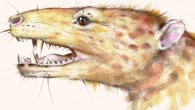
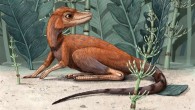
A new genus and species of mammaliaform that lived during the Triassic period has been identified from a partial jaw with teeth found on the eastern coast...
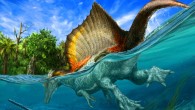
The remarkably high abundance of the teeth of the giant dinosaur Spinosaurus aegyptiacus, compared to the dental remains of terrestrial dinosaurs and some...
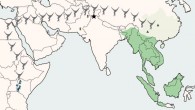
A new genus and species of small-bodied fossil ape that lived during the Middle Miocene epoch has been identified from a fossilized tooth found in Ramnagar,...
An international team of scientists has successfully extracted and sequenced the mitochondrial DNA from an 80,000-year-old adult Neanderthal tooth found...
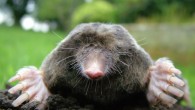
European moles (Talpa europaea) appear to avoid chewing on sand when eating earthworms because it is likely that they find the sensation as repulsive as...
Purussaurus, a top predator that lived in the wetlands of proto-Amazonia between 6 and 13 million years ago (Miocene epoch), hunted not only aquatic animals...
New research led by Bournemouth University archaeologists supports the theory that the Hyksos, the rulers of the 15th Dynasty of ancient Egypt, were not...
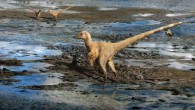
Paleontologists have uncovered the fossilized jawbone of a juvenile dromaeosaurid (raptor) dinosaur that lived 70 million years ago in what is now northern...
A research team led by Northwestern University scientists has uncovered the structural makeup of human dental enamel at unprecedented atomic resolution,...
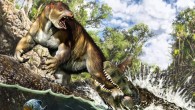
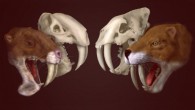
Thylacosmilus atrox, an extinct marsupial that roamed South America between 9 and 3 million years ago (Neogene period), was not the ecological analogue...
An analysis of the fossilized teeth of Deinonychus antirrhopus, a species of wolf-sized dromaeosaurid dinosaur that lived between 115 and 108 million years...
Powerful X-ray beams at the European Synchrotron in France allowed an international team of researchers to study some of the world’s oldest and well-preserved...
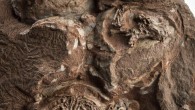
Paleontologists in Germany have found the 150-million-year-old fossilized remains of the extremely rare squid Plesioteuthis subovata preserved with a tooth...
Healthier oral hygiene by frequent tooth brushing and professional dental cleaning may reduce risk of atrial fibrillation (the most common cardiac arrhythmia)...
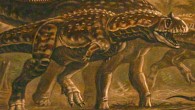
Majungasaurus, a carnivorous dinosaur that lived approximately 70 million years ago (Cretaceous period) in what is now Madagascar, grew new teeth roughly...
Orangutans (genus Pongo) are the closest living relatives of Gigantopithecus blacki, the biggest primate that ever walked the Earth, according to new research...
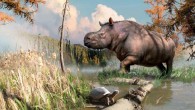
The fossil tooth fragments from extinct rhinoceroses that lived 8-9 million years ago have been found in Canada’s Yukon Territory.
An artist’s imagining...
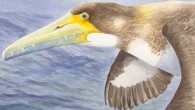
Paleontologists have found the remains of a pelagornithid bird that lived 62 million years ago (early Paleocene epoch) in New Zealand.
Protodontopteryx...
An analysis of the skull biomechanics of Simosthenurus occidentalis, a species of giant short-faced kangaroo that persisted until about 42,000 years ago,...