New research also suggests that dust transport from the Sahara to the Eastern Atlantic Ocean, which could be further transported downstream towards the...
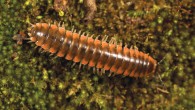
A team of entomologists from the Virginia Polytechnic Institute and State University has described 17 new species of the millipede genus Nannaria living...
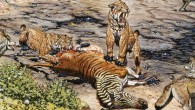
New research confirms the existence of intraspecific fighting in Triceratops horridus, a species of horned dinosaur that lived in North America some 69...
In two large prospective cohorts of U.S. men and women followed for 30 years, higher intake of avocado (≥2 servings/week) was associated with a lower...
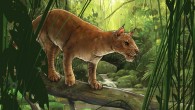
Paleontologists have discovered the fossilized remains of a bobcat-sized creature from a extinct lineage of carnivorous placental mammals.
Life reconstruction...
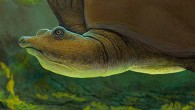
Paleontologists have identified a new species of softshell turtle from a partial carapace found in North Dakota, the United States.
Hutchemys walkerorum....
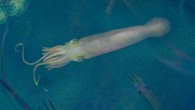
A new genus and species of vampyropod cephalopod — named Syllipsimopodi bideni after President Joseph Biden — has been identified from an exceptionally...
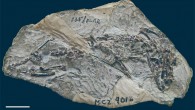
Paleontologists have identified a new species of tuatara-like sphenodontian reptile from dozens of fossilized specimens found in Arizona, the United States.
Holotype...
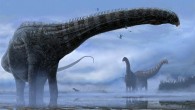
The pulmonary disease infecting this diplodocine dinosaur, nicknamed ‘Dolly,’ would not been externally evident, but the probable pneumonia-like outward...
Archaeologists have found meteorites, microspherules, iridium and platinum anomalies, and burned charcoal-rich habitation surfaces at 11 archaeological...
An extinct species of brachyuran crab called Callichimaera perplexa was a highly visual predator inhabiting well-lit environments, according to new research...
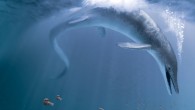
With a skull size of 2 m (6.6 feet) and an estimated body size of 17 m (56 feet), the newly-identified ichthyosaur species is the largest animal discovered...
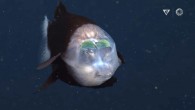
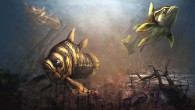
A deep-sea fish species called the barreleye fish (Macropinna microstoma) has been observed with MBARI’s remotely operated vehicle (ROV) Ventana in Monterey...
About 66 million years ago, a 10-km-wide asteroid crashed into Earth near the site of the small town of Chicxulub in what is now Mexico. The impact unleashed...
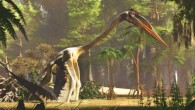
With a 11-12-m wingspan (37-40 feet), Quetzalcoatlus is the largest flying organism ever known and one of the most familiar pterosaurs to the public. Its...
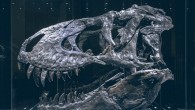
Using a CT scanner and a technique called dual-energy computed tomography (DECT), a team of scientists in Germany has identified a bone disease called...
A new clinical trial has demonstrated that a differential allotment of avocados may impact overall self-reported caloric consumption, as well as macro-...
The fossils are estimated to be around 96 million years old and belong to the first Cretaceous mawsoniid coelacanth from North America.
Reconstruction...
A team of researchers has reconstructed and analyzed the external and internal bone morphology of a deformed hip bone from Smilodon fatalis, one of the...