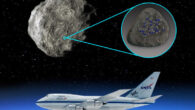
Using the FORCAST instrument on NASA’s retired Stratospheric Observatory for Infrared Astronomy (SOFIA), astronomers have obtained mid-infrared spectra...
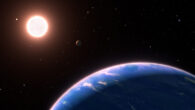
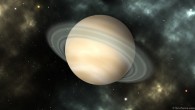
Using the Wide Field Camera 3 (WFC3) instrument onboard the NASA/ESA Hubble Space Telescope, astronomers have detected water vapor in the transmission...
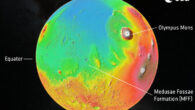
Over 15 years ago, ESA’s Mars Express spacecraft studied the Medusae Fossae Formation, revealing enigmatic deposits up to 2.5 km deep. From those early...
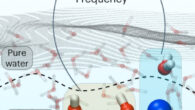
The distribution of ions at the air/water interface plays a decisive role in many natural processes. Several studies have reported that larger ions tend...
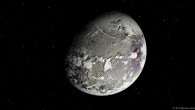
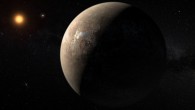
Planets too close to their star are too hot (such as Venus), those too far, are too cold (like Mars), whereas planets in the habitable zone are just right....
Astronomers from NASA and the University of Washington have estimated total internal heating rates and depths to possible subsurface oceans for 17 planets...
Coffee grinding produces large quantities of static charge due to both fracturing and rubbing. Charge causes particle aggregation and discharge, a familiar...
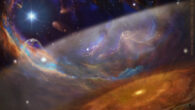
Astronomers using the NASA/ESA/CSA James Webb Space Telescope have detected abundant water, carbon monoxide, carbon dioxide, hydrogen cyanide and acetylene...
The NASA/ESA/CSA James Webb Space Telescope has begun its scientific mission, which includes the atmospheric characterization of transiting exoplanets....
A few decades ago, seismologists identified a thin layer with a lower velocity in Earth’s metallic liquid core. The origin of this layer, known as the...
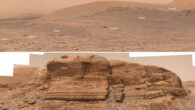
Ancient river deposits exist across Mars and can be identified in satellite data by erosional landforms called fluvial ridges. Fluvial ridges take the...
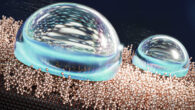
Omniphobic liquid-like surfaces are a new type of liquid-repellent surface that offer many technical benefits over traditional approaches. They have molecular...
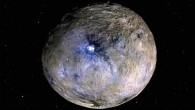
How aliphatic organic compounds originated on the dwarf planet Ceres has been the subject of intensive research since their discovery by NASA’s Dawn...
The sample was collected by NASA’s OSIRIS-REx (Origins, Spectral Interpretation, Resource Identification and Security, Regolith Explorer) spacecraft...
Revealed by 3D seismic imaging, the newly-discovered water reservoir lies 3.2 km (2 miles) under the ocean floor off the coast of New Zealand, where it...
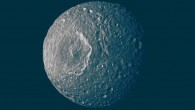
Planetary scientists from the University of Hawaii and elsewhere suggest that although they have confirmed the importance of the solar wind as a major...
The novel photosynthetic biocomposite material is a 3D-printed structure made of a seaweed-based polymer combined with genetically engineered cyanobacteria...
The 4,000-year-old network of ceramic water pipes unearthed at the archaeological site of Pingliangtai on the Central Plains of China represents an unprecedented...