Named Elias 2-24b, the newly confirmed exoplanet is estimated to be less than 1 million years old — so young it is likely still gaining mass from the protoplanetary disk surrounding its star.
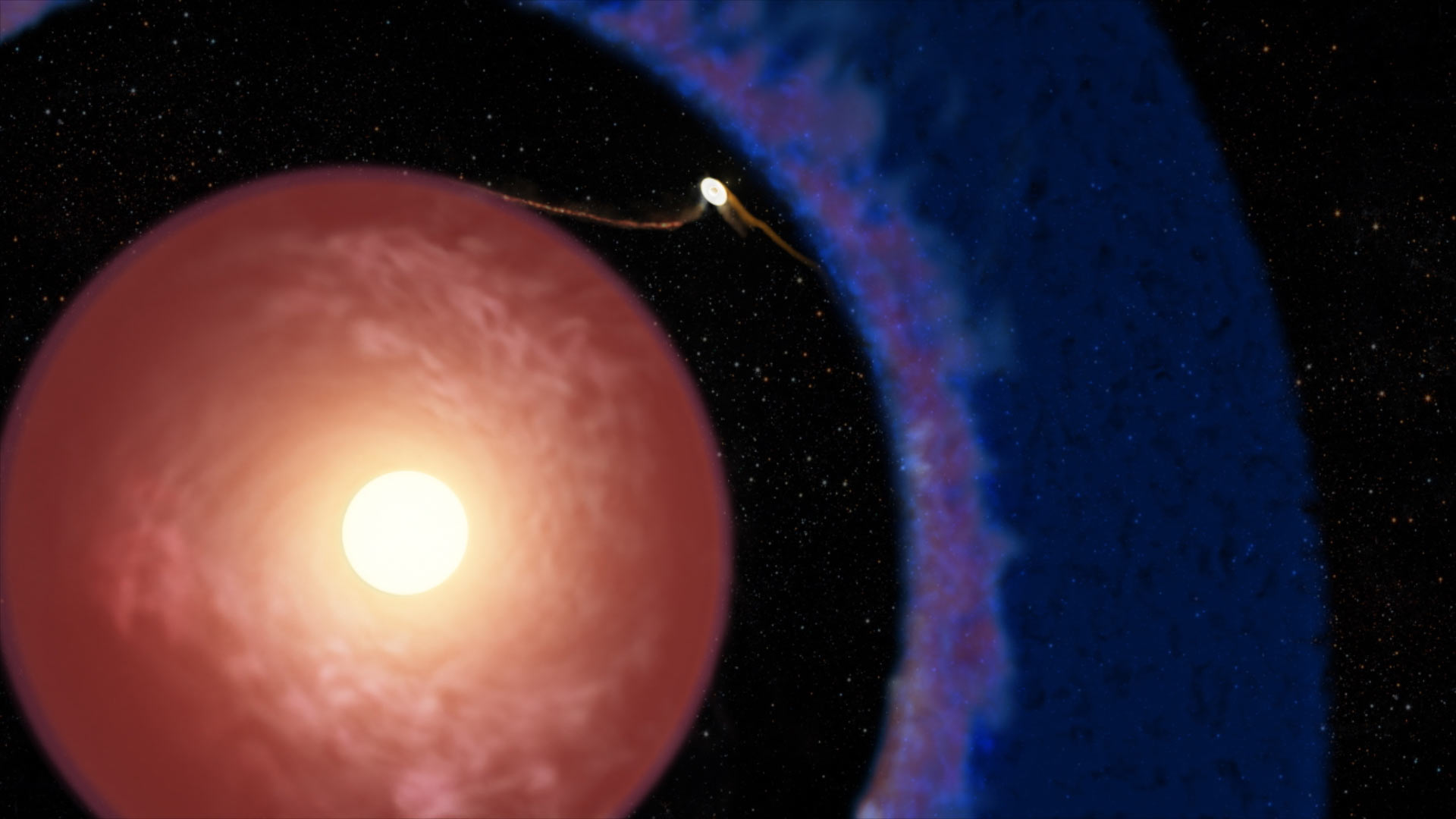
An artist’s concept depicting Elias 2-24b, the youngest exoplanet detected to date, still growing within the disk of gas and dust surrounding its young host star. Image credit: W.M. Keck Observatory / Adam Makarenko.
Elias 2-24b orbits a young star roughly 139 parsecs (454 light-years) from Earth in the Ophiuchus star-forming region.
The star system is barely a cosmic infant, estimated to be no more than 1 million years old.
This makes Elias 2-24b significantly younger than other directly imaged protoplanets such as those orbiting PDS 70 and WISPIT 2, which are roughly 5 million years old.
“Our planet-formation models already struggled to explain the previous record holders for the youngest known planet — a four-way tie between two planets orbiting the star PDS 70 and two planets orbiting the star WISPIT 2 — which are all more than 5 million years old,” said Professor Lucas Cieza, an astronomer at the Instituto de Estudios Astrofísicos in Chile.
“Elias 2-24b shows us that even our best planet-formation models are still missing some important processes.”
About a decade ago, observations from the Atacama Large Millimeter/submillimeter Array (ALMA) showed a narrow gap in the protoplanetary disk around Elias 2-24.
ESO’s Very Large Telescope in Chile then detected a faint point of light sitting in the gap.
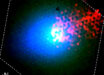
Using the Keck Observatory’s NIRC2 vortex coronagraph, Professor Cieza and his colleagues imaged a young planet, Elias 2-24b, right within the gap.
Based on its brightness and current models of planetary evolution, they estimate the planet’s mass at between 1.9 and 4 times that of Jupiter.
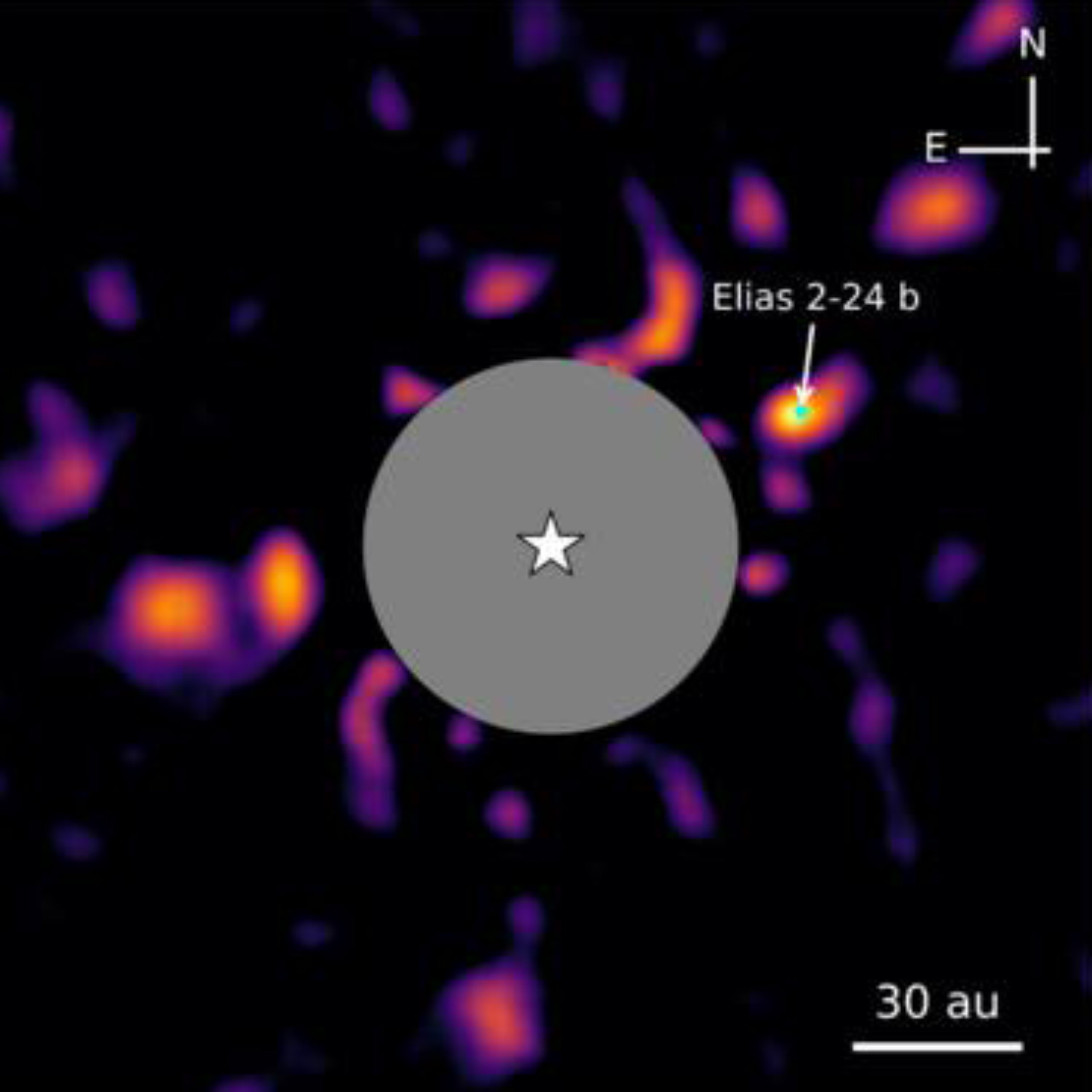
This Keck image of Elias 2-24b was captured on June 21, 2018. Image credit: Bernardi et al., doi: 10.3847/2041-8213/ae9bb6.
“Elias 2-24b is at the limit of what current telescopes can detect, but with new instruments like NASA’s Nancy Grace Roman Space Telescope, such detections should become easier,” said Andrea Bernardi, a doctoral candidate at the Universidad Diego Portales.
The discovery supports the theory that giant planets can form quickly through core accretion, in which a solid core gathers gas around it, rather than through the more sudden collapse process known as gravitational instability.
The gap and bright rim of dust seen in the disk around Elias 2-24 closely match predictions for a growing planet carving out a path in its surrounding material.
“Since Elias 2-24b is the youngest exoplanet discovered to date, its confirmation has important implications for planet formation timescales and the origin of the gaps observed in very young disks,” the astronomers concluded.
Their paper was published in the September 16 issue of the Astrophysical Journal Letters.
_____
Andrea Bernardi et al. 2026. Searching for Embedded Protoplanets with the Keck/NIRC2 Vortex Coronagraph: Confirmation of a Core-accretion Planet in the Narrow Gap of the Elias 2-24 Disk. ApJL 1009, L3; doi: 10.3847/2041-8213/ae9bb6