Vanillin, the compound that gives vanilla its familiar taste, may have a future in treating wounds that refuse to heal, according to a review paper published in August 2026 in the International Journal of Pharmaceutics.
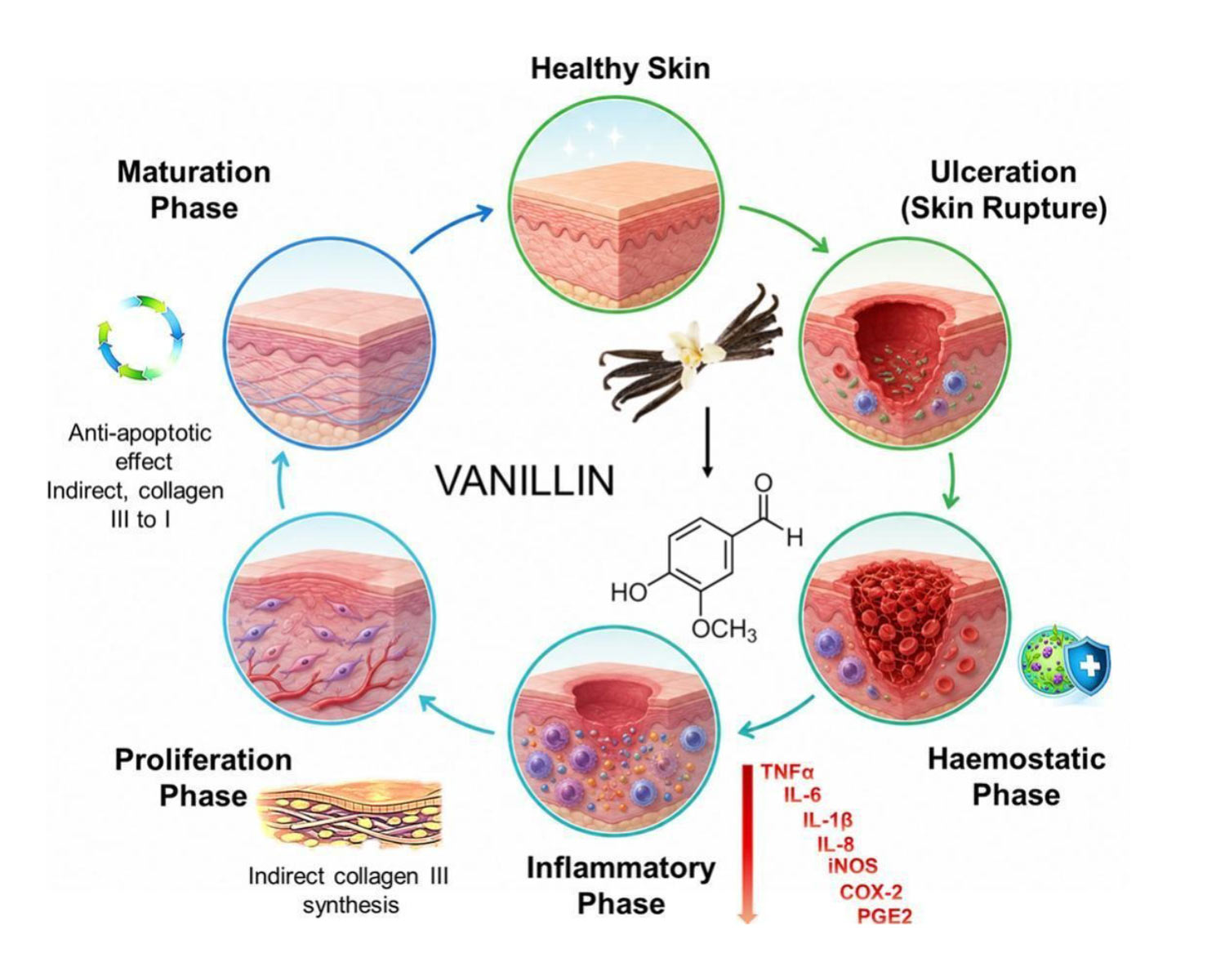
Vanillin has pronounced antioxidant, anti-inflammatory and antibacterial properties. Image credit: Stoilov et al., doi: 10.1016/j.ijpharm.2026.127263.
“Vanillin is one of the most extensively used flavor compounds worldwide and is commonly reported to rank second only to saffron in economic importance among flavoring agents,” said Flinders University’s Professor Krasimir Vasilev and colleagues.
“It is widely incorporated into food and beverage products and is also used in the pharmaceutical and cosmetic industries.”
“Commercial production of vanillin occurs through three principal routes: extraction of natural vanillin predominantly from plants of the Vanilla genus; biotechnological production from substrates such as ferulic acid, glucose or lignin via enzymatic conversion or de novo microbial fermentation using engineered strains; and chemical synthesis from petrochemical precursors including eugenol and guaiacol.”
“Beyond its established role as a flavoring and fragrance ingredient, vanillin has been increasingly recognized for a diverse range of biological activities that have stimulated interest in biomedical research.”
In their review, Professor Vasilev and his co-authors aimed to evaluate vanillin as a food-derived molecule with emerging biomedical relevance, with particular emphasis on its chemical origins, biological activity and incorporation into functional formulations for chronic wound repair.
In laboratory work, vanillin has been shown to neutralize reactive oxygen species, unstable molecules that build up in chronic wounds and can stall healing.
It has also dampened inflammatory signals, including several cytokines and enzymes tied to inflammation, and has shown antibacterial effects.
Because its aldehyde group reacts readily with amino groups, vanillin can link polymers such as chitosan, a material derived from shellfish shells, into soft gels and dressings.
The review cataloged dozens of such formulations, including hydrogels, porous scaffolds, nanofiber mats and nanoparticles. Several were tested on rats or mice with infected, diabetic or full-thickness wounds.
One dual-layer dressing combining vanillin with a growth factor reached 96.4% wound closure within 14 days in animals, and a vanillin-modified chitosan material reached about 94%. These figures come from individual animal studies, not human trials.
Vanillin-based formulations lack standardized testing and that researchers know little about how deeply vanillin penetrates skin, how long it stays in a wound, or how it is cleared when applied topically.
The effects also appear to depend on dose: one study found that vanillin above a certain concentration was toxic to cells, so any treatment would need to stay within a narrow therapeutic window.
Another complication is that skin and immune cells quickly convert vanillin into related compounds, such as vanillic acid, that may account for some of the observed benefits.
The authors conclude that vanillin is a promising but under-explored candidate.
“With coordinated engagement between academia, clinicians, and industry, vanillin has the potential to progress from an underutilized bioactive to a clinically deployable component of next-generation wound care and regenerative therapeutics,” Professor Vasilev concluded.
_____
Borislav Stoilov et al. 2026. Vanillin as a bioactive component in biomedical formulations for chronic wound healing and tissue regeneration. International Journal of Pharmaceutics 702: 127263; doi: 10.1016/j.ijpharm.2026.127263