New research led by the University of Chicago found that nations with more domestic cats tended to report higher levels of happiness, while greater exposure to Toxoplasma gondii, a neuroparasite associated with cats, was linked to lower scores. The study authors caution that the findings show associations, not cause and effect.

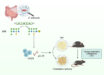
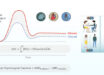
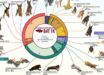
Borráz-León et al. found that national happiness was positively associated with cat density and some socioeconomic factors. Image credit: Sci.News / Makieni777 / Rise-a-mui / Alexas_Fotos / Dorothe / Vaclav Zavada / Artem Makarov / Daga Roszkowska / Birgit / Pasi Mammela.
“Subjective well-being, commonly assessed through life satisfaction and happiness indicators, has increased its relevance as a central indicator of human and social development,” said senior author Dr. Dario Maestripieri from the University of Chicago and colleagues.
“While some economic indicators such as gross domestic product (GDP) per capita, family income, or health expenditure are known to be positively associated with well-being, they are not sufficient to completely explain the variability of happiness levels across countries.”
“Companion animal ownership has been proposed to be an important contributor to psychological health,” they added.
“For example, previous studies have suggested that the presence of pets, particularly cats and dogs, can reduce loneliness, foster emotional bonding, diminish stress, and improve mood. Moreover, pets are often regarded as family members in many societies, and their care reflects cultural values related to empathy, leisure, and relational well-being.”
“Thus, the number of companion animals within a society or country might serve as a sociobehavioral indicator of lifestyle quality and social norms related to animals.”
In the study, Dr. Maestripieri and co-authors compared national happiness scores with cat density, wealth indicators and rates of exposure to Toxoplasma gondii, a parasite carried by cats that can infect humans, across 93 countries.
Happiness correlated strongly with cat density, though it correlated even more strongly with national income and GDP per capita.
Countries with higher rates of recent Toxoplasma gondii infection, measured by IgM antibodies, tended to report lower happiness. Chronic infection, measured by IgG antibodies, showed a weaker link.
In a regression model that left out GDP and income, cat density and recent infection rates remained the strongest predictors of happiness.
The researchers also found that wealthier countries tended to have more cats but less parasite exposure, a counterintuitive result they suggest may reflect cats being kept indoors, vaccinated and fed commercial food in richer nations, while free-roaming cats are more common in poorer ones.
The study does not resolve the underlying causes of these associations, but the scientists suggest that the influence of cats on happiness might be tied to economic factors.
“What we found is that countries with more cats tended to report higher levels of happiness, while countries with higher exposure to Toxoplasma gondii tended to report lower levels of happiness,” they said.
“Of course, these are associations at the country level, so we cannot say that having more cats makes people happier or that Toxoplasma gondii makes people less happy, but the patterns are interesting enough to deserve further investigation.”
“What we find most interesting is that these results bring together factors that are usually studied separately: wealth, health, human-animal relationships, and infectious disease.”
“Our study suggests that understanding why some populations report greater well-being may require us to consider biological and ecological factors alongside the socioeconomic conditions that have traditionally received most attention.”
“One of the most surprising findings was that countries with more cats did not show greater exposure to Toxoplasma gondii; in fact, the association went in the opposite direction.”
“This highlights an important point: the relationship between humans, animals, and infectious diseases depends not simply on the presence of animals, but also on the social, economic, and environmental conditions in which those interactions occur.”
The results were published this week online in the journal PLoS ONE.
_____
J.I. Borráz-León et al. 2026. Wealth, health, cats and Toxoplasma gondii: An ecological correlational study of subjective well-being across 93 countries. PLoS One 21 (9): e0357911; doi: 10.1371/journal.pone.0357911