Neuroscience News

Apr 29, 2016 by News Staff

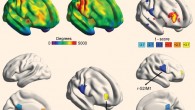
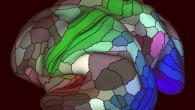
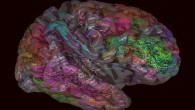
A team of neuroscientists and psychologists at the University of California, Berkeley, has created a detailed ‘semantic atlas’ showing which human brain areas respond to hearing different words. The results were published this week in the journal Nature. Scientists at the University of California, Berkeley, build a semantic atlas to chart how the brain responds to language. Image credit: University of California, Berkeley. “Our goal in this...

Apr 28, 2016 by News Staff

A team of scientists led by Dr. Todd Thiele from the University of North Carolina at Chapel Hill has identified a circuit between two brain regions that...

Apr 20, 2016 by News Staff

A novel technology being developed by a team of researchers at Binghamton University has delivered outstanding results over the ability to identify persons...

Feb 23, 2016 by News Staff

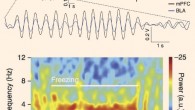
A new study led by Nikolaos Karalis of the Ludwig-Maximilians Universität München and Dr. Cyril Herry of the Neurocentre Magendie has shed light on what...

Jan 12, 2016 by News Staff

Vocal muscles of songbirds work like those of human speakers and singers, according to Emory University scientist Dr Samuel Sober and his colleagues from...

Dec 22, 2015 by News Staff

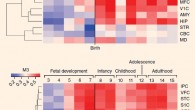
A group of scientists led by Imperial College London researcher Michael Johnson has identified two ‘gene networks’ associated with human cognitive...

Oct 12, 2015 by News Staff

A large international team of researchers from the Blue Brain Project has digitally reconstructed and simulated a slice of a juvenile rat’s neocortex,...

Aug 12, 2015 by News Staff

A new study published in the Journal of Neuroscience has revealed an intrinsic biological difference between males and females in the molecular regulation...

Jul 9, 2015 by News Staff

A team of neuroscientists at Duke University published two separate studies today, one involving rats and the other involving rhesus macaque monkeys, that...

Jun 29, 2015 by News Staff

According to a new study published in the journal eLife, when rats (Rattus rattus) sleep or rest, their brains simulate journeys to a desired goal. Rats...

Jun 18, 2015 by News Staff

A group of scientists, led by Dr Jon Pierce-Shimomura of the University of Texas at Austin, has identified a magnetosensitive neuron in the brain of Caenorhabditis...

Jun 1, 2015 by News Staff

According to a group of researchers led by Prof Susumu Tonegawa from Massachusetts Institute of Technology, memories that have been lost as a result of...

May 26, 2015 by News Staff

According to a new study published in the journal Child Development, infants are capable of understanding abstract relations like ‘same’ and ‘different.’ Babies...

Apr 24, 2015 by News Staff

According to a new study published in the journal Scientific Reports, the feeling of invisibility changes physical stress response in challenging social...

Oct 3, 2014 by News Staff

The more curious we are about a topic, the easier it is to learn information about that topic. A new study carried out by California University scientists...

Sep 4, 2014 by News Staff

In a groundbreaking study, scientists led by Dr Giulio Ruffini of Starlab Barcelona, Spain, have successfully transmitted the words ‘hola’ and ‘ciao’...

Jun 17, 2014 by News Staff

Blue-enriched light exposure immediately before the evening meal may increase hunger, according to a new study published in the journal Sleep (abstract...

Jun 10, 2014 by News Staff

According to a new study published in the journal Nature Neuroscience, rats can feel regret – a cognitive behavior once thought to be uniquely human. Rats...

Jun 5, 2014 by News Staff

Individuals who speak two or more languages, even those who acquired the second language in adulthood, may slow down cognitive decline from aging, according...

Oct 11, 2013 by News Staff

Researchers from the University of Exeter, UK, have used the functional magnetic resonance imaging (fMRI) technology to map the different ways in which...