Paleontology News

Feb 24, 2026 by News Staff

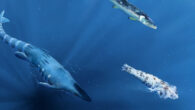
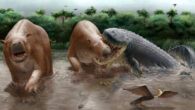
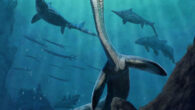
Several 250-million-year-old specimens from museum collections in Australia and the United States have revealed a surprising diversity of trematosaurid temnospondyls in Western Australia, showing that early marine amphibians spread across continents soon after the end-Permian mass extinction. The ancient marine amphibians Erythrobatrachus (foreground) and Aphaneramma (background) swimming along the coast of what is now far norther Western Australia...

Feb 23, 2026 by Enrico de Lazaro

Paleontologists in Brazil have identified a previously unknown species of somphospondylan sauropod dinosaur with European affinities, hinting at ancient...

Feb 23, 2026 by News Staff

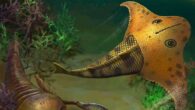
Two species of myllokunmingiid fishes that lived in what is now China around 518 million years ago (Cambrian period) possessed two large lateral eyes...

Feb 19, 2026 by Enrico de Lazaro

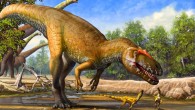
Paleontologists have identified the first unequivocal new species of the fish-eating dinosaur Spinosaurus in more than a century. Spinosaurus mirabilis...

Feb 17, 2026 by Enrico de Lazaro

For decades, depictions of Triceratops and its kin have been driven by bone alone. Now, paleontologists in Japan have mapped the soft-tissue anatomy of...

Feb 16, 2026 by Sergio Prostak

Paleontologists have unearthed fossilized bones of one of the smallest sauropodomorph dinosaurs from the Late Triassic of southern Brazil, offering fresh...

Feb 13, 2026 by Sergio Prostak

Between 73,000 and 20,000 years ago (Late Pleistocene), the Japanese Archipelago was inhabited by cave lions (Panthera spelaea), according to a new genetic...

Feb 11, 2026 by News Staff

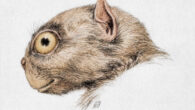
Apteribis, an extinct species of ibis that once inhabited the Hawaiian Islands, occupied a niche similar to that of the New Zealand kiwi: a nocturnal,...

Feb 10, 2026 by News Staff

Tyrannoroter heberti, a new species of pantylid ‘microsaur’ from the Carboniferous period, shows that some of Earth’s earliest land vertebrates had...

Feb 9, 2026 by Enrico de Lazaro

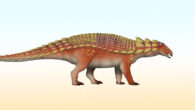
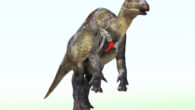
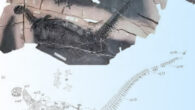
Paleontologists in China have discovered a nearly complete skeleton of a previously unknown species of iguanodontian dinosaur that preserves exceptionally...

Feb 9, 2026 by Enrico de Lazaro

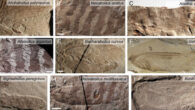
The detection of chitin in an Olenellus trilobite from the Carrara Formation (514.5 to 506.5 million years ago) of California, the United States, not only...

Feb 5, 2026 by News Staff

New research led by Field Museum of Natural History paleontologists suggests that Archaeopteryx, the oldest known bird, had a feeding apparatus shaped...

Feb 3, 2026 by Sergio Prostak

A fossil trunk vertebra from the Chiting Formation of Taiwan reveals that nearly 4-m-long pythons roamed the island during the Middle Pleistocene. An artistic...

Feb 3, 2026 by News Staff

In two separate studies, paleontologists in Australia and China examined the fossilized remains of enigmatic Devonian lungfish with cutting-edge imaging,...

Feb 3, 2026 by Enrico de Lazaro

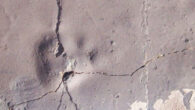
A footprint unearthed by a teenage fossil hunter at Albion in Brisbane, Queensland, Australia, in 1958 has now been formally identified as the continent’s...

Feb 2, 2026 by News Staff

A new genus and species of diminutive bipedal dinosaur has been identified from the fossils found in Burgos province of Spain. Life reconstuction of Foskeia...

Feb 2, 2026 by News Staff

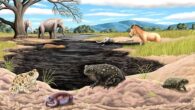
Using newly-discovered fossils and cutting-edge imaging, paleontologists have solved the puzzle of Europe’s missing horned dinosaurs (ceratopsians),...

Jan 30, 2026 by News Staff

New research led by University College London paleontologists shows that newly-hatched long-necked giants were prey for multiple carnivores long before...

Jan 29, 2026 by News Staff

A team of geologists from China and Australia has found evidence that episodic eruptions from vast marine large igneous provinces (LIPs) drove repeated...

Jan 26, 2026 by Enrico de Lazaro

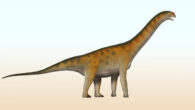
A new genus and species of titanosaur sauropod dinosaur that lived during the Cretaceous period has been identified from the fossilized remains found in...