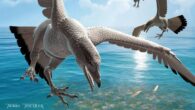
Tenuicruris piscanexum is only the second Cretaceous bird species named from the Australian continent.
Life restoration of Tenuicruris piscanexum. Image...
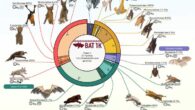
Bats make up more than one fifth of all living mammal species, yet where and when they first took to the air has been debated for decades. An analysis...
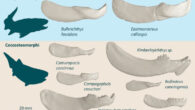
Long before sharks or reptiles ruled the seas, armor-plated fish called placoderms were already experimenting with different jaw designs to crush hard-shelled...
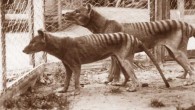
A new study analyzing the walking patterns of predatory mammals suggests that the extinct thylacine (Thylacinus cynocephalus) likely hunted more like an...
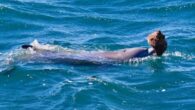
Marine biologists have documented Indo-Pacific bottlenose dolphins (Tursiops aduncus) using large sea shells to hunt for fish off the coast of Queensland,...
Paleontologists at the University of New South Wales have described a new genus and species of dasyurid marsupial from the Early Miocene of Australia,...
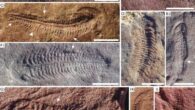
Spriggina floundersi, a marine species that lived during the Ediacaran period 550 million years ago, is one of Earth’s earliest bilaterally symmetrical...
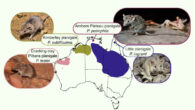
Scientists in Australia have revealed that what was long thought to be a single widespread planigale species is actually four distinct ones, including...
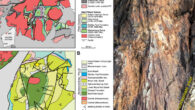
Zircon crystals and impact-altered minerals show that a massive asteroid slammed into what is now the Pilbara region of Western Australia about 3 billion...
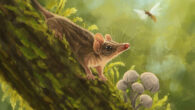
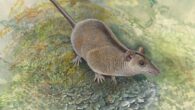
Paleontologists have described a new genus and three new species of small, insect-eating marsupials from the Early Miocene deposits of the Riversleigh...
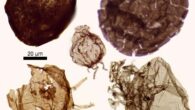
Analyzing 1.75-billion-year-old microfossils from ancient Australian seabeds, paleontologists say ancient eukaryotes — the ancestors of every plant,...
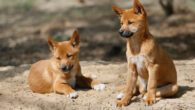
A large genetic survey reveals that the country’s so-called ‘wild dogs’ remain predominantly dingo, reshaping debates over conservation and wildlife...
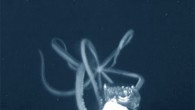
Using environmental DNA (eDNA) collected from waters more than 4 km deep off Western Australia’s Nyinggulu (Ningaloo) coast, researchers identified a...
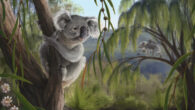
Long-overlooked fossils in the Western Australian Museum collection have been identified as a new species of koala. Named Phascolarctos sulcomaxilliaris,...
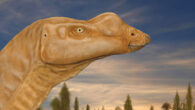
New research shows that the large-bodied ornithopod dinosaur Muttaburrasaurus langdoni from the mid-Cretaceous of Australia was no ordinary herbivore....
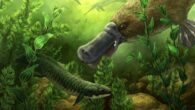
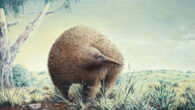
Echidna fossils in Australia are rare and unevenly distributed across time and geography. In a new paper published in The Alcheringa, an Australasian Journal...
Both the Tasmanian tiger (Thylacinus cynocephalus) and the Tasmanian devil (Sarcophilus harrisii) are believed to have become extinct on the Australian...
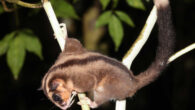
In the remote rainforests of New Guinea’s Vogelkop Peninsula, scientists have spotted two marsupial species — the pygmy long-fingered possum (Dactylonax...