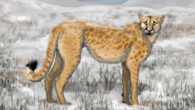
Miracinonyx trumani is an extinct species of cheetah-like cat that roamed the North American prairies and steppe terrains more than 13,000 years ago.
Miracinonyx...
Dinosaurs evolved a remarkable diversity of dietary adaptations throughout the Mesozoic era, but the origins of different feeding modes are uncertain....
Paleoanthropologists have analyzed zinc, strontium, carbon, and oxygen isotope and trace element ratios in a fossilized Neanderthal tooth as well as animal...
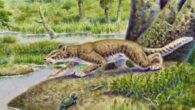
A new genus and species of saber-toothed mammalian carnivore has been identified from a fossil found in California, the United States.
An artist’s impression...
Paleontologists have described a new species of large-sized amphicyonid carnivore from a fossilized mandible found in France.
Tartarocyon cazanavei. Image...
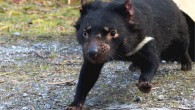
Tasmanian devils (Sarcophilus harrisii) — one of the few mammalian species to have developed physiological and behavioral specializations for scavenging...
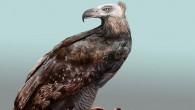
The Haast’s eagle (Hieraaetus moorei), the largest known eagle, habitually killed prey larger than itself, then applied feeding methods typical of vultures...
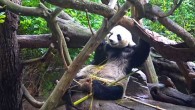
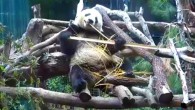
The evolutionary adaptation of the giant panda (Ailuropoda melanoleuca) to bamboo diet has taken place by adaptations in its masticatory (chewing) system,...
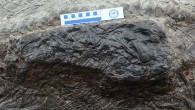
A new fossil of Guizhouichthyosaurus, a 5-m- (16.4-foot) long ichthyosaur that swam in Middle Triassic oceans some 240 million years ago, contains the...
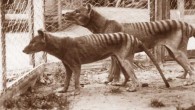
Until its extinction, the thylacine (Thylacinus cynocephalus) was the largest living carnivorous marsupial, but little data exist regarding its body mass,...
Giant pandas (Ailuropoda melanoleuca) feed almost exclusively on highly fibrous bamboo, yet they bear a mix of herbivore and carnivore traits. A new study...
Herbivorous, or plant-eating, mammals have bigger bellies than their usually slim carnivorous counterparts, according to a study led by University of Zurich...
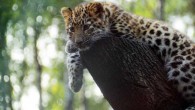
An international team of researchers has sequenced the complete genome of the Amur leopard (Panthera pardus orientalis), one of the most critically endangered...