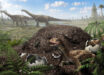
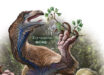
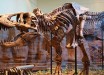
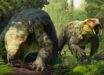
The Carreras Pampa site in the Torotoro National Park, Bolivia, records 1,321 trackways and 289 solitary tracks, totaling 16,600 theropod dinosaur tracks; 280 swim trackways, totaling 1,378 swim tracks; and several trackways with tail traces.
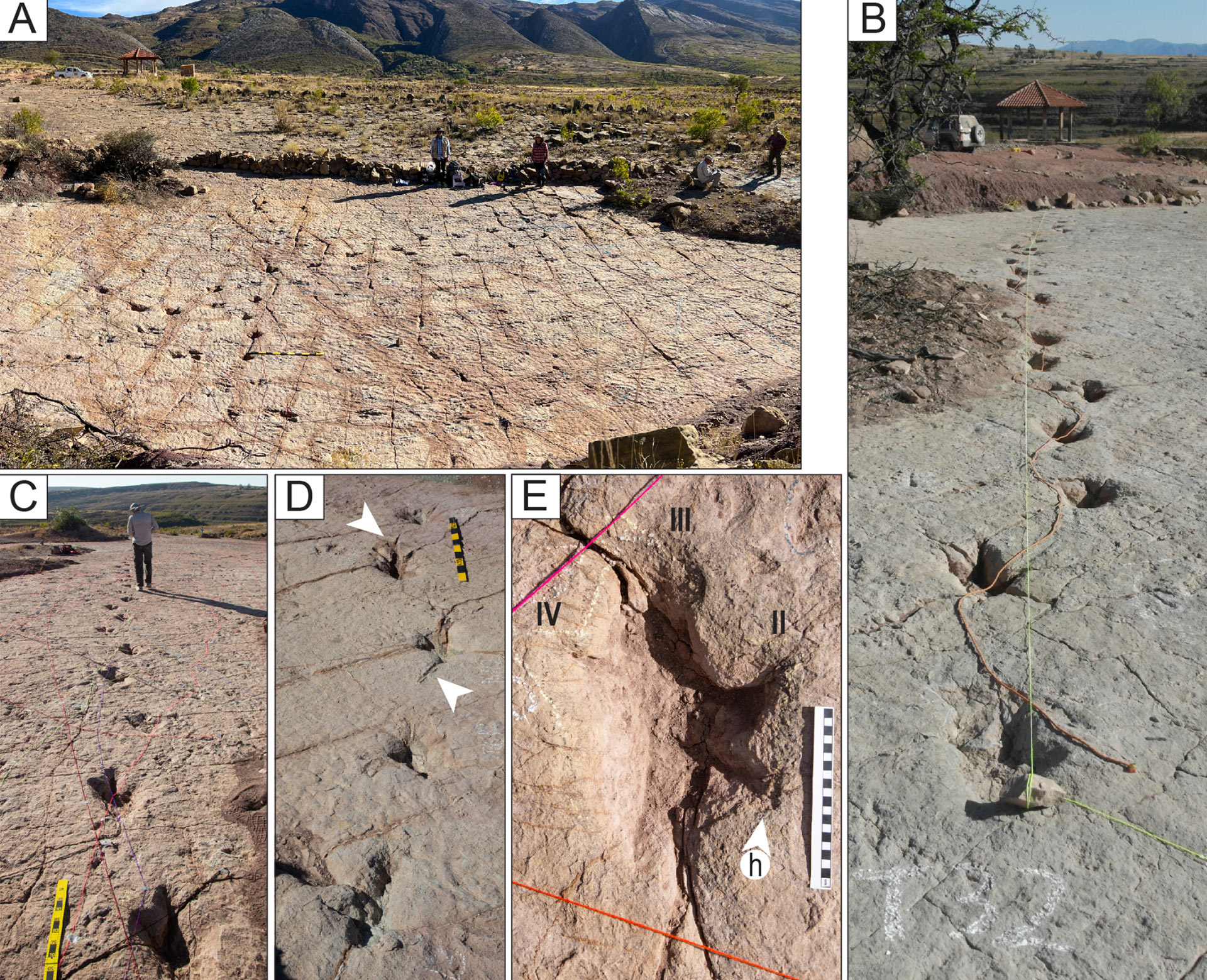
Dinosaur footprints at the Carreras Pampa tracksite in the Torotoro National Park, Bolivia. Image credit: Esperante et al., doi: 10.1371/journal.pone.0335973.
Bolivia has one of the most extensive and diverse records of dinosaur tracksites in the world, spanning the Triassic, Jurassic, and Cretaceous periods.
However, despite the abundance of tracksites, very few scientific studies have been published.
In a new study, Geoscience Research Institute paleontologist Raúl Esperante and his colleagues documented an unprecedented variety of dinosaur tracks at the Carreras Pampas tracksite in Torotoro National Park.
Across nine study localities, they found 16,600 tracks left by three-toed theropod dinosaurs at the end of the Cretaceous period.
These tracks range in size from tiny (less than 10 cm) to large (over 30 cm) and record a variety of dinosaur behaviors, including running, swimming, tail dragging, and even sharp turns.
“Most (80%) of the trackmakers had a hip height between 65 cm and 1.15 m, with a greater percentage in the 75 cm – 1.05 m range,” the paleontologists said.
“Notably, very few trackmakers exceeded a height of 1.25 m.”
Most of these tracks are oriented roughly northwest-southeast, with ripple marks preserved in the sediment, suggesting these dinosaurs were roaming alongside the ancient shoreline.
“The Carreras Pampas tracksite sets new world records for the number of individual dinosaur footprints, continuous trackways, tail traces and swimming traces,” the researchers said.
“This unprecedented abundance suggests this was a high-traffic area, and the parallel orientation of some footprints might indicate groups of dinosaurs traveling together.”
“Many more footprints remain to be explored at this tracksite and others in Bolivia,” they added.
“This site is a stunning window into this area’s past. Not just how many dinosaurs were moving through this area, but also what they were doing as they moved through.”
“It’s amazing working at this site, because everywhere you look, the ground is covered in dinosaur tracks.”
The team’s findings appear online in the journal PLoS ONE.
_____
R. Esperante et al. 2025. Morphotypes, preservation, and taphonomy of dinosaur footprints, tail traces, and swim tracks in the largest tracksite in the world: Carreras Pampa (Upper Cretaceous), Torotoro National Park, Bolivia. PLoS One 20 (12): e0335973; doi: 10.1371/journal.pone.0335973