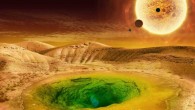
A team of leading astronomers, biologists and geologists have come together under the Nexus for Exoplanet System Science (NExSS), a NASA research coordination...
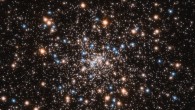
University of Surrey’s Professor Mark Gieles and colleagues may have found a solution to a problem that has perplexed astronomers for several decades:...
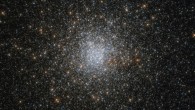
A new image from the NASA/ESA Hubble Space Telescope shows off the massive globular cluster NGC 6139.
The globular cluster NGC 6139 as seen by the NASA/ESA...
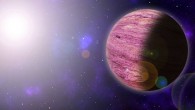
The NASA Kepler spacecraft’s reborn K2 mission announced this week the discovery of 78 new potential exoplanets: 30 high-quality planet candidates and...
An extrasolar planet larger than the Earth has been discovered orbiting a nearby cool star, thanks to data gathered by NASA’s Kepler/K2 mission.
Artist’s...
An international team of astronomers from the United States, Australia, and Brazil has identified 121 giant exoplanets in the habitable zones of their...
Astronomers using the Atacama Large Millimeter/submillimeter Array (ALMA) have uncovered evidence that three infant planets are forming in the protoplanetary...
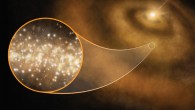
A faint and mysterious stream of microwaves emanating from young star systems far out in the Milky Way Galaxy could be caused by nanodiamonds about 1.5-2.2 nm...
Once thought to be formed soon after the Universe itself, new research from the Universities of Warwick and Auckland finds globular clusters may be only...
A group of astronomers at the University of Toronto in Canada has performed one of the highest resolution observations in the history of astronomy by observing...
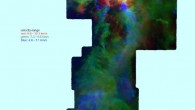
The new map, created by astronomers from Yale University and elsewhere, provides unprecedented detail of the structure of the Orion A molecular cloud,...
2015 BZ509, an object in Jupiter’s co-orbital region with a retrograde motion around the Sun, is the first known asteroid to have been captured from...
An image taken by NASA’s Transiting Exoplanet Survey Satellite (TESS) shows a swath of the southern sky along the plane of our Milky Way Galaxy.
Illustration...
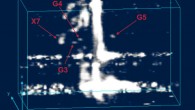
A team of astronomers from the Australian National University and the University of Crete has determined the 3D structure of the interstellar molecular...
A research team led by Rutgers University’s Professor Dennis Kent has documented a gradual shift in Earth’s orbit that repeats regularly every 405,000...
A group of astronomers from Ireland, the Netherlands, the United Kingdom, and the United States has found that the atmosphere of the exoplanet WASP-96b...
First discovered by Italian mathematician and priest Giovanni Battista Hodierna in 1654, NGC 6231 is a young star cluster located in the constellation...