The detection of chitin in an Olenellus trilobite from the Carrara Formation (514.5 to 506.5 million years ago) of California, the United States, not only demonstrates that this structural polymer might be able to survive in arthropod fossils longer than previously confirmed, but also hints that sedimentary rocks may play an unrecognized role in locking away organic carbon over geological time.
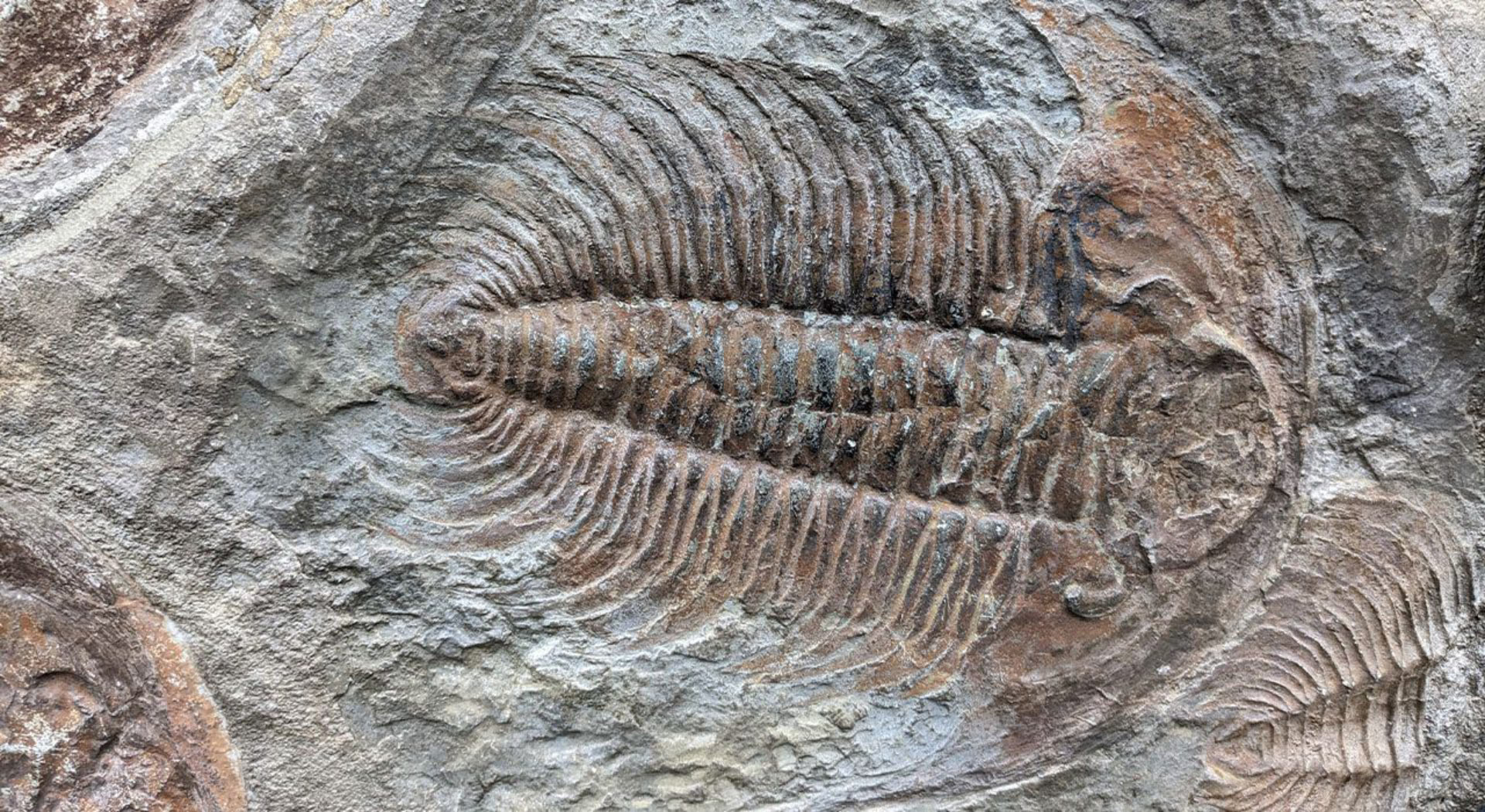
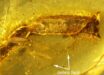
A trilobite fossil. Image credit: Elizabeth Bailey / University of Texas at San Antonio.
Chitin is one of the most abundant organic polymers produced by life on Earth, second only to cellulose.
“This study adds to growing evidence that chitin survives far longer in the geologic record than originally realized,” said Dr. Elizabeth Bailey, a researcher at the University of Texas at San Antonio.
“Beyond paleontology, this has significant implications for understanding how organic carbon is stored in Earth’s crust over geologic time.”
Using fluorescent staining and various spectroscopy techniques, Dr. Bailey and her colleagues analyzed the cuticle of an Olenellus trilobite from the Cambrian Carrara Formation.
The researchers found spectral peaks indicative of d-glucosamine, the monomer of chitin.
Their result contrasts with many previous analyses that produced a negative detection of chitin in a variety of fossils.
It is also consistent with literature published in recent decades reporting positive chitin detections in fossils using modern analytical techniques.
“Though this study focused on a small number of fossils, the implications reach well beyond trilobites,” the scientists said.
“Understanding how organic carbon can persist in common geological settings will help us reconstruct Earth’s carbon cycle and may inform how carbon is stored naturally within the planet’s crust.:
“The research also has potential relevance for modern climate discussions,” they noted.
“For instance, limestones, which are formed from accumulated biological remains and widely used as building materials throughout human history, often contain chitin-bearing organisms.”
“When people think about carbon sequestration, they tend to think about trees,” Dr. Bailey said.
“But after cellulose, chitin is considered Earth’s second most abundant naturally occurring polymer.”
“Evidence that chitin can survive for hundreds of millions of years shows that limestones are part of long-term carbon sequestration and relevant to understanding Earth’s carbon dioxide levels.”
The study was published in December 2025 in the journal PALAIOS.
_____
Elizabeth Bailey et al. 2025. Evidence for surviving chitin in Cambrian trilobites from the Carrara Formation, Western North America. PALAIOS 40 (12): 379-387; doi: 10.2110/palo.2024.025