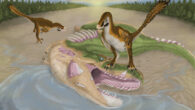
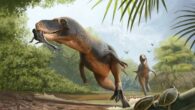
Tyrannosaurs sit at the top of the food chain in the popular imagination, but a newly described fossil from Alberta, Canada, suggests that a much smaller...
Fossils from Montana show a small oviraptorosaur with a jaw that slid front to back, a feature shared with fruit-eating parrots.
Infernogallus jamesi,...
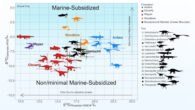
Paleontologists studying Cretaceous fossils have repeatedly found that the teeth of many ancient animals contain more of a heavier carbon isotope, carbon-13,...
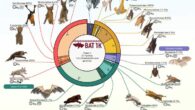
Bats make up more than one fifth of all living mammal species, yet where and when they first took to the air has been debated for decades. An analysis...
A new analysis of Tyrannosaurus rex teeth indicates the ancient predator maintained a body temperature of about 36.3 degrees Celsius (97.3 degrees Fahrenheit),...
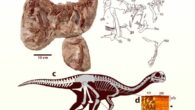
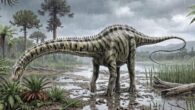
Paleontologists from Fundación Dinópolis have identified the first confirmed fossils of the genus Diplodocus found outside North America.
The Spanish...
Paleontologists have identified a new species of extinct alligatorid that lived in what is now Colorado just a few hundred thousand years after the asteroid...
Paleontologists in Montana have discovered remarkably preserved feathers of an ancient aquatic bird inside a fossilized dinosaur dropping, offering rare...
Paleontologists in North Dakota have unearthed a set of 66.5-million-year-old fossilized footprints that can be confidently attributed to a full-grown...
Paleontologists studying a fossil unearthed in southern Manitoba, Canada, have identified what they believe are two bite marks on the internal skeleton...
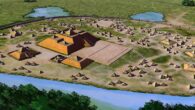
Long before Europeans arrived, cacao (Theobroma cacao) may have traveled far beyond its Central and South American homeland to reach Etowah, a major Mississippian-period...
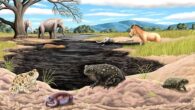
Paleontologists studying the La Brea Tar Pits, one of the world’s richest Ice Age fossil sites, have identified a previously unknown species of spadefoot...
Paleontologists working in southern Wyoming have identified a previously unknown species of omomyid primate, adding a new chapter to the story of one of...
Thousands of fossilized bones from a Cretaceous-period bonebed in Wyoming, the United States, offer rare physical evidence that Tyrannosaurus rex fed on...
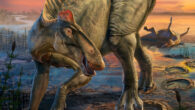
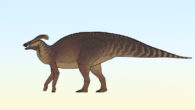
A new genus and species of lambeosaurine hadrosaurid dinosaur has been identified in southern Alberta, Canada, dating back 77 million years to the Campanian...
New research suggests that the first widespread human cultures in the Americas were not opportunistic foragers who ate whatever they could find, but specialized...
For decades, the discovery of stone spear points lying next to proboscidean (mammoth, mastodon, and gomphothere) bones has been treated as archaeology’s...
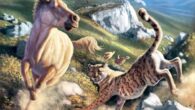
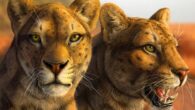
A nearly complete skull unearthed decades ago in Arizona has given paleontologists their clearest look yet at Adelphailurus kansensis, an enigmatic felid...