An antbird long thought to be a single widespread species across the Amazon rainforest is, in fact, several different ones. Among them are two newly-described species — Cercomacra mura and Cercomacra raucisona — that inhabit separate regions of southern Amazonia. The discovery emerged from a comprehensive analysis of museum specimens and vocal recordings of birds in the gray antbird (Cercomacra cinerascens) complex.
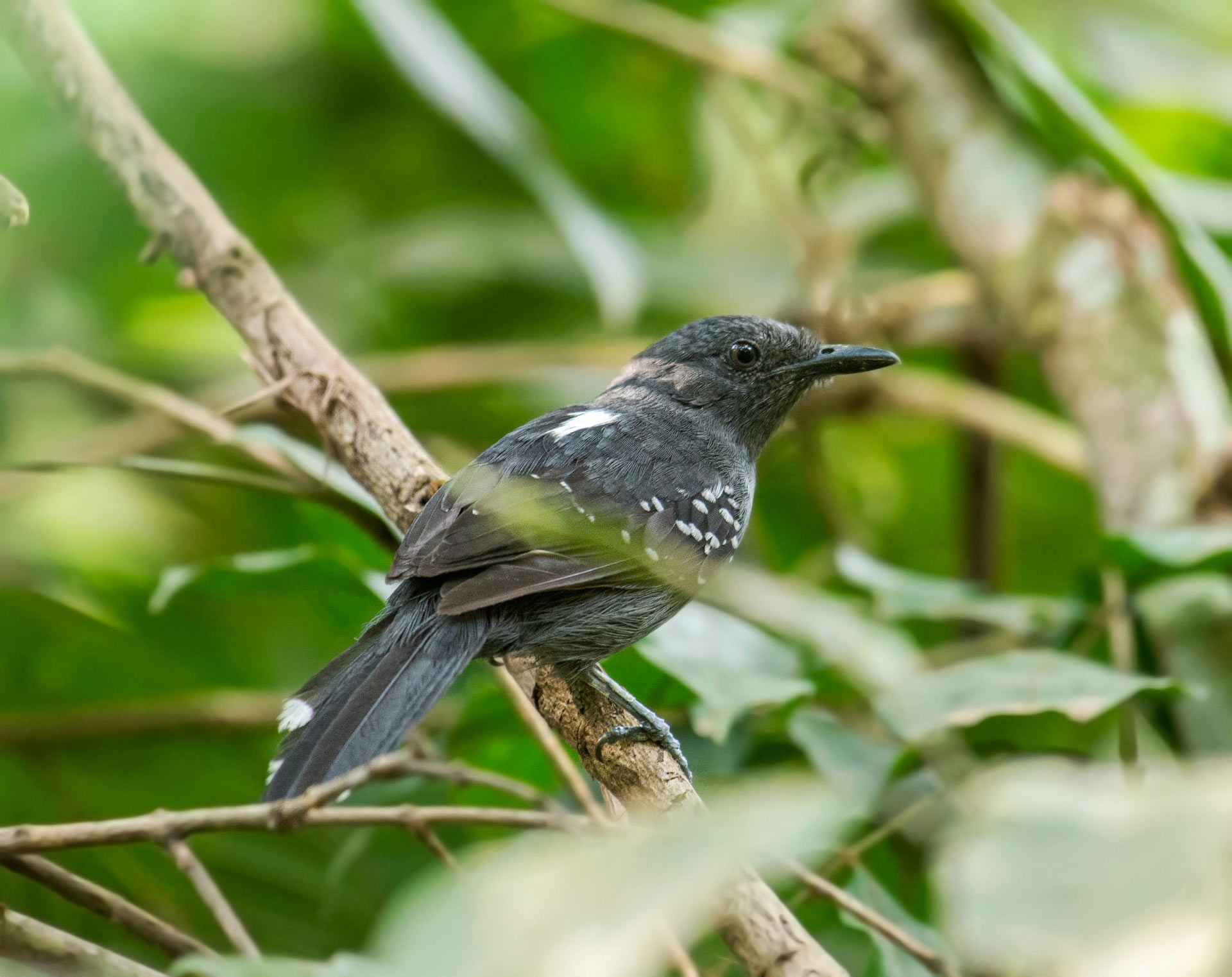
Cercomacra raucisona. Image credit: Fernando Zurdo.
Gray antbirds are small, inconspicuous forest birds in the family Thamnophilidae.
They prefer dense understory habitats and can be found in Brazil, Bolivia, Colombia, Ecuador, French Guiana, Guyana, Peru, Suriname, and Venezuela.
Males are typically gray and females brownish, and the subtle differences in their plumage made it difficult for ornithologists to distinguish populations over the region’s vast geography.
To reassess the species boundaries within the Cercomacra cinerascens complex, Vagner Cavarzere Universidade researcher Estadual Paulista and colleagues compared plumage coloration and body measurements and closely studied the birds’ vocalizations.
They examined 682 bird specimens from museum collections and analyzed 347 recordings of their songs.
They also used BirdNET, a deep-learning system trained to classify bird sounds, to analyze the structure of the songs.
“Birds rely heavily on vocal communication, which are important for species recognition,” the researchers said.
“Their songs act as acoustic signatures, providing a powerful key to unlocking hidden diversity.”
The results revealed clear divisions among populations separated by major Amazonian rivers.
Birds north of the Pastaza, Marañón, Solimões and Amazon rivers differed consistently in coloration and song patterns from populations to the south.
Cercomacra mura inhabits the forest region between the Ucayali and Madeira rivers, while Cercomacra raucisona lives between the Madeira and Tapajós rivers.
“These rivers function as long-term natural barriers,” the researchers said.
“Populations diverged independently over millennia into the unique species we describe today, which are kept isolated by these major rivers.”
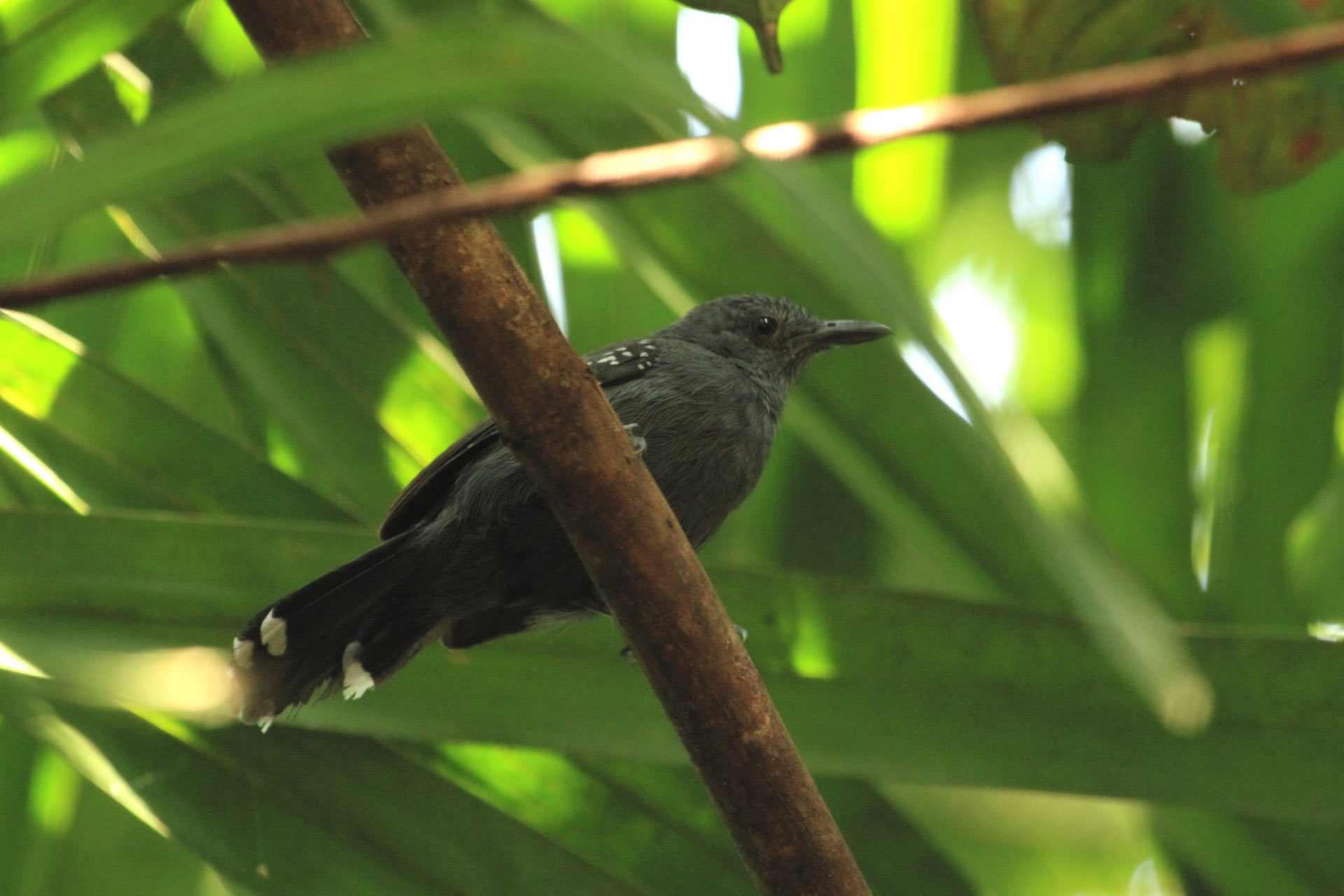
Cercomacra mura. Image credit: Tomaz Melo.
The scientists also recognized several previously named forms as full species, bringing the total number of species in the complex to five.
They concluded that each has distinct vocal characteristics and geographic ranges, with little evidence of overlap or hybridization.
The discovery underscores how much of the Amazon’s biodiversity remains to be clarified, even among birds that scientists believed they already understood well.
“By merging artificial intelligence with the foundational science of bioacoustics and museum collections, we can uncover diversity that would otherwise remain invisible,” the authors said.
“Recognizing these species is the first and most critical step toward ensuring their protection in a rapidly changing world.”
The discovery is described in a new paper in the journal Vertebrate Zoology.
_____
V. Cavarzere et al. 2026. Integrative taxonomy of the Cercomacra cinerascens species complex with description of two new species (Aves: Thamnophilidae). Vertebrate Zoology 76: 73-91; doi: 10.3897/vz.76.e171834