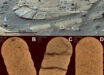
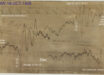
Using data from the ChemCam instrument on NASA’s Curiosity rover, planetary scientists found minerals with high amounts of iron, manganese, and zinc in preserved ripple beds in Gale Crater rocks, indicating the high likelihood that a shallow lake existed at this location.
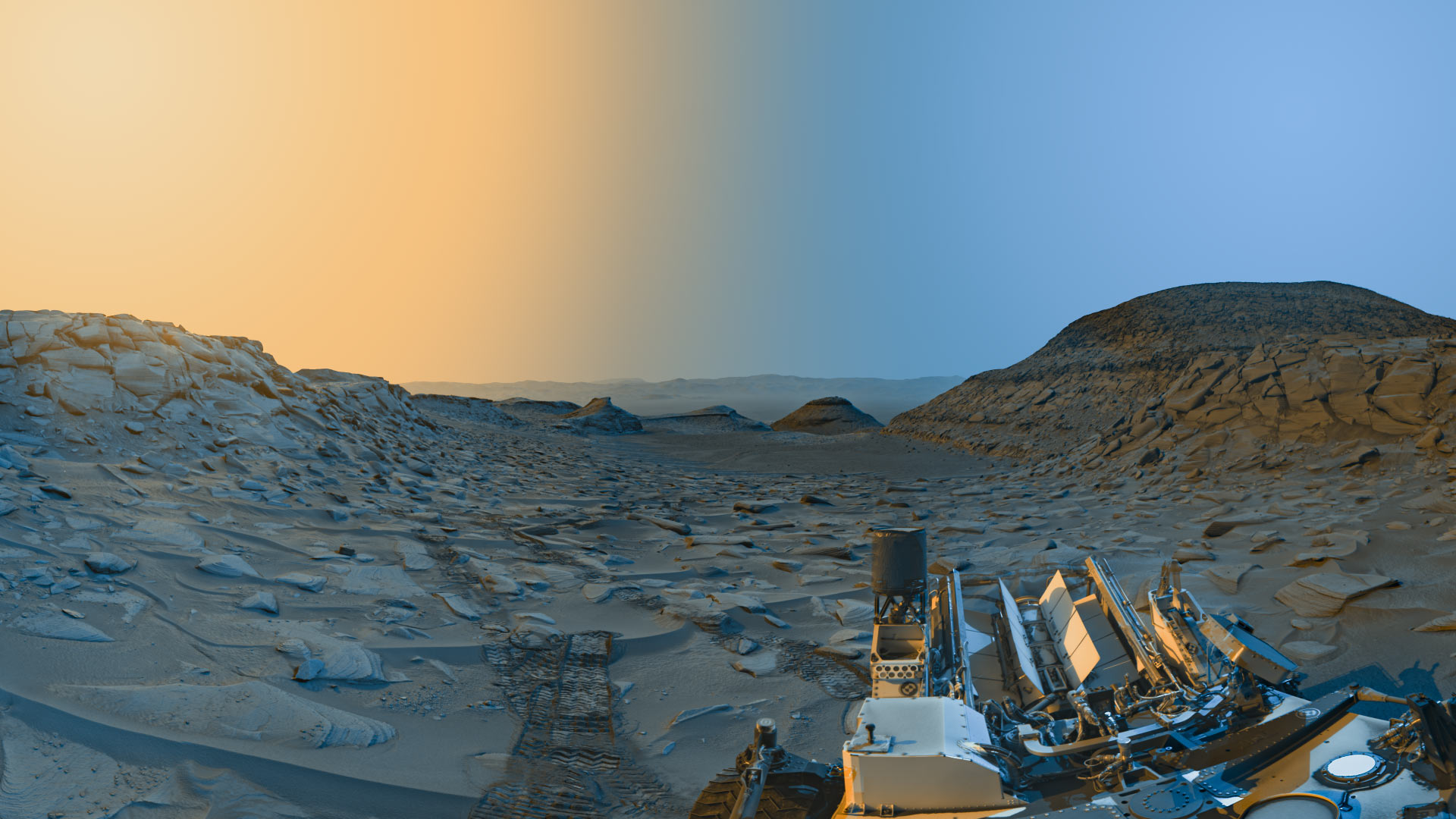
This image shows the Amapari Marker Band, a winding region where NASA’s Curiosity rover discovered unexpected signs of an ancient lake. Image credit: NASA / JPL-Caltech.
Curiosity’s ChemCam instrument uses a technique called laser-induced breakdown spectroscopy to zap rocks to create a plasma and then collects the light from that plasma to understand what elements are present on the planet’s surface.
Its goal is to establish past habitability on Mars, addressing the question of whether Mars was once suitable for life.
The rover has recently been exploring a large sedimentary mound that the researchers believe shows the transition from a warm and wet (phyllosilicate-rich) to a cold and drier (sulfate-rich) Mars.
The discovery of redox-active metals such as iron and manganese could indicate that life would have thrived in this lake, if life existed on Mars.
Some forms of microbial life on Earth can use these metals as energy sources.
“The metals were found in preserved ripples, which is the clearest evidence we have that a lake was present in Gale Crater,” said ChemCam Instrument science team member Dr. Patrick Gasda, a researcher at Los Alamos National Laboratory.
“But what’s more surprising is that this lake existed high up on Mount Sharp, where the rover explored rocks that were deposited during an era on Mars when the climate was drying out.”
“Ancient Mars was much wetter, and lakes in craters were common then.”
“It seems that as Mars became drier and colder, lakes that formed less frequently were very short-lived.”
The detection of iron, manganese, and zinc deposits can lay the groundwork for future research on Mars.
They can help scientists decide where Curiosity should explore next or determine locations for potential sample return missions.
“Given the exciting astrobiological implications raised by the Amapari Marker Band, these types of materials should be prioritized for future Curiosity chemistry analysis or for returning samples from Mars’ Jezero Crater, should the opportunity arise,” Dr. Gasda said.
A paper on the discovery was published this month in the Journal of Geophysical Research: Planets.
_____
P.J. Gasda et al. 2026. Amapari Marker Band Metal-Enrichments: Potential Mechanisms and Implications for Surface and Subsurface Water and Weathering in Gale Crater. JGR: Planets 131 (4): e2025JE009153; doi: 10.1029/2025JE009153