New research from Rice University suggests sulfur keeps Mercury’s interior molten at lower temperatures, offering new clues to how the planet’s strange crust and mantle evolved.

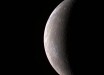
Yishen Zhang & Rajdeep Dasgupta provide new insights into the role of sulfur in shaping the thermochemical evolution of Mercury and other similarly reduced rocky planetary systems. Image credit: NASA / Johns Hopkins University Applied Physics Laboratory / Carnegie Institution of Washington.
“Mercury’s surface looks completely different than Earth’s,” said Professor Rajdeep Dasgupta, director of the Rice Space Institute Center for Planetary Origins to Habitability.
“We couldn’t study its magmatic evolution using assumptions built off our understanding of Earth, and missions data are difficult to interpret.”
“We had to find ways to bring the planet closer to our lab — specifically, through the meteorite Indarch.”
Indarch, a meteorite that landed in Azerbaijan in 1891, looks very similar to the chemical makeup of Mercury.
The researchers realized they could use Indarch to study how Mercury’s unique chemical makeup had shaped the planet, sharing their results in a recent publication.
“Indarch chemically is as reduced as rocks on Mercury,” said Yishen Zhang, a postdoctoral researcher at Rice University.
“It is believed to be a possible building block of the planet.”
The scientists used a model melt composition of Indarch to cook their own Mercury rocks in a high-pressure, high-temperature facility.
The process was fairly simple: mix Indarch’s chemical ingredients together in a small glass vial, change the settings in the facility to match the conditions on Mercury, add in the chemicals and cook.
“This process of cooking a rock can show us what happened chemically inside of Mercury,” Zhang said.
“By using the temperature, pressure and chemical constraints derived from spacecraft observations and models, we recreate Mercury-like conditions to understand how magmas form and evolve there — even without direct samples from the planet.”
What the authors found is that sulfur lowers the temperature at which these reduced melted rocks begin to crystallize.
That means sulfur-rich magmas on Mercury may stay molten at lower temperatures than similar magmas on Earth.
The reason for this significantly decreased crystallization temperature is because of Mercury’s unique chemical composition: low iron, high sulfur and the chemically reduced state.
Sulfur is a promiscuous element — it likes to be bound to other elements, usually iron.
Iron-rich planets like Mars and Earth have most of their sulfur bound to iron. Mercury’s low iron content, however, meant that its sulfur was looking for new binding partners.
Specifically, it could bind to major rock-forming elements like magnesium and calcium.
On Earth, these rock-forming elements would typically bind to oxygen, resulting in a stable structure called a silicate network made up of silicon, oxygen and rock-forming elements.
When sulfur replaces oxygen, however, that network becomes weaker and crystalizes at a lower temperature.
“As Indarch may represent Mercury’s protoplanet state, these experiments show that Mercury likely formed with sulfur occupying a structural position that on Earth belongs to oxygen. This fundamentally changes how the planet’s mantle solidified,” Zhang said.
“This is a fascinating glimpse of how Mercury may have evolved as a planet to its unique current-day surface chemistry,” Professor Dasgupta said.
“More importantly, it provides a way for us to think about planets not based on how Earth was formed, but based on their own unique chemistry and magmatic processes under vastly different conditions.”
“What water or carbon does to magmatic evolution of Earth, sulfur does on Mercury.”
The findings appear in the journal Geochimica et Cosmochimica Acta.
_____
Yishen Zhang & Rajdeep Dasgupta. The effects of sulfur on near-liquidus phase relations of highly reduced basaltic melts with implications for magmatism in Mercury. Geochimica et Cosmochimica Acta, published online February 26, 2026; doi: 10.1016/j.gca.2026.02.034