Paleontologists have identified a new genus and species of soft-bodied, tubicolous polyp medusozoan from well-preserved specimens found about 50 km northeast of Quebec City in Canada.
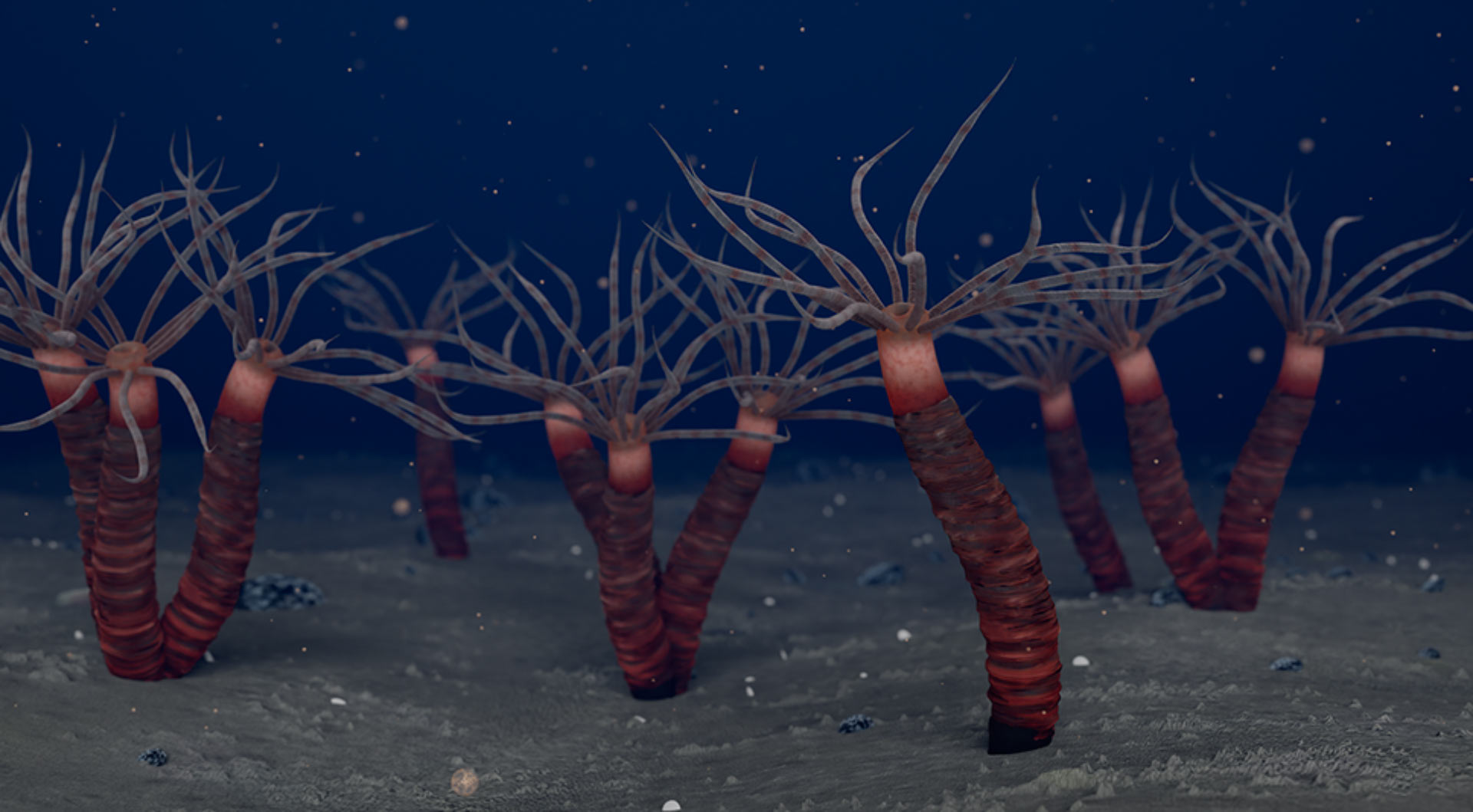
Depiction of Paleocanna tentaculum individuals living in single tubes, as well as clusters of two or three tubes attached together. Image credit: Ramirez-Guerrero et al., doi: 10.1017/jpa.2025.10211.
“Jellyfish and their polyp relatives belong to an ancient group of animals called cnidarians,” said Université de Montréal’s Professor Christopher Cameron and his colleagues.
“Because their bodies are soft, they almost never fossilize, leaving gaps in our understanding of their origins.”
The newly-discovered species inhabited Ordovician oceans around 450 million years ago.
Named Paleocanna tentaculum, the ancient animal lived inside upright tubes, alone or in clusters.
The polyp itself was long and narrow, with a ring of tentacles that extended above the rim of the tube.
“Closely related to modern jellyfish, Paleocanna tentaculum is a rare discovery,” the paleontologists said.
“Only a few other species in its subphylum have ever been described in the fossil record.”
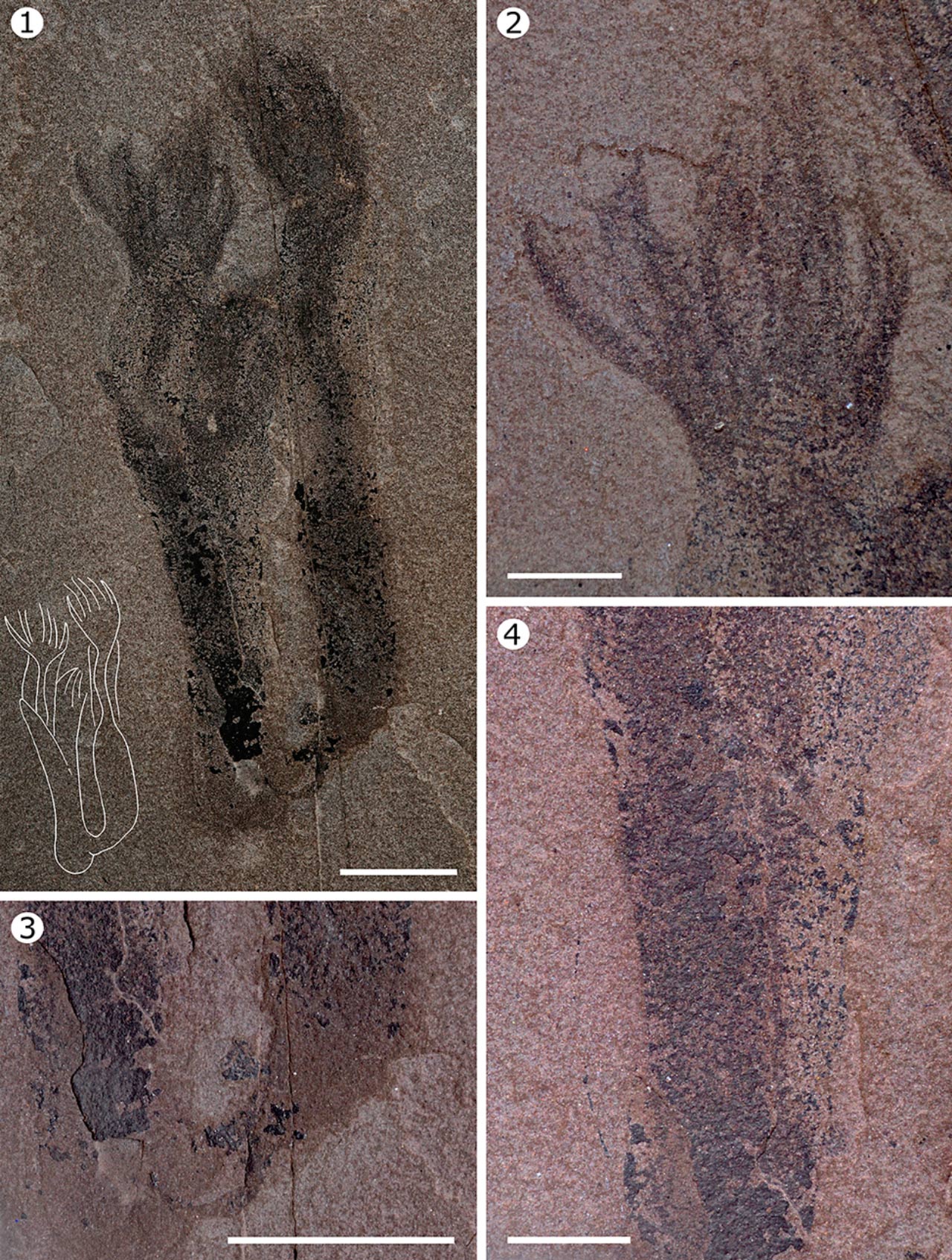
Paleocanna tentaculum. Image credit: Ramirez-Guerrero et al., doi: 10.1017/jpa.2025.10211.
The fossil materials, preserved along the upper surfaces of shaly limestone beds, were found in a small quarry in the Neuville Formation in Quebec, Canada.
“The area is among the most species-rich fossil localities on the planet for fossils from the Ordovician period,” Professor Cameron said.
The researchers examined 15 slabs of shaly limestone containing around 135 specimens of Paleocanna tentaculum.
“Soft-bodied organisms do not preserve as well as hard-bodied organisms, usually making any soft-bodied fossil more valuable to understanding the history of life,” said Louis-Philippe Bateman, a graduate student at McGill University.
“The discovery also highlights Quebec’s significant fossil record.”
“I’ve often caught myself saying that we have a less glamorous fossil record than places like British Columbia or Alberta.”
“Discoveries like this one show that many things have yet to be discovered and described here.”
By comparing Paleocanna tentaculum with other living and fossil genera, the scientists found that it is more closely related to modern jellyfish groups such as box jellies, true jellyfish, and stalked jellyfish than it is to other extinct tube-dwelling relatives.
This places the new species nearer to the modern branch of the family tree than most other known fossil polyps.
“The exceptional preservation of these fossils makes this discovery one of the rare cases in which delicate soft-bodied organisms are found in Ordovician rocks,” the authors concluded.
Their paper was published on February 13, 2026 in the Journal of Paleontology.
_____
Greta Ramirez-Guerrero et al. Thecate stem medusozoan polyp from the Upper Ordovician of Québec. Journal of Paleontology, published online February 13, 2026; doi: 10.1017/jpa.2025.10211