Moving a free-roaming cat indoors for good is a decision many owners approach with dread: guilt over confining a former outdoor explorer, worry about litter boxes and scratched furniture, and doubts about whether the cat will ever adjust. But according to a new survey of cat owners in New Zealand, the transition tends to go more smoothly than expected, even when it isn’t planned at all.
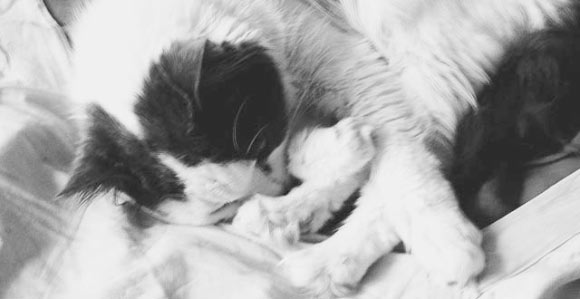
The owner experiences of transitioning cats indoors suggest that, for most owners and cats, a transition to indoor cat management is manageable and worthwhile. Image credit: Natali Anderson.
“Our findings challenge the perception that cats cannot adapt to an indoor lifestyle,” said Adelaide University researcher Julia Henning.
“Many people worry that keeping a cat indoors will be stressful for their cat, but the findings suggest that the transition was often easier than expected.”
“Owners certainly faced some challenges during the transition, particularly in the first few weeks, but most found these were temporary and that the long-term benefits far outweighed the difficulties.”
In the study, Dr. Henning and her colleagues surveyed 87 cat owners who had already moved a cat from outdoor access to an indoor-only lifestyle.
Nearly 70% said the process was easier than they had anticipated, and about three-quarters said they intended to keep future cats indoors as well.
Safety was by far the leading motivation, cited by 77% of respondents, followed by concern for local wildlife and household moves, each mentioned by about a third of owners.
More than 40% said their cat adjusted to indoor life almost immediately, while roughly a quarter said it took weeks.
About 13% reported that their cat still hadn’t settled in by the time of the survey — and those cats were also more likely to be rated as unhappy by their owners.
Notably, most transitions weren’t carefully planned. Nearly half of owners made no preparations before bringing their cat inside, and more than a third said the move was forced by an unexpected medical issue, safety scare or house move.
Despite that lack of preparation, most owners still described the process as manageable, suggesting cats often adapt on the fly.
However, owners frequently cited practical headaches such as keeping doors and windows shut to prevent escapes, more frequent litter box cleaning, and the added cost of enrichment items like scratching posts and toys.
Spending rose across most categories, though veterinary bills were a notable exception: 36% of owners said they spent less on vet care after their cat moved indoors.
Emotionally, guilt was a recurring theme, with some owners describing lingering worry about whether they were meeting their cat’s needs or restricting a life the animal once seemed to enjoy outdoors.
Behaviorally, most owners saw little change in their cats, though some reported increases in attention-seeking, vocalization and play.
The authors also found that cats transitioned before age 2 adjusted markedly faster than older cats, hinting that earlier intervention may smooth the process.
“These findings highlight the importance of supporting both pets and their owners,” said Adelaide University researcher Susan Hazel.
“Keeping cats indoors offers significant benefits for their safety and welfare, but successful transitions depend on supporting owners as much as their cats.”
“Our research shows that owners often need reassurance that the behaviors they see during the transition are temporary and that there are practical strategies — such as providing climbing spaces, scratching posts, toys and opportunities for play — that can help cats adapt successfully.”
The study was published in the journal Applied Animal Behaviour Science.
_____
Julia S.L. Henning et al. 2026. Owner-reported experiences of transitioning cats from outdoor to indoor living. Applied Animal Behaviour Science 304, 107120; doi: 10.1016/j.applanim.2026.107120