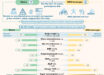
In a study of 2,266 workers in Finland, evening-type people, or night owls, were up to three times more likely to be treated for depression or anxiety than morning types, with poor work-life balance identified as a key contributing factor.

Merikanto et al. showed that evening-types had more issues regarding work spillover to personal life and poor recovery from work and that these factors moderated and partly mediated poor mental health among evening-types. Image credit: Wok & Apix.
“Evening-types are at higher risk not only for mental health problems but also for impaired work ability,” said Dr. Ilona Merikanto from the University of Eastern Helsinki and her colleagues.
“Yet, it is not known why these risks accumulate to evening-types rather than other circadian types and whether issues related to work-life balance have a role in these associations.”
The researchers analyzed data from Finland’s population-based Healthy Finland Study, examining working adults ages 20 to 65.
They assessed participants’ chronotype — whether they identify as a ‘morning person’ or ‘evening person’ — alongside validated measures of depression, anxiety, psychological distress and suicidal thoughts, as well as actual healthcare visits recorded in Finland’s national registers.
The participants who identified as definite evening-types were more likely to have been treated for depression or anxiety disorders, to screen positive for psychological distress and general anxiety, and to report suicidal thoughts, compared with definite morning-types.
Moderate evening-types showed similar, if somewhat less pronounced, patterns.
The scientists also measured two aspects of work-life balance: how much work ‘spills over’ into a person’s free time and mental space, and how well people recover from the strain of a workday.
Evening-types reported significantly more trouble on both fronts than morning-types.
In one specific pathway, poor recovery from work was found to partially explain — accounting for about 13% of — the association between evening chronotype and anxiety disorders serious enough to require healthcare treatment.
The mismatch between evening-types’ natural rhythms and conventional daytime work schedules may leave them feeling more exhausted by work and less able to switch off afterward, potentially because tasks that are harder to perform earlier in the day get pushed into personal time.
The researchers concluded that workplace policies addressing work-life balance could be a meaningful avenue for supporting the mental health of evening-oriented employees, a group estimated to make up roughly 12 to 24% of working-age adults.
“Measures to promote work-life balance and recovery from work can be targeted at the right people,” Dr. Merikanto said.
“This will also promote well-being at work and reduce inequality in the workplace.”
The findings appear in the journal Sleep Health.
_____
Ilona Merikanto et al. 2026. The role of recovery from work and work-life spillover in the association between chronotype and mental health problems: A population-based study. Sleep Health 12 (3): 488-495; doi: 10.1016/j.sleh.2026.03.001