A new review paper published in the journal Nutrition Research Reviews points to nutrients in the nut that play roles in sleep biology.
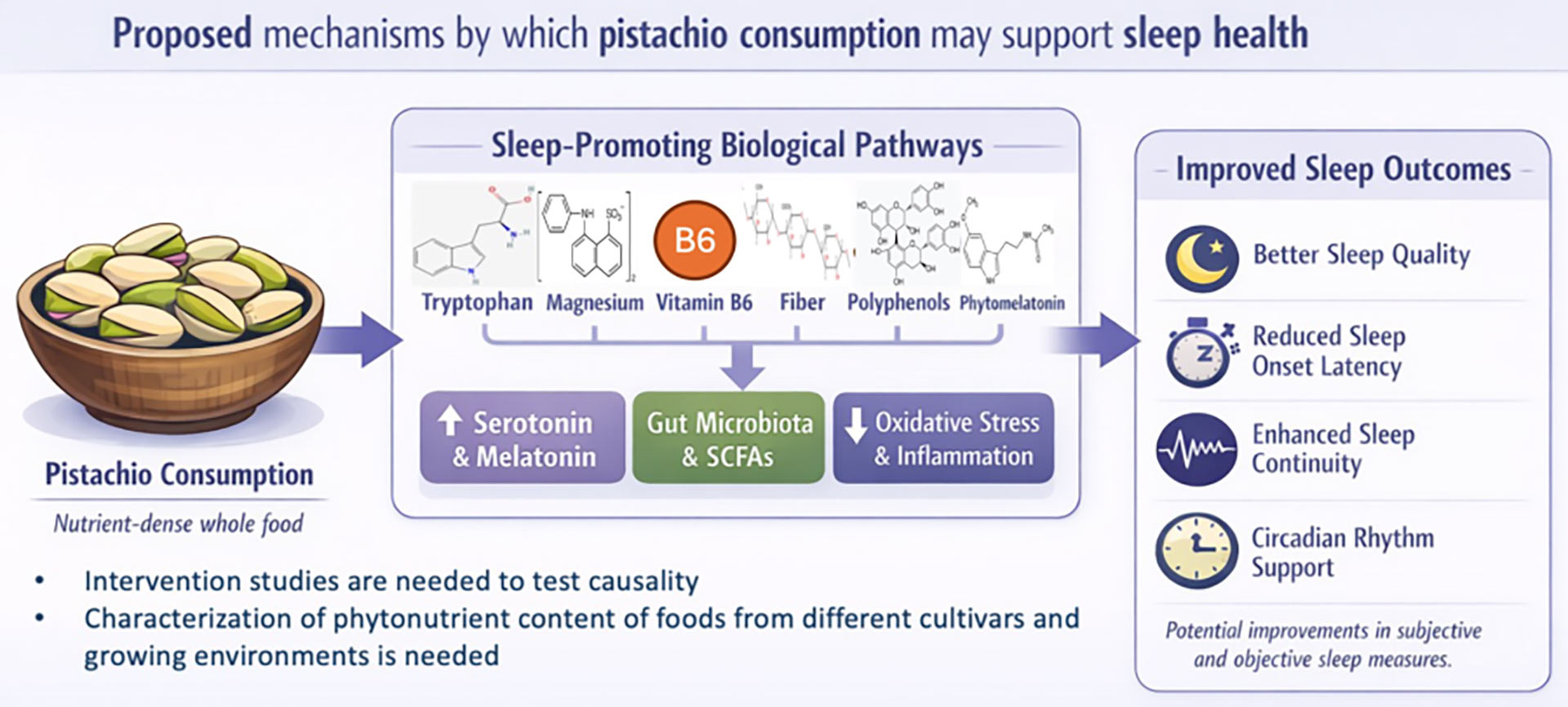
Pistachios are particularly rich in vitamin B6, magnesium, fiber, phenolic compounds, and phytomelatonin that could benefit sleep health. Image credit: Mixon et al., doi: 10.1017/S0954422426100511.
“Pistachios are compelling for sleep research because they bring together several nutrients and plant compounds connected to sleep physiology within one whole food,” said senior author Dr. Marie-Pierre St-Onge, director of the Center of Excellence for Sleep and Circadian Research at Columbia University Irving Medical Center.
“Rather than focusing on a single ‘sleep nutrient,’ this review provides a rationale for studying how the complete pistachio food matrix may affect sleep-related pathways.”
Dr. St-Onge and colleagues argue that pistachios stand out among tree nuts for several nutrients tied to sleep.
A one-ounce (28-gram) serving supplies about 38% of the daily value of vitamin B6, which the body uses to make serotonin and GABA, a calming neurotransmitter.
It also provides magnesium, fiber, polyphenols and tryptophan, the amino acid from which the body builds melatonin, the hormone that signals nighttime.
Pistachios also contain melatonin made by the plant itself.
The authors note that diets rich in nuts, such as the Mediterranean diet, are associated with better sleep, and that higher intakes of magnesium and fiber have been linked to better sleep in observational studies.
Some trials of other melatonin-rich foods, including tart cherry juice and tomatoes, found increases in melatonin output and improvements in sleep.
However, no clinical trial has examined pistachio consumption and sleep, and most of the evidence comes from studies of single nutrients, supplements or population surveys that cannot prove cause and effect.
The evidence on vitamin B6 is mixed: several supplement trials found no benefit in people who were presumably not deficient. Magnesium trials have also produced mixed results.
The review also flags uncertainty about the nut’s melatonin content.
One analysis of American pistachios put it at about 18.7 micrograms per ounce, while other sources report an average of just 0.074 micrograms.
According to the researchers, content varies by cultivar and processing, and that whether the body absorbs these compounds from the nut has not been directly tested.
They call for randomized controlled trials of pistachio intake and sleep in diverse populations.
“Well-designed human trials can help us determine whether the unique combination of nutrients and bioactive compounds in the pistachio food matrix produces measurable changes in melatonin, sleep quality, sleep duration or other sleep outcomes,” Dr. St-Onge said.
_____
Ashley Mixon et al. 2026. Exploring the role of pistachio nutrients and bioactive components in sleep health: a narrative review. Nutrition Research Reviews 39: e29; doi: 10.1017/S0954422426100511