Not all diets are created equal when it comes to reversing the metabolic damage of obesity, even when they produce the same amount of weight loss, according to a new randomized clinical trial published in the journal Cell Metabolism.
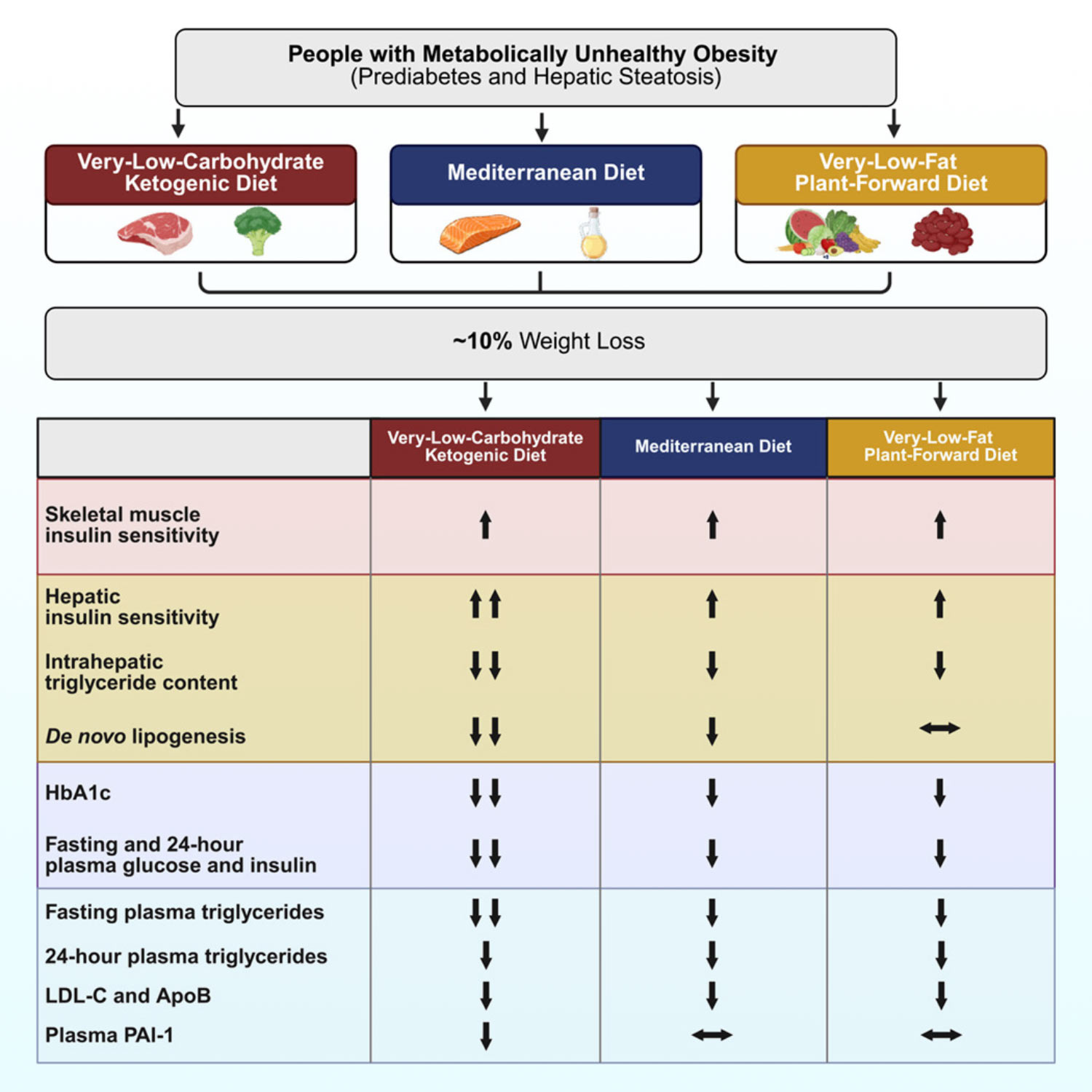
Diet macronutrient content affects the cardiometabolic benefits of weight loss. Image credit: Petersen et al., doi: 10.1016/j.cmet.2026.07.020.
“Obesity causes a constellation of metabolic diseases, including atherogenic dyslipidemia, prediabetes, and metabolic dysfunction-associated steatotic liver disease, which are risk factors for type 2 diabetes and cardiovascular disease,” said Dr. Samuel Klein from the Washington University School of Medicine in St. Louis and his colleagues.
“Insulin-resistant glucose metabolism in both skeletal muscle and liver is the key pathogenic driver of obesity-related metabolic diseases.”
“Weight loss induced by decreasing energy intake relative to energy expenditure is the cornerstone of therapy for people with metabolically unhealthy obesity because it improves multi-organ insulin action and ameliorates, or even completely resolves, obesity-related metabolic disease.”
“However, the macronutrient composition of a diet can also affect metabolic health, independent of weight loss per se.”
“Three popular diets that differ markedly in macronutrient content, namely very-low-carbohydrate ketogenic, Mediterranean, and very-low-fat plant-forward diets, are often recommended for treating people with obesity.”
“Data from randomized clinical trials have shown that these types of diets differ slightly in weight loss efficacy; very-low-carbohydrate diets often display a modest weight loss advantage at 6 months that diminishes with longer duration of follow-up.”
“However, it is not known whether these three popular diets confer specific metabolic benefits beyond those achieved by weight loss alone because of limitations common to many diet trials, which include questionable dietary adherence and unequal weight loss among treatment groups.”
In the study, the authors assigned 55 adults with obesity, prediabetes and fatty liver disease to one of three popular diets — a very-low-carbohydrate ketogenic diet, a Mediterranean diet, or a very-low-fat, plant-forward diet — and provided all their meals to ensure strict adherence.
Each group lost about 10% of their body weight over roughly five months.
While all three diets improved muscle insulin sensitivity by about 50%, the ketogenic diet produced far greater benefits for the liver.
Participants on the keto diet saw a two-to-threefold larger improvement in liver insulin sensitivity than those on the other diets, along with steeper drops in liver fat, blood sugar, glycated hemoglobin (HbA1c) and fasting insulin.
Half of the keto group saw their prediabetes go into remission, compared with 29% on the Mediterranean diet and just 7% on the low-fat diet.
Notably, the keto diet — despite deriving 73% of its calories from fat, including a relatively high proportion of saturated fat — did not raise LDL cholesterol or other markers of cardiovascular risk compared with the other diets, and produced greater improvements in some markers, including HDL cholesterol and triglyceride particles.
The findings suggest that diet composition — not just calorie restriction — plays an important role in reversing obesity-related metabolic disease.
They caution that the trial was small and cannot determine whether a less extreme reduction in carbohydrates might achieve similar benefits without full ketosis.
“We know weight loss can improve metabolic health in people who are obese,” Dr. Klein said.
“Our data suggest that if you have high liver fat content and prediabetes, reducing carbohydrate intake can have important therapeutic effects on metabolism beyond just weight loss alone.”
“The most surprising finding was that participants in the ketogenic diet group didn’t experience an increase in blood fat or cholesterol levels despite consuming the most fat,” said Dr. Max Petersen, also from Washington University School of Medicine.
“GLP-1-based medications have revolutionized the therapy of obesity. We now have a very effective pharmacotherapy for achieving significant weight loss.”
“But in addition, our study shows that the specific composition of the diet can give you added benefits.”
_____
Max C. Petersen et al. Effect of diet macronutrient content on the cardiometabolic response to weight loss: A randomized clinical trial. Cell Metabolism, published online August 27, 2026; doi: 10.1016/j.cmet.2026.07.020