A new species of corcoraniid arthropod that lived during the Furongian epoch, between 497 and 487 million years ago, has been identified from an exceptionally preserved specimen found near Québec, Canada. The discovery supports the view that the so-called Furongian Gap — an evolutionary interval between the Cambrian Explosion and the Great Ordovician Biodiversification Event characterized by a marked drop in biodiversity — partly reflects sampling bias, rather than true biodiversity decline.
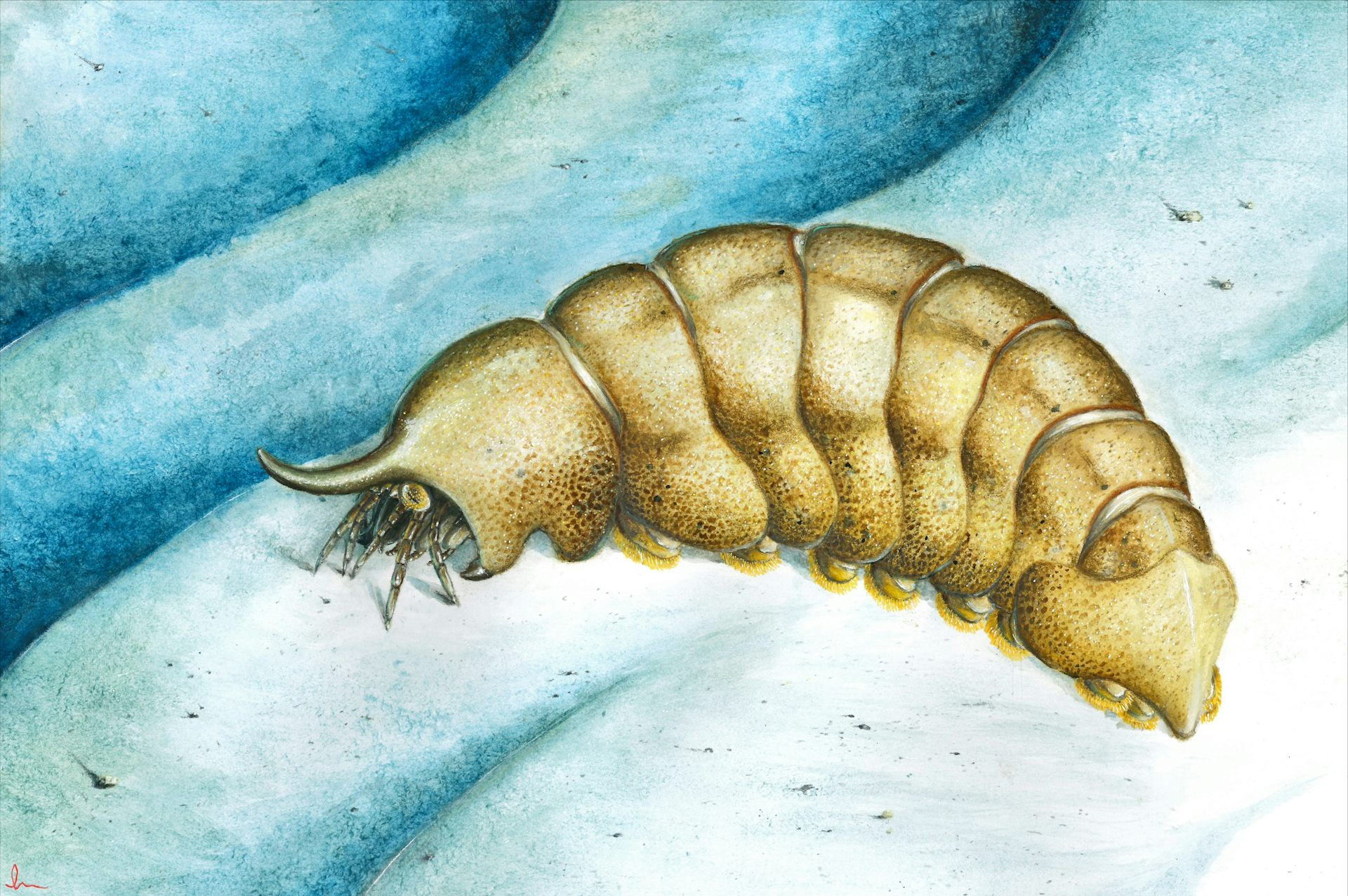
Life reconstruction of Magnicornaspis garwoodi. Image credit: Thomas Turner.
“Paleontologists have wondered whether this time of markedly less diversity of life could be linked to ocean chemistry, cooling climates or environmental instability,” said Flinders University’s Dr. Russell Bicknell.
“But perhaps we haven’t been looking at the right sedimentary rocks or fossil-bearing deposits to get a clear picture of the kinds of soft-bodied organisms and early anthropods that inhabited the planet at that time.”
Named Magnicornaspis garwoodi, the new enigmatic arthropod features broad head shields, segmented bodies and defensive spines that belong to the corcoraniid group.
Found near Québec in Canada and preserved within the Rivière-du-Loup Formation, the specimen was one of only a handful of species known from the Cambrian and Ordovician.
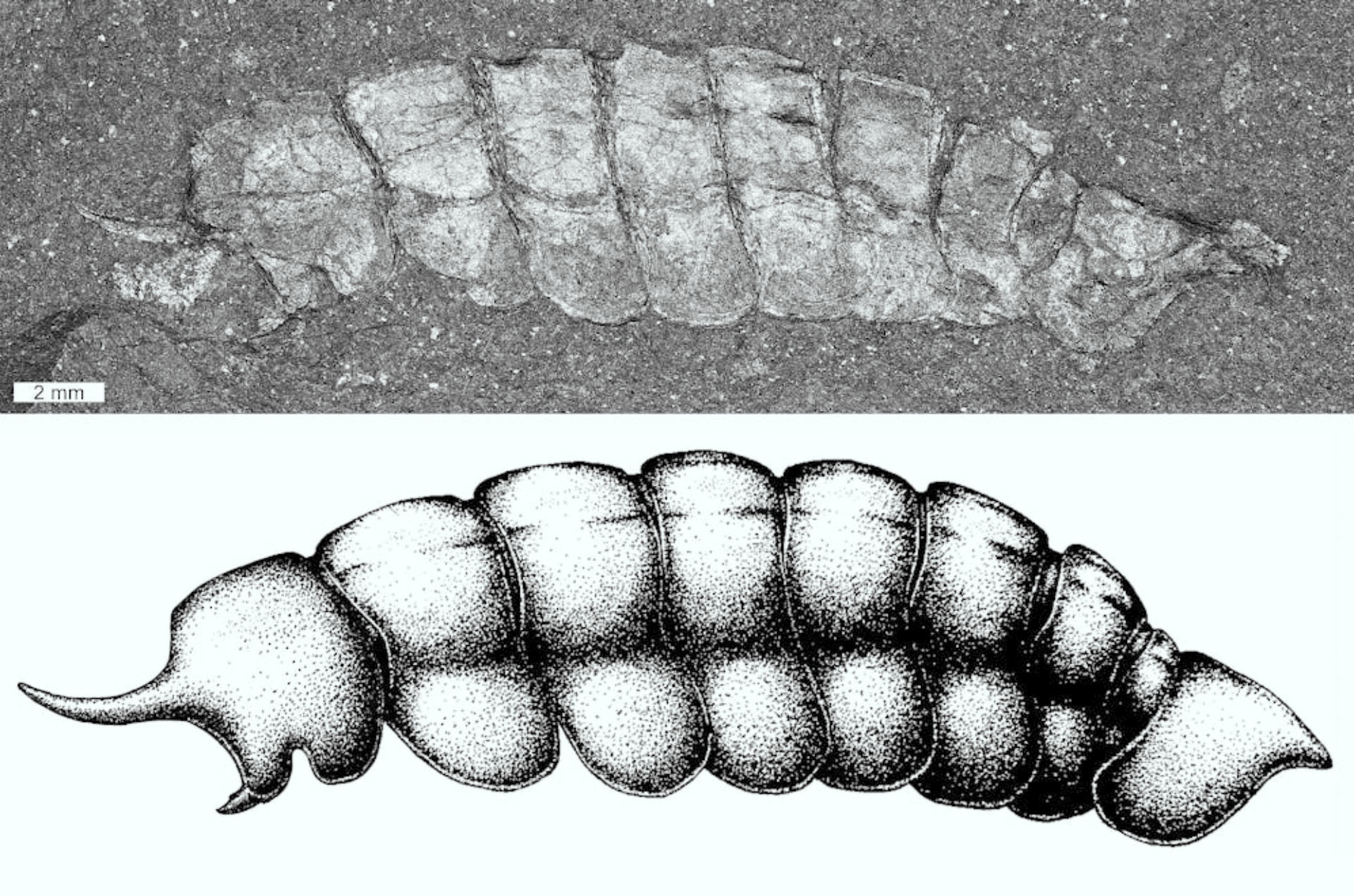
Magnicornaspis garwoodi. Image credit: Bicknell et al., doi: 10.1186/s12915-026-02617-4.
“The fossil is important because it helps to fill blanks in fossil history,” Dr. Bicknell and colleagues said.
“It joins a growing list of Furongian sites that challenge the notion of a barren Late-Cambrian world.”
“Each new Furongian fossil discovery narrows this supposed gap and reveals increasingly sophisticated ecosystems thriving during the Late Cambrian.”
“Together, these discoveries increasingly suggest that Furongian ecosystems remained diverse and ecologically complex.”
“Importantly, it comes from a geological setting not previously recognized for exceptional preservation.”
The discovery of Magnicornaspis garwoodi fits within a broader pattern emerging over the past two decades.
“The Furongian may not represent a true collapse in biodiversity, but rather a gap where scientists have looked and what kinds of rocks have been studied,” said Dr. Julien Kimmig, a researcher at the Karlsruhe Institute of Technology and the Staatliches Museum für Naturkunde Karlsruhe.
The discovery of Magnicornaspis garwoodi is reported in a paper in the journal BMC Biology.
_____
R.D.C. Bicknell et al. 2026. New exceptionally preserved arthropod from the Furongian of Canada. BMC Biol 24, 119; doi: 10.1186/s12915-026-02617-4