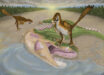
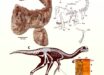
A fossil theropod vertebra about the length of a thumb, found in the Algarve region in southern Portugal, may be the oldest dinosaur remains ever discovered on the Iberian Peninsula.
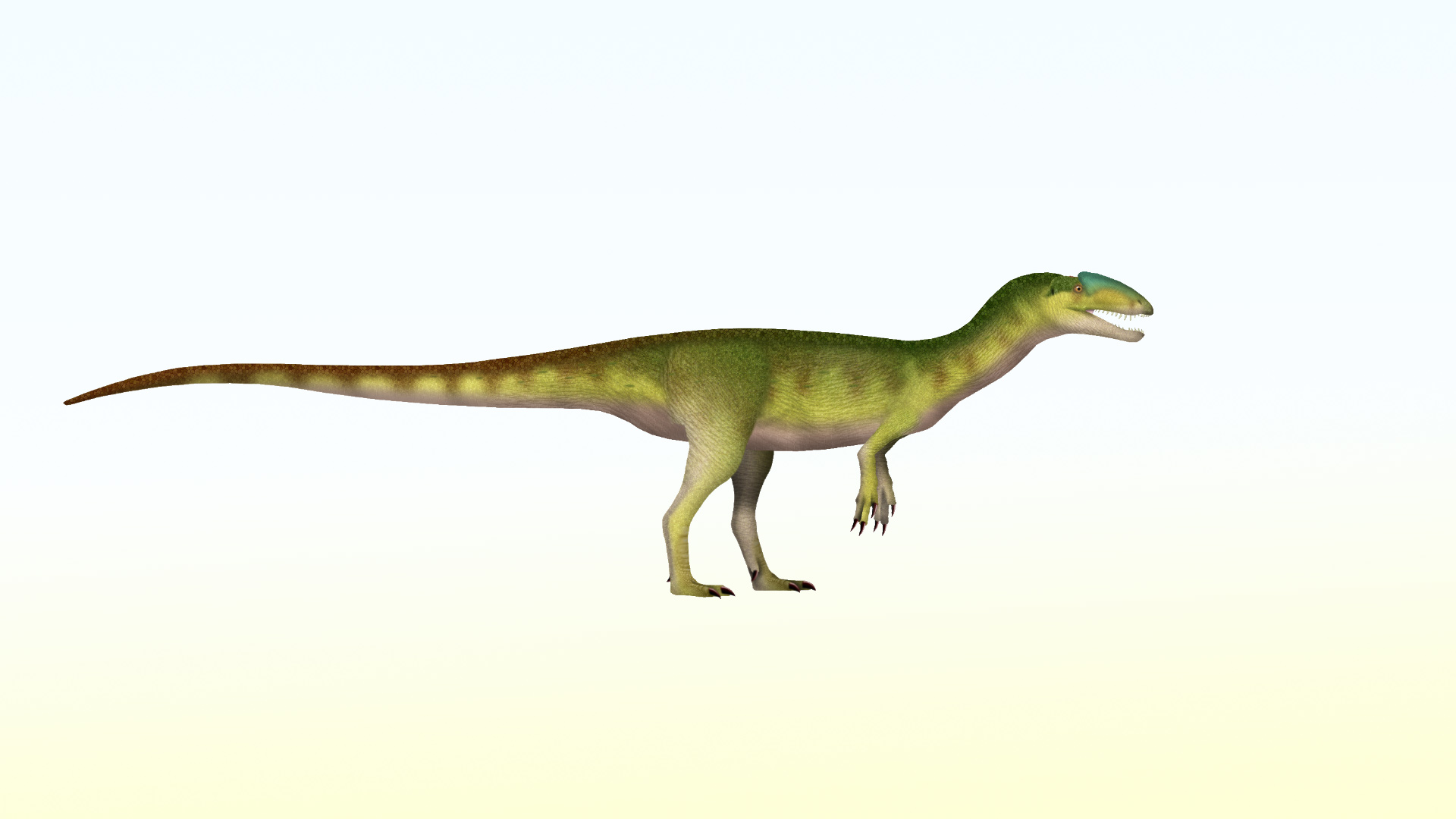
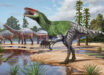
An artist’s impression of Sarcosaurus. Image credit: TotalDino / CC BY 4.0.
“This is the first Triassic dinosaur remains from the Iberian Peninsula, and the oldest dinosaur currently known from this region,” said Universidade Nova de Lisboa researchers Dr. Rui Tiago dos Santos-Matos and Dr. Octávio Mateus.
The specimen is a single vertebral centrum, the main body of a back vertebra, measuring 37 mm (about 1.5 inches).
Labeled NOVAFCT-DCT-5562, the bone was found near Penina, in the municipality of Loulé in the Algarve.
It came from rocks of the Silves Group that paleontologists date to the Late Triassic epoch, more than 220 million years ago.
Until now, the Triassic fauna of Portugal was known mainly from aquatic or semi-aquatic animals, including large amphibians, phytosaurs, placodonts and fish.
NOVAFCT-DCT-5562 represents the first fully land-dwelling vertebrate described from these deposits.
“Until now, no dinosaur bone elements have been described from the Triassic of Portugal, although there are some footprints attributed to this clade,” the scientists said.
To identify the fossil, they compared it with vertebrae of many early dinosaurs and their relatives.
They then ran evolutionary analyses using an expanded dataset that includes 13 new characters they devised to describe the back vertebrae of early theropods.
The analyses placed the specimen among the neotheropods, a branch of early predatory dinosaurs, and as the closest relative of Sarcosaurus woodi, a species known from the Early Jurassic rocks of England.
If this placement holds, the bone would also be among the oldest neotheropods known anywhere.
“The close relationship between Sarcosaurus and NOVAFCT-DCT-5562 would push back the lineage leading to Sarcosaurus from the latest Late Triassic to the early/middle Late Triassic,” the authors said.
The specimen is at least 20 million years older than Sarcosaurus, so the two are very unlikely to be the same species or genus.
The bone has no features unique to it, and is too fragmentary to assign to a known species or to name a new one.
“NOVA-FCT-DCT-5562 may represent an unknown theropod species, however it lacks autapomorphies and the remains are too fragmentary to attribute to any known species or to erect a new one,” the paleontologists concluded.
The study was published this month in the journal Fossil Imprint.
_____
Rui Tiago Santos-Matos & Octávio Mateus. 2026. Theropod vertebra from the Late Triassic of Algarve, Portugal – evidence of the oldest Iberian dinosaur. Fossil Imprint 82 (1): 98-109; doi: 10.37520/fi.2026.006