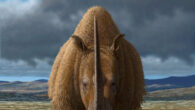
The extinction of the woolly rhinoceros (Coelodonta antiquitatis) at the onset of the Holocene remains an enigma, with conflicting evidence regarding its...
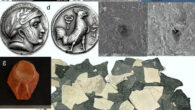
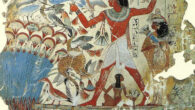
The origins and dispersal of the chicken (Gallus gallus) across the ancient world is one of the most enigmatic questions regarding Eurasian domesticated...
New archaeological discoveries from Mongolia show that, despite a fragmentary archaeological record, horse cultures of the eastern Eurasian steppe were...
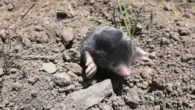
A new species of the mole genus Talpa has been identified in eastern Türkiye (Turkey) by a team of reseachers from Ondokuz Mayıs University, Indiana...
Approximately 6% of the Altai Neanderthal genome was inherited from an ancient lineage of anatomically modern Homo sapiens that migrated from Africa to...
Our species, Homo sapiens, dispersed from Africa into Eurasia multiple times in the Middle and Late Pleistocene. According to new research led by Shantou...
The fossilized remains of the Miocene-period ape species Anadoluvius turkae have been unearthed at the paleotological site of Çorakyerler in central Anatolia,...
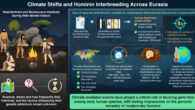
Looking at habitat overlap for Neanderthals and Denisovans, Pusan National University researcher Jiaoyang Ruan and colleagues found patterns of interbreeding...
The dispersal of anatomically modern Homo sapiens out of Africa and across Eurasia provides a unique opportunity to examine the impacts of genetic selection...
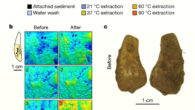
Application of a novel non-destructive DNA extraction method to a Paleolithic deer tooth pendant from Denisova Cave, Siberia, resulted in the recovery...
In new research, scientists analyzed 23 ancient genomes of woolly mammoths (Mammuthus primigenius), including one of the oldest known specimens at 700,000...
Cat domestication likely initiated as a symbiotic relationship between wildcats and the peoples of developing agrarian societies in the Fertile Crescent....
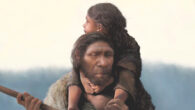
Paleoanthropologists have explored the social organization of Neanderthals using ancient nuclear, Y-chromosomal and mitochondrial DNA data from the remains...
The gray wolf (Canis lupus) was the first species to give rise to a domestic population, and they remained widespread throughout the latest Ice Age when...
Researchers from the University of Adelaide and elsewhere have sequenced and analyzed mitochondrial DNA from fossils of cave lions (Panthera spp.) and...
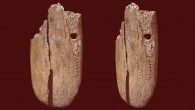
The 41,500-year-old oval-shaped pendant from Stajnia Cave in Poland is the oldest decorated jewelry found in Eurasia.
Dorsal views of the 41,500-year-old...
New research shows that the role of humans in the extinction dynamics of the woolly mammoth (Mammuthus primigenius) began well before the Holocene epoch,...
Homo bodoensis lived in Africa during the early Middle Pleistocene, around 500,000 years ago, and was the direct ancestor of the Homo sapiens lineage;...
In a study published this week in the journal Nature, scientists analyzed ancient horse genomes from all suspected domestication centers, including Iberia,...
Researhers have sequenced the genomes of two living and three extinct rhinoceros species and compared them to existing data from the remaining three living...