In the popular imagination, Vikings were fearsome blonde-haired warriors from Scandinavia who used longboats to carry out raids across Europe in a brief...
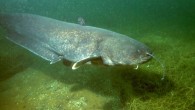
A team of scientists from Europe has sequenced and analyzed the nearly complete genome of the wels catfish (Silurus glanis), one of the largest freshwater...
An international team of scientists has successfully extracted and sequenced the mitochondrial DNA from an 80,000-year-old adult Neanderthal tooth found...
A team of archaeologists from the United Kingdom has uncovered 15,000-year-old stone plaquettes extensively engraved with abstract designs at the Magdalenian...
European moles (Talpa europaea) appear to avoid chewing on sand when eating earthworms because it is likely that they find the sensation as repulsive as...
An international team of researchers led by the Swedish Centre for Palaeogenetics has analyzed 31 mitochondrial genome sequences from the cave lion (Panthera...
A new genus and species of theropod dinosaur from the Cretaceous period has been identified from bones found on the Isle of Wight, the United Kingdom.
An...
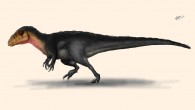
A team of paleontologists from Portugal and Spain has found fossil fragments from a new genus and species of carcharodontosaurian dinosaur.
An artist’s...
Neanderthals may have experienced more pain than average modern humans do, according to new research led by scientists from the Max Planck Institute for...
Smallpox, caused by the variola virus, is one of the most devastating human diseases. Smallpox killed millions of people but drove Edward Jenner’s invention...
A new genus and species of long-necked herbivorous dinosaur that lived during the Triassic period has been identified from fossils found in northern Switzerland.
Schleitheimia...
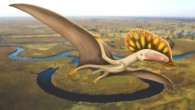
A new genus and species of pterosaur has been identified from a partial fossilized jaw collected on Isle of Wight, southern England.
Wightia declivirostris...
An isotopic analysis of fossil collagen from the bones collected in three Romanian caves indicates that the cave bear (Ursus spelaeus), an extinct species...
An international team of researchers has discovered and dated the remains of Homo sapiens and associated artifacts — including pendants manufactured...
In a study published in the journal Nature Communications, archaeologists analyzed the molecular remains of food preserved in 6,000-7,000-year-old pottery...
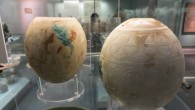
Engraved, painted and embellished with ivory, precious metals and faience fittings, decorated ostrich eggs were traded and exchanged as luxury items around...
In a phylogenetic network analysis of the first 160 complete genomes of SARS-CoV-2 to be sequenced from human patients, an international team of scientists...
Modern humans in Eurasia carry genetic material inherited from Altai Neanderthals, according to a study published in the journal Genetics. This is noteworthy...