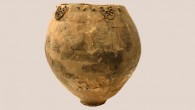
8,000-year-old pottery fragments from two sites in the Republic of Georgia, South Caucasus, have revealed the earliest biomolecular archaeological and...
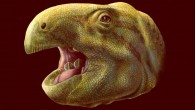
A new species of rhabdodontid dinosaur, named Matheronodon provincialis, has been discovered in southern France.
Artist’s impression of Matheronodon...
The aboriginal inhabitants of the Canary Islands, commonly known as Guanches, were genetically most similar to modern North African Berbers, according...
An international team of paleontologists from the United States, Sweden, and Japan has retrieved original pigment, beta-keratin and muscle proteins from...
An ornamented bâton percé, or pierced rod, unearthed at the archaeological site of Gołębiewo in Poland, may provide evidence of interregional contact...
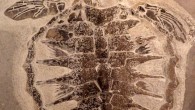
A new species of marine reptile that lived about 163 million years ago (Middle Jurassic epoch) has been identified from a fossil found near Melksham, Wiltshire,...
In a study published Friday in the Journal of Vertebrate Paleontology, paleontologists report the discovery of a partially-preserved skeleton of one of...
Plants and the meat of mammoths, red deer and horses were a major part of the diet of anatomically modern humans who lived in what is now Crimea, Ukraine,...
Archaeologists have found a well-preserved Early Bronze Age wooden vessel in the Swiss Alps. The artifact could help researchers shed new light on the...
According to a new analysis of modern and ancient cat DNA, today’s domestic cat is a descendant of both the Near Eastern and Egyptian populations of...
An international team of archaeologists has provided a window into one of the most exciting periods in human history — the transition between Neanderthals...
An international team of paleoanthropologists, led by Professor Madelaine Böhme of the University of Tübingen, Germany, has analyzed 7.2 million-year-old...
Two partial archaic human skulls unearthed in central China provide a new window into the biology and populations patterns of the immediate predecessors...
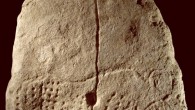
Researchers have uncovered a 38,000-year-old engraved image at Abri Blanchard, an Upper Paleolithic site of the Aurignacian culture — a finding that...
The ash tree (Fraxinus excelsior) is one of Europe’s largest native deciduous trees. Image credit: Matthieu Sontag / CC-BY-SA.
Ash trees (genus Fraxinus)...
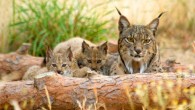
A team of researchers in Spain has successfully sequenced and analyzed the genome of the Iberian lynx (Lynx pardinus), the world’s most endangered feline...
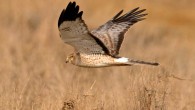
New research confirms that the hen harrier (Circus cyaneus), a medium-sized bird of prey found in parts of North America and Eurasia, is two different...