Pierolapithecus catalaunicus is an extinct species of great ape that lived in what is now Europe about 12 million years ago. A remarkably complete, although...
Anthropologists in Greece have used facial reconstruction techniques to show how Homo heidelbergensis, a poorly understood relative of Neanderthals that...
The new fossil material belonging to Anachlysictis gracilis, including an almost complete specimen consisting of a nicely preserved skull and postcranial...
The fossilized remains of the Miocene-period ape species Anadoluvius turkae have been unearthed at the paleotological site of Çorakyerler in central Anatolia,...
Saurosuchus galilei, a large loricatan pseudosuchian archosaur that lived in South America 230 million years ago (Late Triassic epoch), was thought to...
Hupehsuchus nanchangensis, a species of marine reptile that lived between 249 and 247 million years ago in what is now China, had soft structures such...
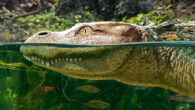
The newly-identified species is closely related to the Chinese alligator (Alligator sinensis), the only living representative of Alligatoridae (the crown-group...
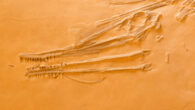
A new species of the ctenochasmatid pterosaur genus Petrodactyle has been described from an unusual specimen found in the Late Jurassic limestone beds...
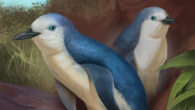
Eudyptula wilsonae is the smallest extinct crown penguin yet known and is a possible ancestor of the kororā or New Zealand little penguin (Eudyptula minor...
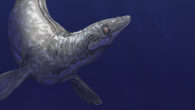
A new genus and species of mosasaurid being named Sarabosaurus dahli has been discovered by a team of paleontologists from the United States, the Netherlands...
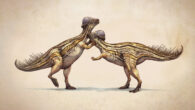
A new genus and species of pachycephalosaurid dinosaur has been described from a partial skull found in Montana, the United States.
Life reconstruction...
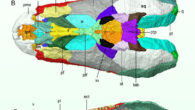
Crassigyrinus scoticus was a large aquatic predator known from the lower- to mid-Carboniferous period of Scotland and Canada.
3D reconstruction of the...
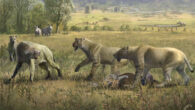
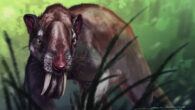
The newly-identified species — the earliest and most primitive member of the saber-toothed cat genus Amphimachairodus — had craniodental adaptations...
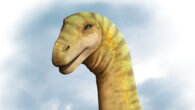
Titanosaurian sauropod dinosaurs were diverse and abundant throughout the Cretaceous period, with a global distribution. However, few titanosaurian species...
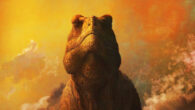
Non-avian theropod dinosaurs such as the iconic Tyrannosaurus rex have long been portrayed with their teeth fully visible, similar to living crocodiles....
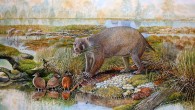
Mukupirna fortidentata looked a bit like a modern wombat crossed with a marsupial lion (Thylacoleo carnifex).
An artist’s impression of Mukupirna nambensis...
Paleontologists from the University of Texas at Austin have identified a new species of ancient beaver from the fossilized remains found at several sites...
Paleontologists from the American Museum of Natural History, the Instituto Argentino de Nivología, Glaciología y Ciencias Ambientales and CONICET investigated...
Paleontologists have examined the fossilized brain and cranial nerve soft tissues of Coccocephalus wildi, a species of early ray-finned fish that lived...