An international research team led by scientists from the University of Bonn, the University Hospital Bonn and the Max Planck Institute of Animal Behavior has identified supermagnetic macrophages in the livers of homing pigeons (Columba livia domestica) that appear essential for navigation when the Sun is not visible, pointing to an entirely new mechanism for animal magnetoreception.
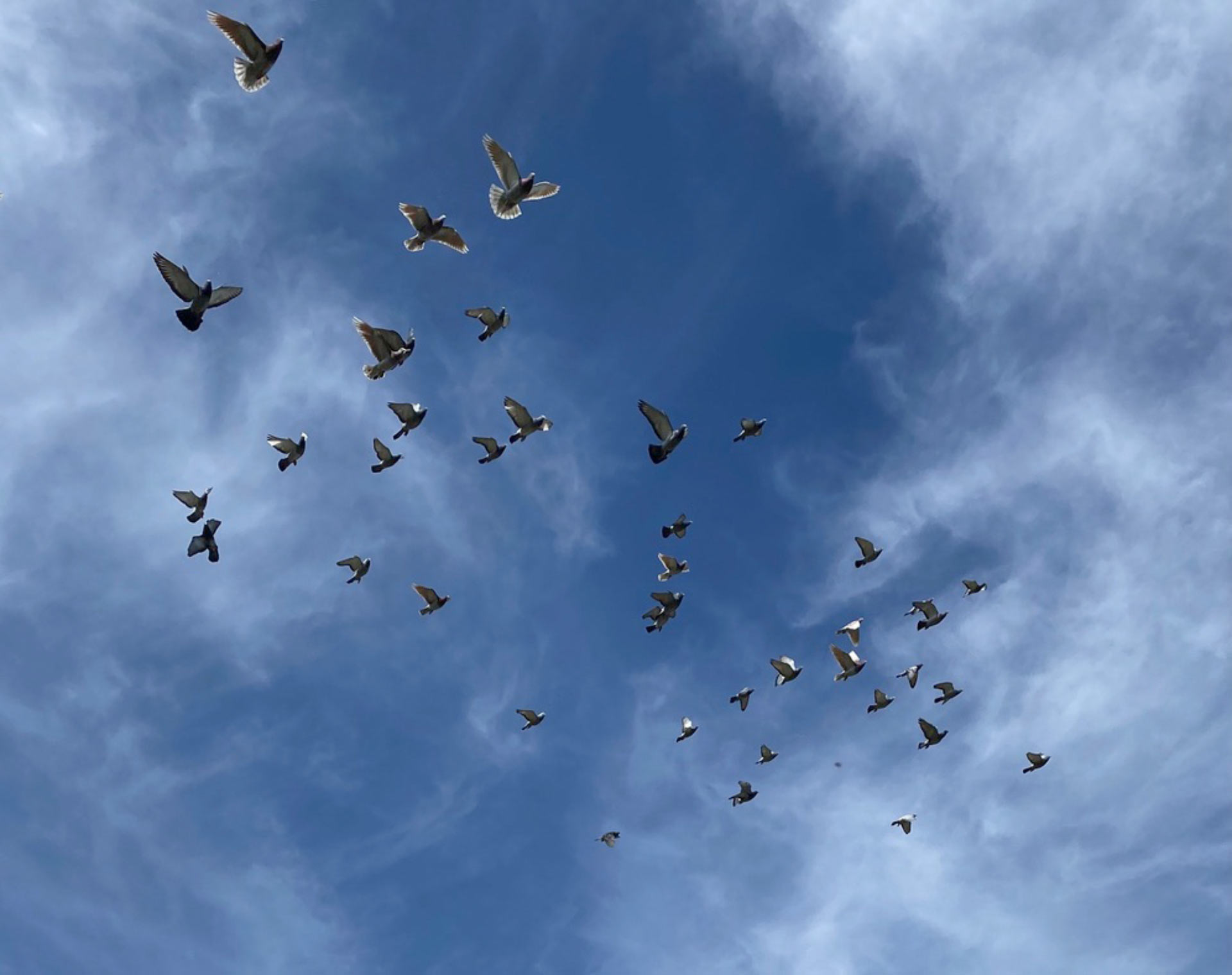
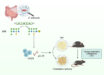
Lisowski et al. used physical, morphological, functional, and genomic assays to identify the presence of superparamagnetic macrophages in the liver of homing pigeons (Columba livia domestica). Image credit: Spanishguitar101 / CC BY-SA 4.0.
The ability to determine position and maintain a course toward a destination is critical for the survival of many animals.
Field studies have shown that numerous species rely on Earth’s magnetic field for orientation, particularly when visual cues are unavailable or unreliable.
Birds have served as a key model for investigating this ability. Migratory songbirds, for instance, can maintain a magnetically calibrated flight direction over hundreds of km, even when traveling at night or beneath overcast skies.
Homing pigeons are thought to combine visual landmarks and environmental odors to determine their location and may also draw on magnetic information.
To keep a chosen course, birds use either a sun compass or a magnetic compass, which might operate independently.
Unlike other vertebrate sensory systems with well-defined receptor organs, the mechanisms of magnetoreception have remained elusive and widely debated despite decades of intensive research.
“We didn’t expect immune cells to act like sensors for magnetic fields at all,” said University Hospital Bonn’s Professor Christian Kurts.
“Our results reveal a previously unknown mechanism for magnetic perception in animals.”
In the new research, Professor Kurts and his colleagues identified a population of specialized immune cells — macrophages — in the livers of homing pigeons that carry magnetic properties strong enough to respond to Earth’s geomagnetic field.
When those cells were experimentally eliminated, pigeons released under overcast skies lost their ability to navigate home entirely.
Birds whose macrophages had been depleted but were released on sunny days returned without difficulty, suggesting the liver-based system kicks in specifically when visual cues like the Sun are unavailable.
“What looks like a ‘gut feeling’ in bird navigation may actually have a physical basis,” said Professor Martin Wikelski, director of the Max Planck Institute of Animal Behavior.
The cells in question are superparamagnetic, meaning they behave like tiny magnets at low temperatures.
The researchers believe the cells acquire this property through their ordinary biological function: breaking down aging red blood cells and accumulating the iron released from hemoglobin, stored as ferritin.
The same type of superparamagnetic macrophages had previously been found in the spleens of mice and humans, but their possible role in sensing direction had never been explored.
In the pigeon experiments, 34 birds were trained to fly a 19-km route from west to east.
The scientists then split the birds into two groups, administering a liver-macrophage-depleting treatment to one group before releasing all the birds under overcast conditions.
Every control bird made it home within 70 minutes. Not a single macrophage-depleted pigeon returned that day, instead drifting in apparently random directions.
When the same depleted birds were tested again under sunny skies, they homed normally.
“We had some clues that the liver and spleen have magnetic properties, because they break down red blood cells and so store much iron in the body,” said Dr. Clivia Lisowski, a researcher at the University of Bonn and the University Hospital Bonn.
“Iron is crystallized in oxide nanoparticles making the cells superparamagnetic and reactive to magnetic fields,” added Dr. Ulf Wiedwald, a researcher at the University of Duisburg-Essen.
“We found by far the strongest magnetic response in liver tissue.”
The authors propose that the liver macrophages, sitting in close proximity to nerve fibers, transmit geomagnetic signals to the brain via the vagus nerve — a communication pathway already known to link peripheral organs to central processing.
Rather than a single cell detecting the field, they suggest the system depends on a collective signal from many macrophages acting in concert.
The findings, if replicated, could reshape the understanding of magnetoreception well beyond pigeons.
“These findings provide the first concrete evidence of how the Earth’s magnetic field can be perceived within the body and passed on to the brain to guide movement,” Dr. Lisowski said.
“The study brings together known biological processes, including iron metabolism and how the immune and nervous systems communicate, into a clear answer to the fundamental question of how animals navigate.”
“Animal navigation is one of the most fascinating phenomena in nature,” Dr. Wikelski said.
“If immune cells are part of how birds sense direction, it would fundamentally change how we understand navigation.”
The study was published on May 28, 2026 in the journal Science.
_____
Clivia Lisowski et al. 2026. Homing pigeon navigation relies on superparamagnetic macrophages under overcast conditions. Science 392 (6801): 985-991; doi: 10.1126/science.ady2486