A new review of previous studies in the journal Appetite undercuts the popular belief that water fills you up at the table. Meanwhile, a companion study in the journal Food Quality and Preference found that spicy salsa — often avoided by dieters — actually curbed how much people ate.
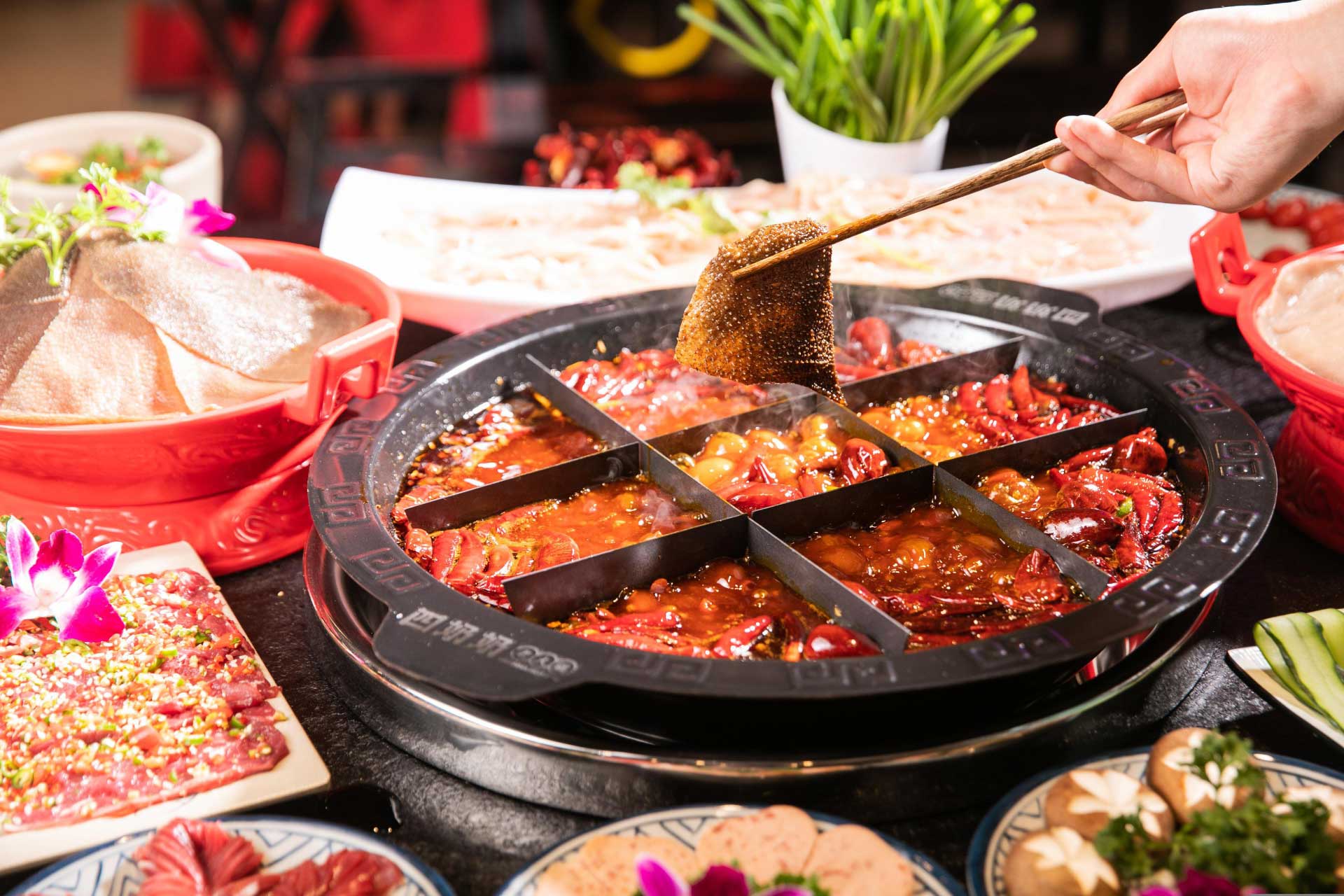
New research makes a case that runs against two different strands of popular nutrition advice at once: that water at meals is a simple ally in eating less, and that spicy food is something to approach with caution if you’re watching what you eat; the research showed the opposite might be true: water tracked with eating more, and spice tracked with eating less. Image credit: Yukuaikuai.
Common dietary advice is to drink more water for the management of body weight and energy intake.
This advice is pervasive and widespread: a 2019 study found, of the 42% of the 48,026 participants who reported attempting to lose weight at the time of the survey, increasing water consumption was the third most prominent strategy reported, after reducing food consumption and increasing exercise.
The advice seems highly intuitive — drinking water before and with meals is believed to increase gastric distension, leading to greater feelings of fullness and ultimately reducing the amount of food consumed.
“There’s been this widespread advice that if we drink water, it fills us up,” said Cornell University’s Professor Paige Cunningham.
“But water is emptied quickly from the stomach so it likely doesn’t fill us up for long.”
“Instead, water may increase how much we eat, providing lubrication which can speed up eating, and preventing a dry mouth which can prolong enjoyment of the food.”
The authors pooled existing data from two crossover experiments where adults ate a lunch consisting of 650 g of beef chili or chicken tikka masala with 450 g of water twice in the laboratory while being video-recorded.
For both experiments, the spiciness of the lunch was varied by adding different ratios of hot/sweet paprika.
Videos were coded to measure sip number, sip size, drinking rate, and number of switches between bites of food and sips of water.
For every additional 100 grams of water participants drank, they ate about 39 more grams of food — roughly 49 more calories.
People who frequently switched back and forth between bites of food and sips of water ate even more: each additional switch was tied to about 4.4 more grams of food consumed.
In a related study, 49 adults were served tortilla chips alongside a mild or spicy salsa, once a week for two weeks; only the salsa’s cayenne content changed between conditions.
The spicier version cut total snack intake by 28% — not just of the salsa itself, but of the chips too, even though the chips themselves didn’t change.
Participants ate the spicy snack about 30% more slowly than the mild one, which the researchers suspect drove the decrease: heat slowed people down, and slower eating meant less eaten overall.
Water intake during the snack was unaffected by spice level, which rules it out as an explanation for the reduced intake.
“Both studies show how mealtime behaviors and food properties can significantly influence how much we eat, without us even realizing,” Professor Cunningham said.
“We found that just drinking more water was associated with greater consumption, while adding a bit more spice to a snack slowed eating and decreased how much participants ate.”
_____
Paige M. Cunningham & John E. Hayes. 2026. Water intake, switching between bites and sips, and drinking behavior are associated with food intake across meals varying in spiciness: A secondary analysis of two randomized crossover studies. Appetite 226: 108698; doi: 10.1016/j.appet.2026.108698
Paige M. Cunningham et al. 2026. Increasing the spiciness of a snack slows eating and reduces food and energy intake. Food Quality and Preference 143: 105951; doi: 10.1016/j.foodqual.2026.105951