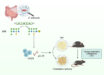
An analysis of 27 animal studies found that switching to a healthier diet improved memory performance, though the effects were far weaker after diets high in sugar.

Rehn et al. performed a systematic review and meta-analysis of the cognitive and behavioral effects of diet reversal in rodent models. Image credit: Steve Buissinne.
“Our results show that improving diet quality does benefit memory,” said Dr. Simone Rehn, a researcher at the University of Technology Sydney.
“But those improvements were incomplete. Even after weeks on a healthy diet, memory did not return to the level seen in animals that had never eaten an unhealthy diet.”
Dr. Rehn and colleagues conducted a systematic review and meta‑analysis of 27 preclinical studies to identify consistent patterns across experiments.
They focused on memory, but also looked at anxiety- and depression-like behavior, general activity, and motivation for food.
Across the studies, animals switched to a healthy diet performed better on memory tasks than those that continued eating unhealthy food.
However, memory recovery depended on diet composition, with recovery seen in experiments that used high‑fat diets but not those using diets high in sugar or combined high‑fat and high‑sugar diets.
No consistent improvements were seen for anxiety, activity levels or food motivation, suggesting the effects were specific to memory rather than general behavior.
“We saw clearer memory improvements after high‑fat diets were replaced with healthy food,” Dr. Rehn said.
“But diets high in added sugar, including diets high in both fat and sugar, showed little evidence of recovery.”
“This suggests sugar may be a key factor in limiting memory recovery.”
The memory tasks analyzed reflect function of the hippocampus, a brain region essential for learning and memory, and one that is also involved in regulating appetite and food intake.
“Animal models were critical for understanding how diet affects the brain,” said Dr. Mike Kendig, also from the University of Technology Sydney.
“In humans, changes in diet usually occur alongside changes in exercise, mood and daily routines, which makes it very difficult to separate the effects of diet alone on brain function.”
“There is a common belief that the effects of unhealthy eating are easily reversible.”
“These results suggest that, at least for memory, the picture may be more complicated, especially when diets are high in added sugar.”
“Improving diet quality is still worthwhile. But protecting brain health may also depend on avoiding prolonged exposure to unhealthy diets, rather than assuming the effects can always be fully undone later.”
The review paper was published May 17, 2026 in the journal Nutritional Neuroscience.
_____
Simone Rehn et al. Cognitive and behavioural effects of high-fat, high-sugar diet reversal: a systematic review and meta-analysis of animal studies. Nutritional Neuroscience, published online May 17, 2026; doi: 10.1080/1028415X.2026.2664635